All Posts

Conversations Spoken and Unspoken

Creative Commons License

I would like to say that our love of literature drew Emily and I together, or perhaps our mutual feminist ideals. But, if my memory serves me correctly, our very earliest conversations revolved around men.

Before boarding our flight to Tokyo to take up posts as English teachers, I’d spotted Emily and a bloke making their goodbyes. Since I was leaving my boyfriend behind in the UK, I suspected that Emily and I might share the experience of attempting to sustain long-distance relationships.

During many late-night conversations in the months that followed, I discovered that we had, in fact, made the opposite decisions: my boyfriend and I planned to keep going whereas Emily’s relationship had already come to an end.

In an attempt to move on, Emily was generally rather reticent about the man she’d left behind. Having seen him from afar at the airport, however, and sensing that her feelings still ran deep, I was curious and so tended to ask about him. As we gradually opened up about these men back home, our own friendship began to grow.

Many of these early conversations occurred towards the end of parties when most of our English teacher friends would embark on games like truth-or-dare and spin-the-bottle. When drunken nights began to get raucous, Emily and I often ended up drifting outside. I was loyal to my boyfriend back home and uninterested in hooking up with someone new. And, although Emily was officially single, I suspect that this was partially true of her too. Indeed, the goodbye I witnessed at Heathrow turned out only to mark a brief pause: after she completed her two years in Japan, they took up where they left off and have remained together ever since.

But the more I’ve got to know Emily, the more I’ve realised that there was also another reason why she preferred to absent herself when talk turned dirty: Emily is incredibly discreet. Over the years, this is one of the traits I have grown to admire most in my friend.

In truth-or-dare type scenarios, I have been known to reveal things about my life that should have remained private. The next day, I’ve invariably woken up regretting it. I can’t think of a single occasion when I’ve ever seen Emily make such a mistake.

I am grateful to Emily for the conversations we shared in the dark of our friends’ empty backyards: the confidences we traded about love and loss, and soon enough about literature and feminism too. But I am just as grateful for the conversations she saved me from indulging in: the private moments that remained private because of her.


Mary Lamb and Dorothy Wordsworth

In our round-up of Something Rhymed’s first year, we promised this month to reveal a friendship between two female authors that has been neglected in favour of these women’s relationships with famous men.  

Mary Lamb (Creative Commons License)

Mary Lamb and Dorothy Wordsworth, great writers themselves, are most often remembered because of their intense attachments to their brothers, essayist Charles Lamb and Romantic poet William Wordsworth. Their own fascinating friendship, preserved in their intimate correspondence, barely scrapes a mention in most literary histories.

And yet, like the men in their circle, Mary and Dorothy also hiked up the mountains around Grasmere, exchanging their thoughts on the natural world and trading ideas on each other’s poems.

When Dorothy visited London, Mary would welcome her into the small Inner Temple flat where she lived with her brother, and the two women would stay up talking late into the night.

The pair both shunned marriage in favour of devotion to their sisterly roles. The night before William’s wedding, Dorothy wore the ring that he had purchased for his betrothed and, when she gave it to him the following morning, he slipped it back onto her finger before taking it to the church. Dorothy did not attend the ceremony.

Stories of the relationship between the Lamb siblings suggest similar hints of the illicit. Mary, who suffered throughout her life from severe attacks of mental illness, had tragically stabbed their mother to death during her first breakdown. Charles promised to take care of his sister, thereby preventing her from being sent to Bedlam. They upheld their mutual pledge never to marry, instead committing themselves to each other ‘for better, for worse’ as Charles put it; writing in collaboration; and caring for their adopted child.

The women’s fraternal relationships, which had drawn them together, later threatened to split them apart. One of Mary’s breakdowns – so severe that she spent several weeks in an asylum – occurred after an overnight visit from Dorothy.

Charles, who felt that his sister’s mental health was reliant on a good night’s sleep, blamed the women’s late-night conversations for the onset of her illness. He therefore banned Dorothy from staying with them in future and declined her offer to bring Mary up to the Lakes.

But as soon as Mary recovered, she wrote a cheerful letter to Dorothy and the pair continued their friendship despite the restrictions imposed by Mary’s kindly but overbearing brother.

Dorothy Wordsworth (Creative Commons License)

Both of them eventually outlived their beloved siblings. In her dotage, Dorothy also suffered a loss of mental health – although different in nature from Mary’s lifelong illness.

As Dorothy’s grip on the present loosened she became immersed in memories of her youth. She took to reciting poems from the early Grasmere days: poems by the men we’ve come to think of as the great Romantics, but also her poems and those of her friend – the female Romantics whose lives and works have for too long been consigned to the shadows.

Activity

Inspired by Mary Lamb and Dorothy Wordsworth, this month we will write about some of our own late-night conversations.

A Year of Hidden Friendships

When we first launched Something Rhymed, a year ago now, concerned well-wishers expressed scepticism about whether we’d discover twelve pairs of historic female writer friends to profile each month over the course of 2014.

Thanks to our close-knit community of readers from around the globe, the reverse has in fact been true. You’ve helped us to unearth many more female collaborations than we could possibly have envisaged at the beginning of the year. With such a treasure trove of hidden friendships still to explore, we intend to keep sharing our findings here in 2015.

Old treasure chest
Creative Commons License

The collaborations we’ve explored so far were sometimes illicit, scandalous and volatile; sometimes supportive, radical or inspiring. And so, we’ve increasingly found ourselves asking why they have been consigned to the shadows.

To mark the end of Something Rhymed’s first year, here are our top ten ideas on why the friendships between some of our most famous female writers still have a cloak of secrecy about them:

  1. Women writing in the past had more opportunities to converse in the parlour than in the pages of literary magazines.
  • For reasons of propriety, for example, Harriet Beecher Stowe felt that she could not write an obituary in the Atlantic for her long-time friend and confidante, George Eliot.
  1. The marked harmony and lifelong endurance of many of these writing partnerships cost them copy.
  • Charlotte Brontë and Elizabeth Gaskell bonded over their shared experience of infamy since they had both become mired in scandal for daring to pen biting social criticism. However, this enduring friendship often gets written off as a mere acquaintanceship. Could marked harmony also account for why so few of us have heard about the unlikely friendship between Ruth Rendell and Jeanette Winterson?
  1. Friendships between women are often neglected in favour of a female author’s intense or turbulent relationships with men.
  • On January 1st we will reveal an intimate friendship that fits into this category…
  1. The literary status of some of our writer heroines has suffered because their genre, style or subject matter was particularly associated with women.
  1. Some of the pairs shared an alliance so radical that others refused to believe that it could possibly have thrived.
  1. Other collaborations challenged core mythologies about female authors: the well-bred lady; the solitary eccentric; and the suffering genius.
  1. Popular perceptions of female friendship still struggle to allow for the kind of rivalry embraced by some of our writer forebears.
  1. Rumours of lesbian affairs sometimes actually seem easier for commentators to accommodate than the possibility of an intellectual partnership between women.
  1. Close friendships between girls might be all well and good but, after marriage, women have traditionally been expected to devote themselves primarily to their husband and offspring.
  1. Historically, female collaboration was considered subversive and therefore taboo.
  • And yet, the subversive nature of these friendships between women makes them powerful sources of transformation: Maya Angelou’s Nobel party for Toni Morrison, for instance, both celebrated the achievements of a fellow African American author and challenged their government’s failure to do so itself.

Working together on Something Rhymed this year, we have experienced some of the most jubilant moments in our own friendship (as well as some of the most fraught!). But, from Eliot and Stowe – who taught us the importance of candour – to Mansfield and Woolf – who showed us that rivalry can be a positive force – we are learning how to keep our own collaboration on course. And, with your support, we will continue to celebrate the secret sisterhood between our trailblazing forebears, finally bringing it centre stage.

Memories of Jean Rhys: our interview with Diana Athill

We recently wrote to one of this month’s profiled authors to ask if she would be willing to answer some questions about the late Jean Rhys. We were delighted when Diana Athill responded with a charming picture postcard and an invitation to come and visit her. December’s guest blog is the result of our conversation.

Jean Rhys in older age (1970s). Creative Commons licence

Diana Athill, now in her mid-nineties, has often spoken about how much she likes living at this residential home in north London. The greatest wrench she experienced when she moved out of her old flat in Primrose Hill was the need to give up a lifetime’s worth of books.

There is a single tall bookcase to the left of the chair where she is now sitting. Although it holds a great many more volumes than my similarly-aged grandparents had in their entire house, Athill’s collection previously ran into the thousands. In fact, the mammoth task of being forced to reduce it caused her such stress that she ended up spending a night in hospital.

From the chairs she’s instructed us to pull up – warning me apologetically that mine won’t be very comfortable – we count several titles by Jean Rhys, the author whose career Athill helped to resurrect through her work as an editor at André Deutsch.

Readers of our first December post will know what a long wait Athill had in store for her when Rhys told her she could have the final draft of Wide Sargasso Sea in ‘six or nine months’, and of her support and encouragement over the nine years it took for Rhys to finally deliver her manuscript.

Did Athill ever feel frustrated with her, we wonder. ‘I quite often felt frustrated’, she says, ‘but on the hand it became sort of a habit… She was fun to be with, you see, when she was being happy. And she was great as a writer.’

In relation to her writing, Athill remarks that Rhys was ‘steely’. ‘She knew exactly what she wanted and she was always dead right. In relation to ordinary life, I think she got stuck at about the age of eight.’

But because she could be charming, people wanted to come to her aid: ‘When she was young and a very, very pretty woman, she was rescued over and over again by helpful men. When she became older, she was rescued by nice women like me.’

When we ask Athill about her happiest memories of Rhys, she responds with laughter. She recalls the times when she stayed at Rhys’s cottage in Devon, saying that they were ‘hardly happy… but fun’.

Rhys once described the village she lived in as ‘a dull spot which even drink can’t enliven much’. Athill reserves comment on the geographical location, but she was clearly horrified by the small house itself: ‘When I first saw it I thought, how could anybody live here?’

But although she and others spent hours trying to find the author an alternative home, Athill tells us that Rhys would always say, in the end, ‘I think not. Better the devil I know.’

After the publication of Wide Sargasso Sea and republication of her earlier novels brought her greater financial stability, Rhys’s friends arranged for improvements to be made to the house, which resulted in it becoming warmer. The shed beside the building was converted into a spare room.

‘The funniest time really’, Athill laughs, was ‘when I went there and I was staying in this awful little shed’. It was a windy night and the surrounding bushes were banging against its outer walls. She woke up thinking: ‘Oh goodness, it’s making even more of a noise, and so I opened my eyes and what did I see? My handbag flying through the air out of the window!’

It would turn out that a thief with a hook on a long wooden rod had whisked her bag away. Athill leapt out of bed, but the boy vanished immediately.

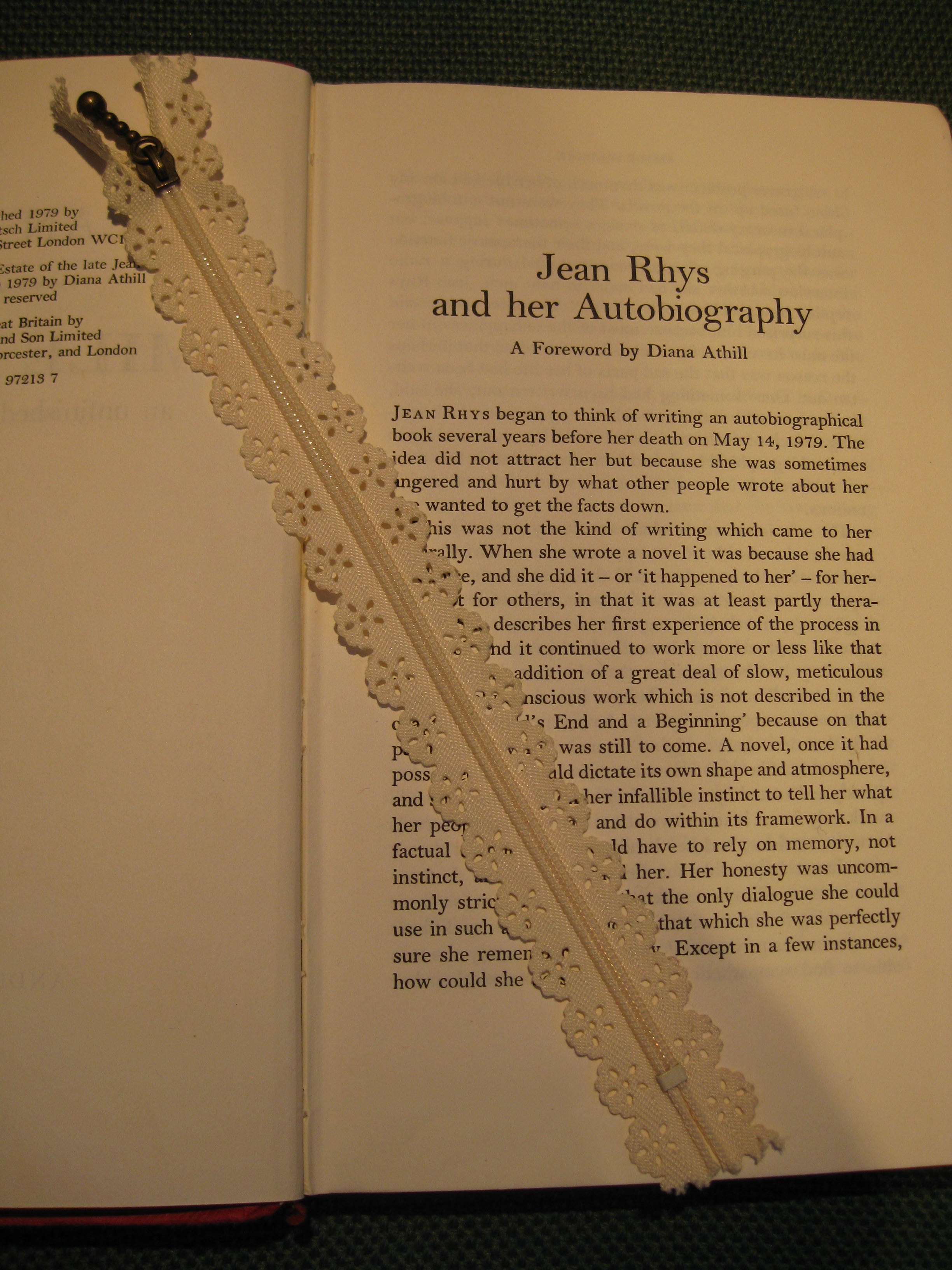
First page of the introduction to Smile Please by Diana Athill, Jean Rhys's unfinished autobiography.
First page of Diana Athill’s introduction to  Smile Please, Jean Rhys’s unfinished autobiography.

When she told Rhys about the incident the next morning, the author’s reaction was: ‘“Oh good!” Because she’d been telling people that she’d heard suspicious people creeping about outside at night and they’d all told her she was imagining it.’

Rhys was famously paranoid – something she herself admitted. ‘Victim’ is another term readily associated with her, although this was something that used to make her angry. ‘There was a lot of violence in Jean’, Athill says. ‘She used to get very, very cross when people said she was a victim because she knew perfectly well, in her heart of hearts, that she was pretty fierce.’

Rhys’s literary ferocity combined with her helplessness in everyday matters created the circumstances for her collaboration with Athill – one of the most important in recent literary history.

Diana Athill’s collection of short stories Midsummer Night in the Workhouse is published by Persephone Books. Her selected memoirs Life Class is published by Granta Books.

A True Story

Emily and I have vivid memories of the moment when we first admitted that we were both secretly writing: the bowls of garlicky spaghetti we were eating; the acquaintance who unexpectedly showed up at the restaurant, putting a stop to our conversation; the way we picked up where we’d left off as we wandered through a shopping mall on our way home.

That discussion revealed some differences in our main motivations. Emily was driven by a desire to tell gripping stories whereas – ridiculously, in retrospect – that didn’t much interest me. My imagination was more fired by the psychology of characters and the cadences of individual lines.

A year later, when we gathered the courage to swap drafts, Emily sent me a fully formed story, while my pages comprised a series of vignettes with no discernible narrative. I still remember the first scene I read from Emily’s pen: a girl hunched over a sink in a drab Parisian hotel room, rinsing blood from her clothes while her boyfriend looked on. I still remember the tension that mounted as I turned the pages, the male character metamorphosing into a mosquito. The story ended with two possibilities hanging in the balance: perhaps the transformation had been real or perhaps it was the product of the girl’s unhinged mind.

Emily’s fiction has become increasingly stamped with her own unique style while still containing traces of those early literary influences: Jean Rhys, Haruki Murakami and Daphne du Maurier. But even those first efforts contained the beginnings of the melodic elegance and taut precision that I have come to so admire in Emily’s work. Many of her characters have lingered long in my mind: Loll, the Western nightclub hostess in Ōsaka’s Moonglow bar, who mixes cocktails for breakfast and wears long platinum blond wigs over her dark razor-cut hair; Nigel, the nylon-suited twenty-seven year-old, who is devoted to his elderly wife ‘Mrs Brewster’; Violet Wyndham, long-time principal of the Wyndham School of Ballet and Modern Dance, who wears stage makeup, dyes her hair flame red and cuts a controversial figure in the local town.

Creative Commons License

From Emily I learned that characters and cadences can only be enhanced by a good, old-fashioned, page-turning plot. But, much as she loves a great story, in her non-fiction she never gives way to the temptation to embellish or distort. ‘Is that quite right?’ Emily often asks when we are co-writing a literary feature, ‘Do we really believe that?’

When I came to write my PhD, I could often hear Emily’s voice in my head: ‘Is that a claim you’re prepared to stand by?’ she would ask. So, although she hasn’t read a word of my thesis, her influence is imprinted on every page.

The best story, Emily has taught me, is always the true story. It is the job of the non-fiction writer to draw out its inherent intrigue, tension and significance – something we endeavour to do on this site each and every time we unearth one of the hidden friendships of the women who went before us.

What I’ve Learned from Emma Claire Sweeney

Drawing inspiration from Diana Athill and Jean Rhys, this month we take up the challenge to let each other know some of the things we’ve learned from the experience of regularly reading our friend’s writing.

The first time Emma Claire and I swapped pieces of work, we each printed out a short story we’d written, tucked it into an envelope fixed with airmail stamps and then waited with considerable trepidation for a postal reply.

I was living on the Japanese island of Shikoku at the time. Emma Claire, whose home had previously been a ninety-minute drive away, was now back in Britain, at her parents’ house in Birkenhead. A year had passed since we’d each confessed our secret ambitions to write, but it had taken us all this time to get up the nerve to show the other what we were working on.

View from Matsuyama Castle (the town where I used to live) by Jyo81 (Creative Commons licence)

Today, when Em and I exchange writing so frequently, this seems, on the one hand, extremely timid. But on the other, we probably did have some cause to worry – not just that our own efforts wouldn’t be good enough – but about how our friendship would be affected if we didn’t like each other’s prose styles.

Thankfully, the opposite turned out to be true, which is not to say that those early stories were much good. We were still grappling with the basics: how to pace a story, when to show and when to tell, and (in my case) how to write in grammatical sentences.

Nonetheless, Emma Claire’s use of language, infused with sensory detail, immediately pulled me in. In those early years, the stories she sent me were most often inspired by her experiences of living in Japan and her backpacking travels around South East Asia. I still easily recall a scene aboard a cramped Mekong river barge, ‘a garland of white jasmine petals and pink carnations’ swinging ‘hypnotically’ at the boat’s bow.

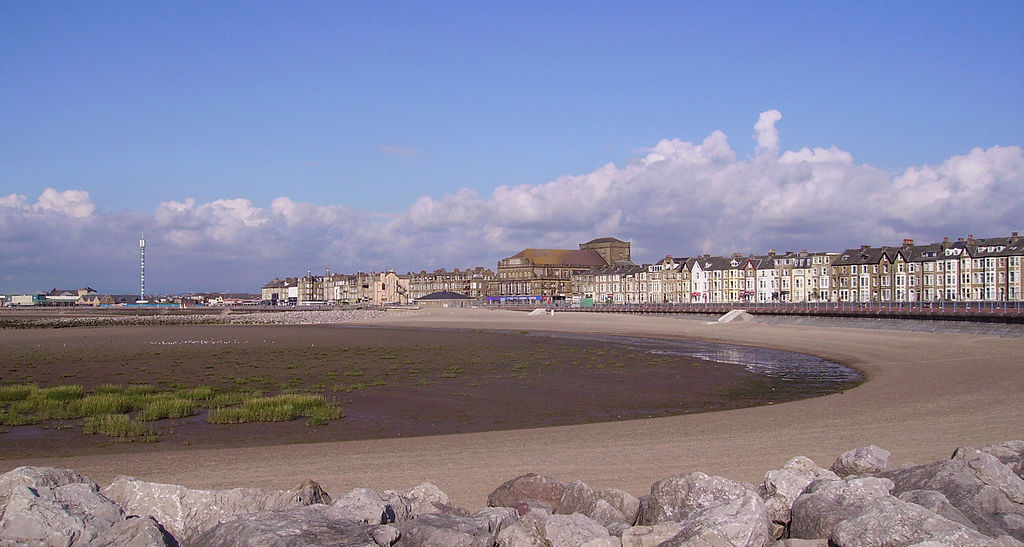
More recently, her fiction has centred on places closer to her roots. Like the novel she’s close to finishing, my favourite short story of hers is set in the seaside town of Morecambe. ‘The Taj Mahal of the North’, exemplifies so much that I admire about Em’s writing: the warmth of her voice on the page; her compassion for her characters; her ability to make the ‘ordinary’ seem suddenly startling and new.

Morecambe by Immanuel Giel (Creative Commons licence)

I love her descriptions of the thriving resort of yesteryear – ‘the thick scent of the sea… the honky-tonk noises of the amusement arcades, and the couples sharing sundaes in the ice-cream parlour’. There’s a melancholy beauty to the Morecambe of today too, as seen through the eyes of the elderly male narrator who laments the demise of ‘the bath-houses and theatres’ where he spent his youth, ‘all standing derelict and converted into discotheques’.

This is writing that flows with ease. A reader would never know how many revisions it’s been through, how boldly its author has reshaped her story, removing characters, reordering scenes and, as Athill once recalled Rhys saying, being ready to ‘cut, cut, cut’.

Emma Claire’s example has encouraged me to stick with many a project that isn’t working yet and to take brave decisions when it comes to rewriting, completely replotting a novel for instance, or ditching a once-loved narrator: decisions that are made that bit easier when you know you’re guaranteed to have a writer friend beside you, every step of the way.

Diana Athill and Jean Rhys

Prostitution, abortion, failed marriages and alcoholism: accounts of Jean Rhys’s story tend to paint her as a tragic femme fatale. But these facets make up only part of the colourful life that she’d weave so hauntingly into her fiction.

Of white Creole heritage, Ella Gwendoline Rees Williams was born in 1890 on the Caribbean island of Dominica. After emigrating to Europe in her late teens, she attended a girls’ boarding school in Britain, and later spent years living a financially precarious existence in bohemian Paris and London. This included periods as a chorus girl and artist’s model – experiences she’d later draw on in her lyrical early novels.

But works like Voyage in the Dark and Good Morning, Midnight – which takes its title from a poem by Emily Dickinson – initially met with only limited success.

In middle age, Rhys retreated from the gritty glamour of her earlier existence. Now living in a remote country cottage, she upped her alcohol intake to a bottle of whisky a day and all but disappeared from the public’s consciousness.

Literature lovers owe a great debt to the editor Diana Athill for the part she played in putting Rhys back on the literary map. When Athill’s publishing house, André Deutsch, committed itself to Wide Sargasso Sea, Rhys’s daring prequel to Jane Eyre, the author let the firm know that they could have the completed manuscript within six to nine months.

Image used with the kind permission of Penguin Books.

Six to nine months turned into a year. A year turned into five, six, and then seven… Throughout this period, Athill, along with her fellow editor Francis Wyndham, encouraged Rhys by letter, and neither of them ever lost their belief in her phenomenal talent.

Athill was already a published writer herself, of short stories and a first volume of memoir by that stage. Born close to two decades after Rhys, Athill, who’d grown up on a thousand-acre estate in the British county of Norfolk, came from a very different social background. But she too flouted convention: by going to Oxford University and then into a career in publishing, rather than settling down to married life as so many of her female friends had done.

The two, who’d been corresponding for seven years, had still never met when Rhys agreed to bring her almost-finished manuscript to London. They’d arranged to have lunch together, but, the day before, Athill received a panicked phone call from the manager of the hotel where the author was staying. Rhys had suffered a heart attack.

Instead of the planned champagne celebrations, she was rushed into hospital, and so the pair first really got to know each other during the following weeks of Rhys’s convalescence. Later, Athill would recall that the experience ‘with all the usual intimacies of nightdress washing, toothpaste buying and so on, plunged us into the deepest end of friendship’.

Although there had only been a few lines missing from Rhys’s manuscript at the time of her heart attack, it took her a further two years to complete it. But nine years after taking on the book as an editor, Athill travelled from London to Devon to collect Wide Sargasso Sea in person.

Its great success would bring Rhys the celebrated literary status that had always eluded her in her youth.

Athill, too, would go on to enjoy a hugely successful old age, with the release of several more books, including Stet, the memoir of her days as an editor, and the award-winning Somewhere Towards the End.

Image used with the kind permission of Granta Books.

Activity

Diana Athill has said that she learned much about concision and clarity from Jean Rhys – lessons that she was able to draw on in her own writing. This month, we’ll let each other know the lessons we’ve learned from many years spent reading and commenting on each other’s work.


So Many Unexpected Connections

As we mentioned in our first post of the month, it was one of our blog readers, Sarah Emsley, who told us about the friendship of L.M. Montgomery and Nora Lefurgey.

We’d got to know Sarah through her website and her support of Something Rhymed. Forming this kind of unexpected connection, often across the seas, has been one of the real pleasures we’ve encountered as a direct result of setting up our project.

Since beginning Something Rhymed at the start of this year, we’ve profiled the friendships of eleven pairs of female authors. But, of course, these women’s relationships with other writers didn’t stop with a single friend. Through our research we’ve learned about other important connections between different authors we’ve featured on this site.

Winifred Holtby, lovingly memorialised by Vera Brittain in Testament of Friendship, had earlier written a biography of her own: a book about Virginia Woolf. George Eliot, often believed to have been scornful of Jane Austen’s work, in fact studied the novels of her forebear in preparation for beginning to write her own fiction.

One of this month’s authors, L.M. Montgomery, felt a sense of affinity with Eliot. Mathilde Blind’s early biography of Eliot had such an impact on the then young and aspiring Montgomery that several of its words and phrases found their way into her own journals.

Elizabeth Gaskell was friends, not just with Charlotte Brontë, but also with Harriet Beecher Stowe. Stowe, as we wrote in October, was such an admirer of Charlotte Brontë that she once asked a medium to help her try to make contact with the late author’s ghost.

A planchette - the kind of device once used by Harriet Beecher Stowe, to try and make contact with the ghost of Charlotte Bronte. (Creative Commons licence)
A planchette – the kind of device once used by Harriet Beecher Stowe, to try and make contact with the ghost of Charlotte Bronte. (Creative Commons licence)

One half of next month’s pair of writers was also greatly influenced by Brontë, but she adopted a less other-worldly approach. Jean Rhys’s most famous book Wide Sargasso Sea resurrects the story of Antoinette Cosway, her reimagined version of the character of Bertha Mason, the ‘madwoman’ who’d previously languished in the attic of Brontë’s novel Jane Eyre.

We look forward to sharing more of Rhys’s own story with you in our first post of December, next week, and also continuing to discover many more important links between the great female authors – connections that often transcended their historical eras.

From Literary Protégée to Competition Rival: our interview with Madeline Miller

We were drawn to the friendship between Nora Lefurgey and L. M. Montgomery because it endured despite marked differences in their literary standings: while Anne of Green Gables propelled Montgomery to international fame, Lefurgey’s novel gathered dust in the proverbial drawer.

Of course, the prospect of rivalry does not end when both friends are published. Then there are questions of sales and reviews and awards. We’d been intrigued, therefore, when it was announced that both debut novelist, Madeline Miller, and multi award-winning author, Ann Patchett, had been shortlisted for the 2012 Orange Prize since Madeline had previously been one of a Ann’s protégées.


Ann Patchett. Creative Commons License.

We met Madeline to ask her about the transition from literary mentorship to competition rivals.

Madeline explains that she had always been a great fan of the established author’s work, and that she counts Truth and Beauty, Ann’s memoir about her friendship with fellow writer Lucy Grealy, as one of her favourite books of all time.

Early in her career, Madeline had been thrilled to receive a glowing blurb from Ann for the publisher’s proof copy of her debut novel, The Song of Achilles. At this stage, Madeline had never met Ann, this novelist who had unexpectedly done her such a good turn. Evidently still touched by the older author’s generosity, she tells us about how they finally came face-to-face.

Fortuitously, Ann had been due to give a reading at Madeline’s local book store, and so Miller bought tickets, intending to introduce herself after the event. When, on the night, an audience member asked for a reading recommendation, Madeline was delighted to hear the celebrated author single out the forthcoming Song of Achilles for praise. She was even more surprised when Ann suddenly looked up, right into Madeline’s eyes, and introduced her to the crowd.

Ann proceeded to share the limelight with the younger author, who couldn’t fathom how she had been recognised. She jokes that she had been ready to put it down to Ann’s magical powers until her fiancé later confessed that he was the one to have pointed her out. ‘But she does have magical powers,’ Madeline laughs, ‘I stand by that!’

Ann’s kindness didn’t stop there. The pair struck up an email correspondence, and Ann generously shared the benefits of her own longer experience as a published author. Madeline is particularly grateful for Ann’s advice to steer clear of reviews, which give an exaggerated sense of both the positive and the negative, encouraging the writer to focus on the outward expressions of literary “success” rather than drawing on internal inspiration. Ann also shared her secret to a fulfilled writing life: There are times for writing and times for living, Madeline remembers Ann once saying, and one feeds the other.

The next time the pair met in person, it was on Ann’s instigation: she invited Madeline to read at Parnassus Books – the independent store that she co-owns in Nashville, Tennessee. It was there the two novelists discovered that they’d both made it onto the short list for the 2012 Orange Prize (now the Baileys Women’s Prize) – an award that recognises the work of female novelists.

It could have been a situation fraught with stress: although a game-changer for the debut author, Madeline now found herself pitted against her mentor.

But, instead, Ann, who had already won the prize back in 2002, took great pleasure in the opportunity this time to share the limelight with her protégée. When the date of the prize ceremony was announced, Ann realised that she couldn’t make it over to Britain at that time. She was glad that Madeline would be able to attend, and she even loaned her competitor one of her own outfits that she felt might be particularly suitable for the Orange Prize do: a beautiful dress of tangerine silk.

Madeline Miller wearing the dress she loaned from Ann Patchett.

When the judges revealed that they were awarding the prize to Madeline Miller for The Song of Achilles, the young writer keenly acknowledged her indebtedness to her mentor in her acceptance speech. ‘I got to go and help represent her book as well,’ she says.

The competition seems to have actually strengthened their relationship. In fact, Madeline tells us that Ann was not the only one eager to congratulate her. The award, she says, ‘fostered a sense of collegiality’ amongst all its female nominees.

The friendship of Lefurgey and Montgomery taught us that creative rivalry can be endured, while the example of Miller and Patchett shows that it can even be enjoyed.

A shorter version of this interview was originally included in our feature in Mslexia Issue 57. 

Diaries, Diversions and Double Beds

As a young woman, L.M. Montgomery, the woman who would later publish the famous Anne of Green Gables series, kept a giddy collaborative journal with her writer friend and housemate, Nora Lefurgey. Inspired by them, we have written a joint diary post about a trip we made together to Ilkley.

Emily: We get off to a slower-than-expected start when, on arriving at King’s Cross railway station, the board tells us our train has been cancelled. But it doesn’t maGregPhoto.comtter: our Something Rhymed event at the Ilkley Literature Festival isn’t until tomorrow – we’ve allowed ourselves an extra day for lots of rehearsing – and even though we’ve arranged to meet our friends at the town’s Playhouse bar later, we still have plenty of time.

Plus, with the two of us together, these things are always all right; they would be even if we were cutting it fine. 

An hour or so later, we are on the train making our journey north. I plan to work on a blog post that’s set to go live tomorrow, while Emma Claire puts the final touches to an article we’ve written for Shooter Lit Mag. But we keep talking, and so we don’t get as much done as we’d have liked.

Emma Claire: The article is about Emily Dickinson, and so I have been reading her letters and am itching to share my findings with Em: the only friend who I know for sure will find Dickinson’s love life as fascinating as I do. DespitGregPhoto.come at least one proposal of marriage; a darkly mysterious correspondence with someone she called ‘Master’; and a late-life erotic liaison with a man eighteen years her senior, Dickinson famously never married. And yet, as an adolescent, she had harboured such high hopes of romance. I can’t help disturbing Em from her blog post to share this snippet from one of Dickinson’s letters: ‘I am growing handsome very fast indeed! I expect I shall be the belle of Amherst when I reach my 17th year. I don’t doubt that I will have perfect crowds of admirers at that age. Then how shall I delight to make them await my bidding and with what delight shall I witness their suspense while I make my final decision’. Who would have thought that such a sociable creature would have become mythologised as a crazed recluse?GregPhoto.com

Emily: When the man with the refreshments trolley reaches us he says ‘What can I get you, girls?’ We wonder for how long people will keep calling us that. We are almost thirty-five.

Emma Claire: Now that Emily has pointed it out, I keep noticing people’s tendency to refer to us as ‘girls’. We got to have a brief chat with Edna O’Brien at tGregPhoto.comhe Small Wonder Festival recently and, although we were there in our role as lecturers accompanying our New York University students, she greeted us affectionately with the words: ‘Two girls!’ Both with Edna O’Brien and with the man on the train, I found myself quite enjoying the image of us as young friends – perhaps because, in both cases, their tones seemed wistful rather than patronising. Life’s thrown quite a lot at Emily and me during the dozen or so years since we first met, beating much of our youthful naivety out of us. And yet, now that we’re far closer to forty than twenty, I feel as if my friendship with Emily has helped me not only to mature but also to prolong my girlhood.   

GregPhoto.comEmily: Through the window, we pick out places that bring back lots of memories: towns I remember from days that seem distant, when I used to commute to London from my old flat in Leeds every week. As we pull into Grantham, Emma Claire says she always recalls switching trains here, stepping down to take the much slower service to the village in Lincolnshire where I lived in my mid-twenties. Ever since I first got to know her, Em has been a regular house guest.

Emma Claire: During the years when I was living in central London and Emily and her partner were moving between various towns and villages, my visits to them always felt like mini-holidays. By the time I reached Grantham, I would already have begun to unwind. My memories of those weekends are full of small pleasures: picking rocket from tGregPhoto.comheir back garden; mixing gin with triple sec and a squeeze of lemon; shopping for sushi-fresh fish in their local market.

Since they moved to London and we started SomethingRhymed.com, I have become a far more frequent overnight guest – something that particularly struck me this weekend when Emily and her partner came over to my place for breakfast on their way to other friends. It had been five years since Emily’s partner had visited my house, and yet these days he welcomes me into theirs on an almost weekly basis.  

GregPhoto.com

Emily: When we arrive in Ilkley at last, we find our hotel with minimal trouble. Phone maps have made everything easier than it used to be, but it’s still far from unusual for us to get lost, particularly when we are chatting as we wander.

Through the front door, in the narrow corridor, Emma Claire, who’s made theGregPhoto.com two-night booking, gives her name to the man on reception. He nods, but seems strangely reluctant to show us to our room, and so we wait with our bags while he disappears out the back. We can hear the hum of his voice. He seems to be trying to find someone, anyone, else to show us to where we will be sleeping.

When he emerges at last, unsuccessful apparently, he leads us up the stairs. In the room, we see a large bed for two. The man talks us hurriedly through the facilities, his eyes focused away.

Once Emma Claire has explained that she’d requested a twin, our host visibly relaxes. He insists on showing us to three different rooms, asking us to take our pick. On our own again, with the door closed, we laugh about what’s just happened.

Emma Claire: ButGregPhoto.com we also feel that we’ve been given an insight into what it could be like for gay couples on their travels, and the way that such situations could become far more tiresome than funny. But we keep on laughing, wondering if there’ll ever come a day – now that we’re really no longer girls – when we might feel flush enough to book separate rooms. 

Emily: It’s not long before we have to get back out to meet Gail and Irenosen, also in town for the festival. The sky is dark and brooding and we are walking along the sloping streets, neither of us entirely sure where the Playhouse is, despite having been to Ilkey before – and in my case to the theatre itself.GregPhoto.com

Over the years, Em and I have got ourselves lost in so many locations: along the country roads of Japan’s Ehime Prefecture, circling the streets of Barreiro in Portugal, and on several nights out in London. This time, though, we keep up today’s earlier form and find our way fairly quickly – not that it would have mattered if we hadn’t, not really, with the two of us together.