Dear Something Rhymed readers … after a very long time

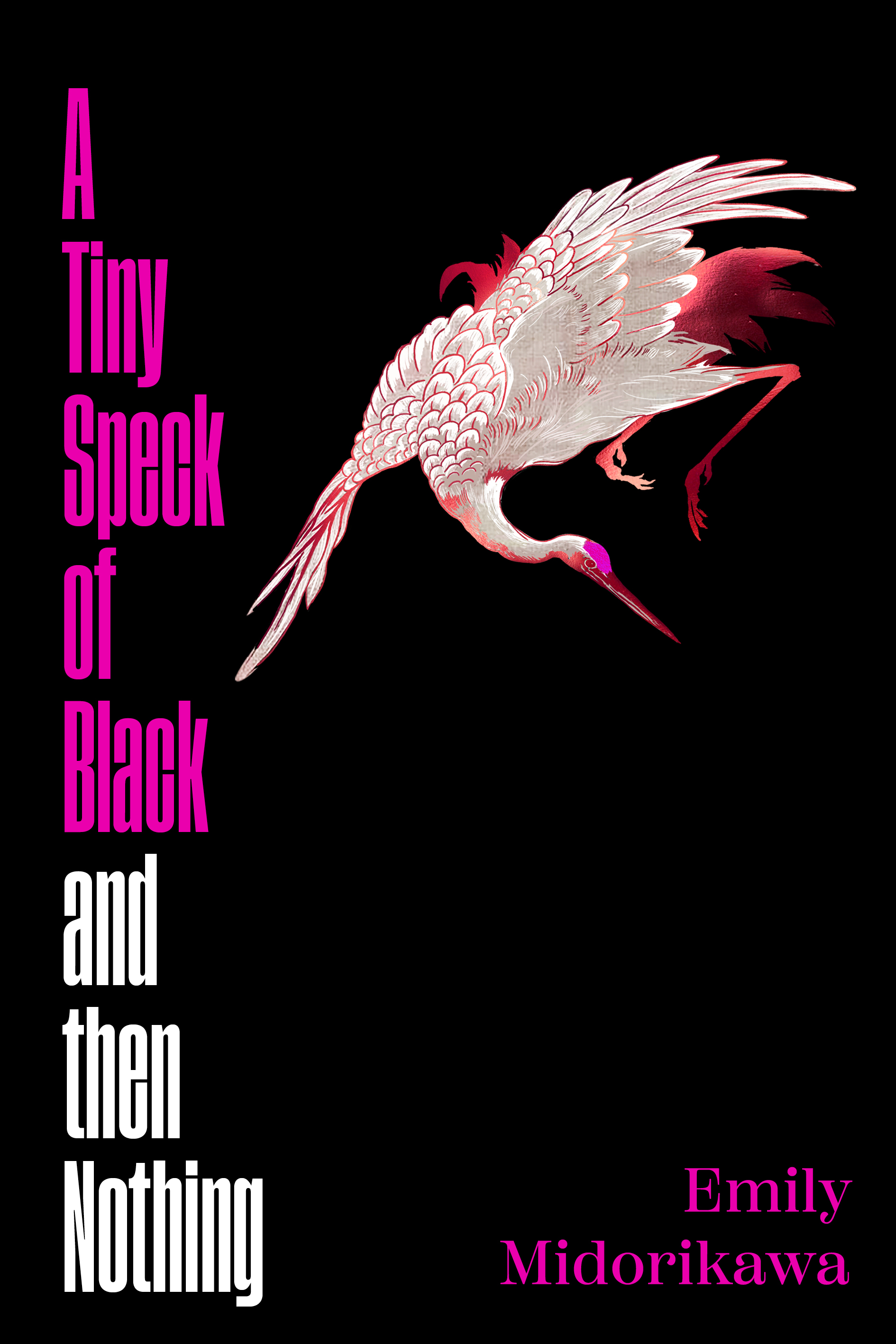
We hope you are well, and that you might be interested in the news that one of us has a new book out. Emily’s debut novel, A Tiny Speck of Black and then Nothing is set in the Japanese city of Osaka in the early 2000s. It’s about the complicated friendship between two young women – a schoolteacher and a nightclub hostess – and what happens when one of them suddenly disappears.

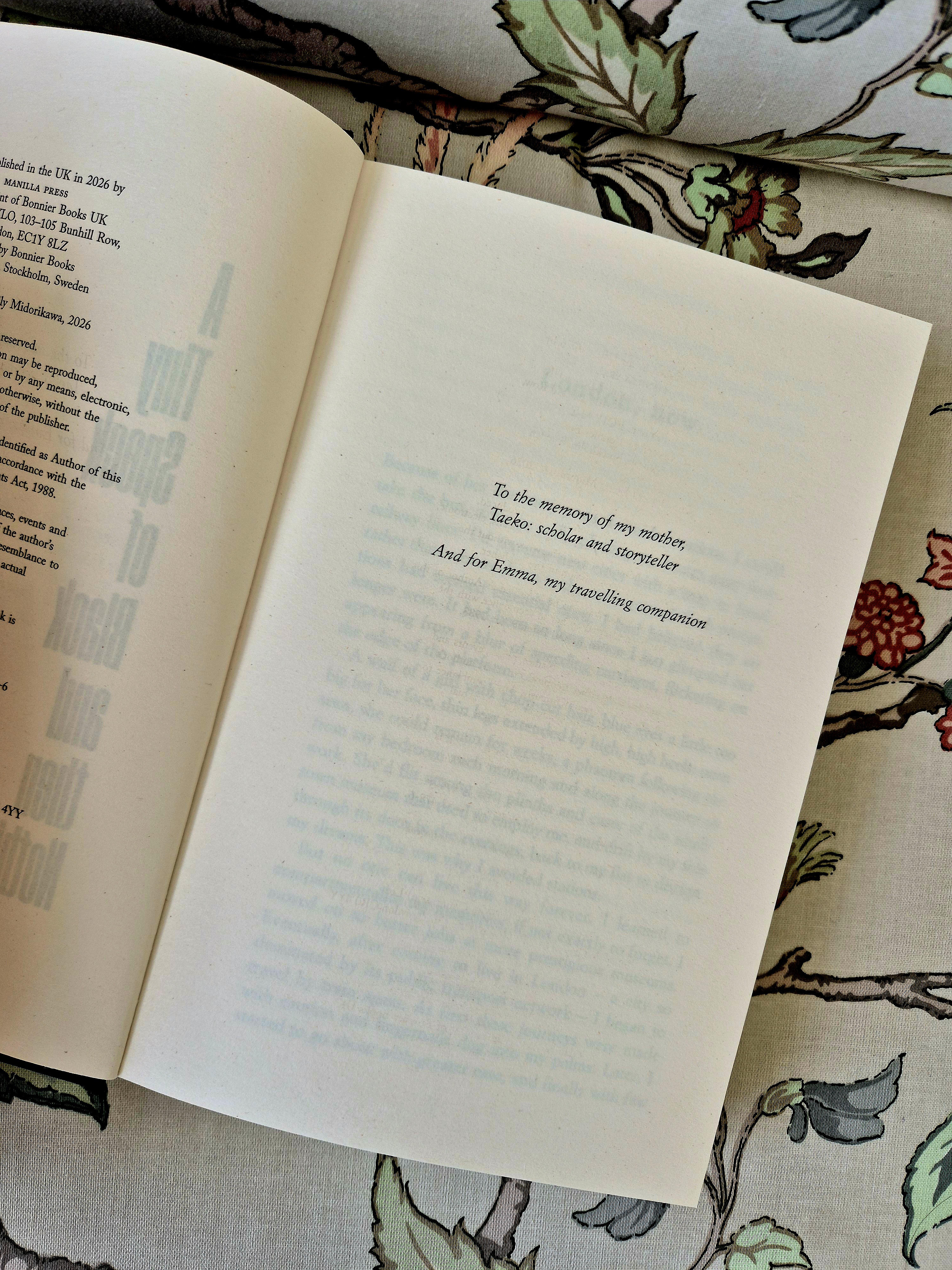
Unlike A Secret Sisterhood: The literary friendships of Jane Austen, Charlotte Brontë, George Eliot and Virginia Woolf, which we coauthored, only Emily’s name appears as the author on the cover this time. But Emma is not entirely absent from the text. Emily included a tribute to her in the Acknowledgements pages and the novel is also dedicated to her.
As Emily narrates in a post on her personal website, A Tiny Speck of Black and then Nothing’s path to publication has been long, convoluted and strange. Readers with long memories might recall from earlier posts like this one that her friendship with Emma began when the two were both young English language teachers working in Japan in roughly the same period as which the novel is set.

The early 2000s is also, incidentally, the period in which Emily began writing A Tiny Speck of Black and then Nothing. This means that the novel’s journey from first rough scribblings to bookshop shelves took over twenty years! And Emma has, of course, been at her side all the way, giving feedback on multiple drafts and offering writerly advice and encouragement.

Having begun the book when she was a young woman in her twenties, Emily worked hard on it for many years. It was eventually taken on by a literary agent who submitted it to countless publishers, but, although it got tantalising close on several occasions (and also won the Lucy Cavendish Fiction Prize for unpublished female writers in 2015), it never quite made it into print.

Eventually, Emily decided to put A Tiny Speck of Black and then Nothing aside to concentrate on other projects, such as the literary friendship blog, Something Rhymed, which she ran with Emma, their 2017 book A Secret Sisterhood and her 2021 solo-authored group biography Out of the Shadows: Six Visionary Victorian Women in Search of a Public Voice.

In 2024, however, Emily received an email from her literary agent letting her know that an editor who’d read the novel’s manuscript some years before, at a time when circumstances prevented her from acquiring it, was interested in taking another look. This was followed, a few weeks later, with an offer from Manilla Press to publish the book, plus the prospect of many more months thoroughly revising those pages to get them ready for the novel’s release last week.
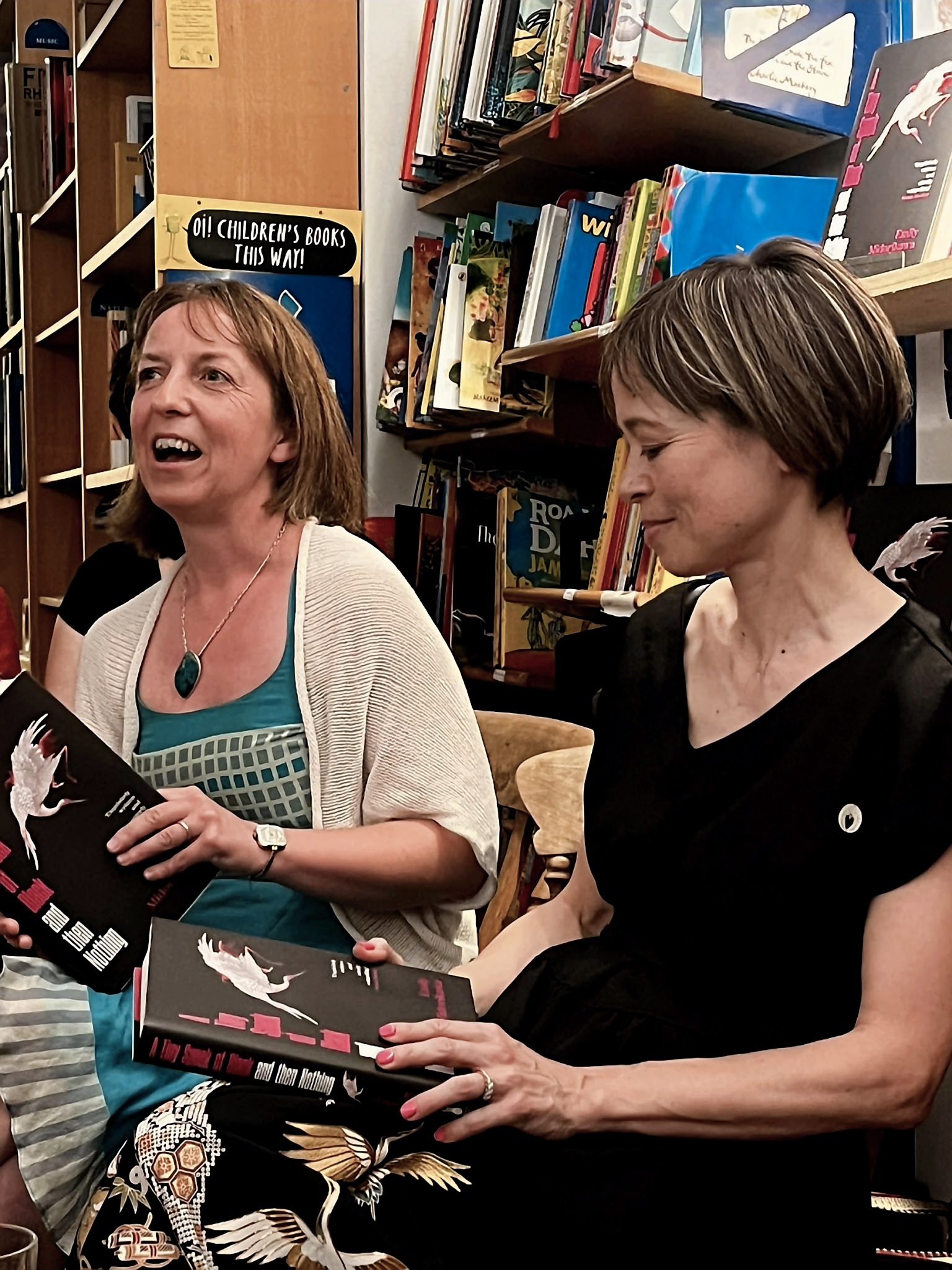
The questions Emma (left) asked at the book launch were informed not only by her reading of the book, but also our many years of friendship.

This was, of course, immensely exciting for Emily and, as you’d expect, Emma was one of the first people with whom she shared the astonishing news. But the idea of returning to a manuscript that had been abandoned for the best part of a decade was also daunting, and she was glad to have Emma to turn to for guidance and support, just as they had done for each other on so many past occasions.

When Emily’s publisher asked her to suggest someone to chair the discussion at her London book launch, held at the fantastic independent Burley Fisher Books, there really was only one possible choice in her mind and she was thrilled when Emma said yes.

Although we’ve shared a stage on many past occasions, particularly events related to Something Rhymed and A Secret Sisterhood, we have had only limited practice at interviewing each other, so in some ways this was an unusual experience. On the other hand, since we know each other so well, there was something about sitting there before the audience in that packed bookshop that evening that felt incredibly familiar. You could say that it felt quite simply like two old friends getting together for a chat, which really we suppose it was.

While neither of us has turned our back on writing nonfiction, we have, in fact, both been working on fiction more recently. Emma is writing a novel, Magpies, about a biographer whose life spins out of control in the wake of the publication of her latest book, whose subject is Virginia’s Woolf’s half-sister, Laura Stephen, who died in obscurity in a mental asylum.

A Tiny Speck of Black and then Nothing is published by Manilla Press and is available as a hardback, ebook and audiobook. In the UK, copies are available from Blackwell’sWaterstonesBookshop.OrgAmazon or your favourite independent bookshop.

The US e-book, published by Open Road on 4 August, is available for pre-ordering from Barnes & Noble, Bookshop.OrgAmazon and independent bookstores. The US paperback will be released in November and will be available for pre-ordering soon. (The audiobook is already available in the US and Canada, as it is elsewhere.)

If you would like to keep up with Emily, through monthly memoir-based essays relating to her novel, you can sign up for her newsletter here.

And for dispatches from Emma’s new life at The Little Goat Barn writing retreat in North Wales with Jonathan Ruppin, her ex-London literary agent husband, subscribe for free to The 400-year-old Library Substack.

A True Story

Emily and I have vivid memories of the moment when we first admitted that we were both secretly writing: the bowls of garlicky spaghetti we were eating; the acquaintance who unexpectedly showed up at the restaurant, putting a stop to our conversation; the way we picked up where we’d left off as we wandered through a shopping mall on our way home.

That discussion revealed some differences in our main motivations. Emily was driven by a desire to tell gripping stories whereas – ridiculously, in retrospect – that didn’t much interest me. My imagination was more fired by the psychology of characters and the cadences of individual lines.

A year later, when we gathered the courage to swap drafts, Emily sent me a fully formed story, while my pages comprised a series of vignettes with no discernible narrative. I still remember the first scene I read from Emily’s pen: a girl hunched over a sink in a drab Parisian hotel room, rinsing blood from her clothes while her boyfriend looked on. I still remember the tension that mounted as I turned the pages, the male character metamorphosing into a mosquito. The story ended with two possibilities hanging in the balance: perhaps the transformation had been real or perhaps it was the product of the girl’s unhinged mind.

Emily’s fiction has become increasingly stamped with her own unique style while still containing traces of those early literary influences: Jean Rhys, Haruki Murakami and Daphne du Maurier. But even those first efforts contained the beginnings of the melodic elegance and taut precision that I have come to so admire in Emily’s work. Many of her characters have lingered long in my mind: Loll, the Western nightclub hostess in Ōsaka’s Moonglow bar, who mixes cocktails for breakfast and wears long platinum blond wigs over her dark razor-cut hair; Nigel, the nylon-suited twenty-seven year-old, who is devoted to his elderly wife ‘Mrs Brewster’; Violet Wyndham, long-time principal of the Wyndham School of Ballet and Modern Dance, who wears stage makeup, dyes her hair flame red and cuts a controversial figure in the local town.

Creative Commons License

From Emily I learned that characters and cadences can only be enhanced by a good, old-fashioned, page-turning plot. But, much as she loves a great story, in her non-fiction she never gives way to the temptation to embellish or distort. ‘Is that quite right?’ Emily often asks when we are co-writing a literary feature, ‘Do we really believe that?’

When I came to write my PhD, I could often hear Emily’s voice in my head: ‘Is that a claim you’re prepared to stand by?’ she would ask. So, although she hasn’t read a word of my thesis, her influence is imprinted on every page.

The best story, Emily has taught me, is always the true story. It is the job of the non-fiction writer to draw out its inherent intrigue, tension and significance – something we endeavour to do on this site each and every time we unearth one of the hidden friendships of the women who went before us.

Thinking Back Through Our Mothers

By coincidence, this month Emily and I both recommended authors who were deeply influenced by Charlotte Brontë.

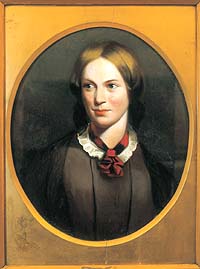
Portrait of Charlotte Brontë by J. H. Thompson  (Creative Commons License)
Portrait of Charlotte Brontë by J. H. Thompson
(Creative Commons License)

I will now treasure the copy of Jean Rhys’s After Leaving Mr MacKenzie, which Emily gave to me. Of course, Rhys’s most famous novel, Wide Sargasso Sea, which was inspired by Jane Eyre, imagines the first Mrs Rochester before she became consumed with madness and locked in the attic.

Rhys’s work, in turn, inspired Emily. She dedicated After Leaving Mr MacKenzie to me with the words: ‘When I first read this book, it changed the way I thought about writing forever’.

Just as Rhys’s descriptions of dingy hotel rooms and low-lit streets have lingered long in Emily’s imagination, I feel as if I have sat at the cocktail bar in A Tiny Speck of Black and then Nothing, Emily’s novel, chatting with the blind barman. There’s a scene in which the heroine searches for her missing friend in the labyrinthine alleyways of Osaka that has become so lodged in my own mind that I could almost mistake it for a memory. Moreover, the melodic quality of Emily’s novel sets up in duet with Rhys’s melancholic song.


Jean Rhys in the 1970s (Creative Commons License)
Jean Rhys in the 1970s
(Creative Commons License)

I also chose for Emily a writer whose work I engage with in my own writing. Virginia Woolf, although she famously overturned taboos of madness and sexuality, claimed that ‘one could hardly describe’ the life of her half-sister who was diagnosed with ‘imbecility’.

When I began my novel, The Waifs and Strays of Sea View Lodge, I set out to prove Woolf wrong by writing from the perspective of twin sisters, one of whom has profound learning disabilities. However, I ended up turning back to Woolf’s novels for inspiration on how to write about our flawed yet valiant attempts to read each other’s minds.

Woolf had an ambivalent relationship with Charlotte Brontë, whose genius she felt was hindered by her attempts to ape a male type of writing rather than creating a voice of her own. However, like Rhys’s Wide Sargasso Sea, it seems to me that Woolf’s Mrs Dalloway also owes a debt of gratitude to Charlotte Brontë’s Jane Eyre.  

Virginia Woolf (Creative Commons License)
Virginia Woolf
(Creative Commons License)

I first read Mrs Dalloway when I was in my late teens, and I still remember the passage that seduced me: ‘Like a nun withdrawing, or a child exploring a tower, she went upstairs, paused at the window, came to the bathroom. There was the green linoleum and a tap dripping. There was an emptiness about the heart of life; an attic room’.

How odd that this depiction of sexual grief so captured my adolescent imagination. I now wonder whether I subconsciously related it back to Bertha, Charlotte Brontë’s ‘mad woman in the attic’, whose story I found even more fascinating than that of Jane Eyre.

‘We think back through our mothers if we are women,’ Woolf claimed in A Room of One’s Own. In Mrs Dalloway and Wide Sargasso Sea we catch a glimpse of two authors doing just that: befriending and confronting their predecessor on the page. This, in turn, has been the founding philosophy of our quest on Something Rhymed. Together, Emily and I are gleaning tips about how to sustain our valuable friendship by thinking back through the successes and mistakes of our literary mothers – a lineage that runs from Brontë to Woolf and Rhys.