Frances Burney and Hester Thrale

When Emily met John Mullan at the Bloomsbury Institute, he suggested that we investigate the friendship between Frances Burney and Hester Thrale. We soon discovered a story full of intrigue and betrayal.

On a summer’s evening in 1778, Frances Burney’s father took her to Hester Thrale’s literary salon at Streatham Park. The grand occasion would have been intimidating indeed for the shy twenty-six-year-old writer, whose identity had only recently been revealed.

Burney had penned her novel, Evelina, at the dead of night and then audaciously published it anonymously without her parents’ consent. When her music-teacher father finally discovered its authorship, however, he astounded his daughter by not only giving his blessing but fizzing with such pride that he divulged the secret to his friend and employer, Hester Thrale.

A painting of Hester Thrale in 1771 by John Singleton Copley [Public domain], via Wikimedia Commons
London’s literati flocked to Thrale’s gatherings, attracted by the thirty-nine-year-old hostess’s wealth, ebullience, arrogance and wit. Thrale was delighted to introduce her friends to the mysterious author of the novel that was causing such a stir.

Thrale had literary ambitions of her own. She would go on to write a popular history book that failed to win over critics of the day but is now considered a radical pre-cursor to feminism, and she was a consummate memoirist, letter-writer and diarist. Perhaps envy soured Thrale’s pen that summer’s night in 1778 when she jotted in her journal that Burney’s ‘Conversation would be more pleasing if She thought less of herself’. Or perhaps fame really had gone to the young author’s head for a while. Either way, Thrale did admit that Burney’s ‘Merit cannot as a Writer be controverted’.

Despite Thrale’s mixed first impressions, she nonetheless welcomed Burney into her home, inviting her first for a weeklong visit and later for several months on end. Over the next six years, the pair forged an intense bond cemented by their shared wit and storytelling flair.

‘Irresistible Burney!’ Thrale wrote in one of her daily letters: ‘and who was ever like you for warm affection, cool Prudence, and steady Friendship!’ But this same ‘cool Prudence’, which Thrale once so admired, ended up causing a great rift between the two authors.

During her husband’s final illness, Thrale confessed to Burney her growing tenderness towards one of the musicians she employed: an impoverished Italian singer called Gabriel Mario Piozzi. Thrale felt determined that, after the death of her spouse, she would finally secure a love match.

Although Burney’s own father was a music teacher from a similar social milieu to Piozzi, she was horrified by the thought of her friend marrying a Catholic foreigner of lower social rank, and by what she saw as the emotional and financial abandonment of Thrale’s children. ‘Think a little’, Burney pleaded. ‘The mother of 5 children, 3 of them as Tall as herself, will never be forgiven for shewing so great an ascendance of passion over Reason’.

Thrale married Piozzi in 1784. From then on, Burney’s letters went unanswered and she was no longer welcome at the home of her former friend.

Frances Burney circa. 1784 painted by Edward Francisco Burney (1760-1848) [Public domain], via Wikimedia Commons
During the next thirty years and more, Burney ‘made every possible overture’ of friendship but Thrale, now Signora Piozzi, could no longer trust the woman she referred to as ‘l’aimable Traitesse’. But her name did continue to appear on the subscription list for Burney’s novels, as, indeed, did that of the young Jane Austen – an ardent fan.

Burney’s persistence may well have been motivated by an increased empathy with her former friend’s predicament. At the age of forty-one, Burney defied her father by marrying a penniless French Catholic and becoming known as Madame D’Arblay.

In 1817, Burney, now sixty-six, dared to call in on the seventy-five-year-old Thrale. ‘At the sound of my name’, Burney wrote immediately afterwards, ‘she came hastily from her Boudoir to receive me in the grand sallon’. But Thrale, suffering from asthma, was so embarrassed and agitated that she could not utter a single word.

Once she recovered, they sat together on a sofa and entered into a political debate. Though spirited, their conversation lacked the affection of old. And yet, they talked on as night fell, quite forgetting about dinner. When Burney finally realised the time and made to leave, Thrale affectionately thanked her for calling in. ‘Much surprised, & instantly touched,’ wrote Burney, ‘I turned back, & held out my hand. She gave me hers, & each hand again pressed the other’. And this late-life reconciliation endured.

Activity

Burney and Thrale often surprised each other. This month, we’ll take the opportunity to reflect on the unexpected things we have learnt while working together on Something Rhymed.

All Things Horror and Fantastic: Yen Ooi and Denise Saul

We were intrigued by Oriel Malet’s account of how she met Daphne du Maurier. In this month’s guest blog, two modern-day writers, Yen Ooi and Denise Saul, share their story of how they first became friends.

Yen: I spotted Denise at a writing masterclass nearly three years ago. There, we talked about characters, plot, tricks and tropes. I thought she was a fiction writer like myself, and only found out about her love and skill at poetry a little while later. On our first meeting, she seemed so serious and unassuming with her flask of tea and packed lunch. She still is, though I’m getting more of a glimpse of what drives her passion, and what riles her.

Our friendship grew slowly but surely with occasional coffee meet-ups and more writing classes. We talked mostly of our (surprising) shared interest in all things horror and fantastic. Though Denise definitely has a stronger stomach than I do, we are both intrigued by the horror stories that cultures present: today, in the past, at home in London and from our heritage. This side of Denise makes me smile, as it feels so different from her serious side: the poet.

I watched Denise at a poetry event earlier this year at The Poetry Cafe. The evening was pleasant and the people really warm. The basement, filled with poets, audience, family and friends, made it seem like a welcoming house party, where the entertainment was artistic, cultural and distinctive. Denise came on after the interval, and she read with grace and control. Her poetry painted vivid pictures of people and places that brought comforting smiles to our faces, yet they touched us with a sense of reality that demanded attention.

Many of us hide behind our writing, conjuring a new self from the words we make up, but Denise shows me through her work that it is possible to be true to yourself in your writing. And most importantly, that it is ok to do that.

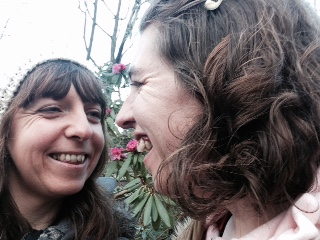
Yen Ooi (left) and Denise Saul (right)
Yen Ooi (left) and Denise Saul (right).

Denise: Yen and I first met at a fiction masterclass about three years ago. I remember her as the most serious writer in the group as she was focused on typing up her notes in the session. We had a chat afterwards about speculative fiction. It was evident that Yen was a natural storyteller. She has the ability to shift her stories from London to other places such as Malaysia or Japan.

We’re both fans of science fiction and horror. A year ago, Yen invited me to the science fiction convention, Worldcon, where she launched her novella, Sun: Queens of Earth, and also acted as a panellist in the same afternoon.

She is a multi-tasker who can work on several writing projects at the same time. It’s a quality that I admire because she always finds time to start her own projects and also help other writers with their writing strategies. Yen always has a number of projects on the go and yet always completes them successfully. It’s easy to see why she has such drive and passion for whatever she does. I recently found out that Yen is an accomplished musician who started playing the piano from the age of three.

I can understand why she sees herself as “a creator, thinker and do-er” and my first impression of Yen was that she embraces refreshingly new ways of literary thinking.

Yen Ooi’s second book, A Suspicious Collection of Short Stories, Poetry and Drawings will be published in July 2015. More information on Yen’s writings can be found on yenooi.com.

Denise Saul is a poet and academic. Her work can be found at www.denisesaul.co.uk

The Rivalry between Jane Austen’s Sister and Sister-Friend

This pendant is set with what is supposed to have been Jane Austen’s hair. A lock of which was set for Fanny Austen, and another sent to Jane’s dear friend, Anne Sharp.

Cassandra Austen took the time, just four days after her sister’s funeral, to pen a letter and send some treasured mementoes to Jane’s friend, the governess and amateur playwright Anne Sharp. It was the second letter she is known to have written after Jane’s death. The first was to Fanny Knight: the niece whom Anne once taught.

When I first learnt that Anne was the only person outside of the Austen family and household to receive such poignant trinkets, I assumed that the note accompanying Jane’s lock of hair, pair of belt clasps and silver needle would have been infused with a sense of shared love and grief for Jane.

But, when I tracked down Cassandra’s letter, I detected instead a barbed quality that hints at a deep conflict between Jane’s sister by birth and the sister-friend she singled out.

Letter from Cassandra to Anne (2)

I long to read the letter Anne sent to Cassandra, to measure for myself the friend’s ‘ardent feelings’ against the sister’s stoicism. But Anne’s voice has been largely silenced – like that of so many working women of the past.

In her dotage, Cassandra re-read all of Jane’s correspondence one last time. Secretly, she then removed from her cache all those letters she felt might compromise the mythology her family had constructed of Jane as a meek, conservative maiden aunt, who dabbled with storytelling in between chores. And finally Cassandra built up a fire and, one by one, fed her sister’s most personal words to the flames.

But surviving letters, like the one above, and several volumes of unpublished diaries have allowed us to reconstruct something of Jane’s incendiary relationship with a woman of lower social standing – a sister-friend who shared her fieriness, whose ‘ardent feelings’ provided a welcome contrast to her sister’s ‘tranquil’ restraint.

Cassandra’s envy of Anne’s intimacy with Jane emerges in her insistence that ‘What I have lost, no one but myself can know, you are not ignorant of her merits, but who can judge how I estimated them?’ Cassandra could have become close to Anne through their shared bereavement. After all, Jane had drawn both intelligent spinsters into her inner circle. But the sister found the sister-friend’s spirited personality a source of pain during this desolate time.

The letter is freighted with Cassandra’s conflicting emotions: her desire to honour her sister’s highly-valued relationship competing against the dual demands of snobbery and envy. She feels compelled to offer the hand of friendship to the woman her sister so loved: ‘If any thing should ever bring you into attainable distance from me we must meet my dear Miss Sharp’. But she will not go out of her way to visit the woman her sister called ‘my dearest Anne’, nor will she offer any specific hospitality.

So, imagine my surprise when I discovered that Anne stayed in Chawton Cottage with Cassandra for several weeks in 1820 – three years after Jane’s death. We know then that the fraught relationship between sister and sister-friend endured against the odds. But from this answer more questions arise: How did the pair move from competition to compassion? What took them from half-hearted invitations to residing under the same roof? How did their relationship develop and change during this time?

These questions send me back to the diaries, back to the letters that survived the flames, back into the realms of my own imagination where Anne sits beside Cassandra, reminiscing about their beloved Jane, a fire roaring in the grate.

Growing Mature Together

Emily and I have sometimes envied Vera Brittain and Winifred Holtby their shared university years. If we could defy time and pal up with just one of the pairs of writers that we’ve profiled on this site, I’m pretty sure that we’d both pick these friends: two women who ‘didn’t exactly grow up together’ but ‘grew mature together’ and considered that ‘the next best thing’.

Unlike them, we met after separate and rather different undergraduate experiences: Emily partying hard in London while I pored over books in Cambridge.

book stacks

In the best possible way, co-running Something Rhymed feels akin to studying together. We now spend hours on end searching the stacks at Senate House Library, and we regularly exchange bulging folders of notes. We’ve created for ourselves a second stab at studenthood – this time together and with a curriculum of our own.

This month I’ve relished the chance to re-read the poetry of Marianne Moore, which I’d first come across as an undergrad. We toyed at first with profiling Moore’s friendship with fellow modernist Hilda ‘H.D.’ Doolittle, who she met in 1905 when they were both studying at Bryn Mawr College, Pennsylvania. But we ended up becoming even more fascinated by a bond that began in 1934 when the middle-aged Moore took final-year undergraduate, Elizabeth Bishop, under her wing.

Both Emily and I have benefited from the wisdom of women writers older and more experienced than us and, as with Moore and Bishop, these mentorships have sometimes blossomed into friendships. Now that we teach ourselves, we’ve had the chance in our own small way to continue this intergenerational sisterhood.

Without ever really discussing it, we must have both come to the conclusion that – in the widest sense – the best students are also teachers; the best teachers, forever students. We each tend to enrol in one writing course per year – sometimes together, sometimes separately – to remind ourselves what it feels like to sit at the other side of the desk. And yet we were surprised (and heartened) to learn that a poet of Moore’s stature had taken this same approach.

Inspired by Moore, this month I’ve been attending Berko Writers’ screenwriting course, taught by Abigail Webber, formerly a commissioning editor and now a script consultant. I have written poetry, fiction and non-fiction over the years, taking my first steps into all of these forms as if entering familiar rooms. But screenwriting has always felt like a closed door – and one on which I felt nervous even to knock. My heart pounded so loudly during the first session at Berko Writers that I promised myself never to underestimate the courage it might take for one of my own students to step into my class.

The course has opened up that locked door, and screenplays no longer feel to me like a forbidden wing in literature’s house. Emily’s acting background and her storyteller’s skill lead me to suspect that she might one day turn her hand to scripts and that I might get to share with her the tips that I’ve recently gleaned.

Emily’s storytelling skill and lyricism were recognised last night at the awards ceremony for the prestigious Lucy Cavendish Fiction Prize 2015. Emily’s shortlisting opened up for her – and for me as her guest – the usually closed doors of the dining hall at this Cambridge College. Here we had the chance to chat over dinner with its president, Professor Janet Todd – a feminist heroine of ours. In the hall at Lucy Cavendish, among its students and fellows, I enjoyed the great privilege of cheering on my friend as she was announced the winner. As I sat there, watching her receive her prize, it dawned on me that this shared moment of celebration more than made up for our separate university years. Growing mature together is, in fact, the very best thing.

Emily Midorikawa is announced the winner of the Lucy Cavendish Fiction Prize 2015


Elizabeth Bishop and Marianne Moore

Elizabeth Bishop was in dire need of maternal affection. At five years old, she’d witnessed her own mother committed to an asylum: the last glimpse Bishop ever got of her.

In the mid-1930s, as a shy, bushy-haired student at the all-women’s Vassar College in Poughkeepsie, New York, Bishop devoured many poems by the older modernist writer Marianne Moore. Later, she’d wonder whether she would ever have become a poet if it hadn’t been for reading the likes of ‘Marriage’ and ‘Peter’.

Elizabeth Bishop. Image used with kind permission from the Elizabeth Bishop Society.

Moore was perhaps ready to adopt a literary daughter. Her own mother rarely left her side, watching while she wrote or busying herself in the adjacent room, ready to cast her sharp editorial eye over each new poem. During the last three decades of Mrs Moore’s life, the pair even shared a bed.

Moore may have had a surfeit of maternal attention, but she could connect with Bishop’s parental loss. During Moore’s infancy, her father had cut off his right hand in a fit of delusion and had then been committed to an asylum. She could not recollect a single memory of him.

When Moore was approached by an old childhood friend, now the librarian at Vassar College, she reluctantly agreed to meeting the twenty-three-year-old Bishop. The young woman rushed from Grand Central Station, relieved to have just about made it on time to their meeting place beneath the imposing lion statues that flank the New York Public Library. Moore, who wore two wrist watches, was already waiting for her. She cut a quaint old-fashioned figure, her rust-pink hair braided around her head, her man’s polo shirt two sizes too large.

Marianne Moore in 1935. Creative Commons License.

Despite Bishop’s nerves and Moore’s reservations, the pair hit it off immediately. The older writer soon placed her protégée’s work in an anthology, writing an insightful preface to the new poems. But there was always a familial aspect to their friendship as well as a literary connection: they would take trips to the circus and the cinema and to children’s talks at the Natural History Museum. And, however early Bishop showed up, she would always find Moore there ready and waiting.

Soon, Bishop was invited to the narrow over-crowded apartment that Moore shared with her mother in Brooklyn – the unlikely but popular meeting place for Moore’s coterie of fellow high-modernist friends, among them H.D., T.S. Eliot, Ezra Pound, Wallace Stevens and William Carlos Williams.

Elizabeth Bishop is standing on the right and Marianne Moore is sitting beside her. Other writers include the likes of W. H. Auden, Tennessee Williams and Gore Vidal. Image used with kind permission of the New York Times.

Unlike Moore and her mother – who impersonated each other to the extent that it was difficult to tell where one ended and the other began – Bishop retained her separate identity. Six years into their friendship, she sent her mentor her latest poem ‘Roosters’. Moore and her mother objected to what they considered Bishop’s vulgarity – particularly her reference to a ‘water-closet’! Staying up until the early hours of the morning, the mother-daughter duo rewrote the younger woman’s poem, removing everything that had affronted them. Although Bishop incorporated some of the changes, she retained her lavatorial images. And the friendship survived undented.

Activity:

In her old age, Moore soared to an extraordinary level of superstardom: appearing on the Tonight Show, featured on the cover of Esquire, inundated by fans who showed up at her door. But in her memoir of her friend, Bishop lovingly recalls how the elderly Moore continued to attend creative writing classes as a student (sometimes to the tutor’s horror!) and even enrolled in a dance school, where she learnt to tango.

This month, we will follow in Moore’s footsteps by embracing lifelong learning.

Cocktails and Candour

London buzzed with a carnival energy on the night Emily and I met for cocktails at the Hotel Café Royal. It was the evening before the Easter weekend and Piccadilly Circus milled with people who had just arrived or were just about to depart, almost everyone wheeling cases or carrying backpacks or cradling cones of spring flowers.

Something Rhymed’s April ‘challenge’ to follow in the footsteps of Agatha Christie and Dorothy L. Sayers provided the perfect excuse to embrace the city’s festive atmosphere. Surrounded by holidaymakers and all decked out in my cocktail dress, I took in afresh the grandeur of Regent Street – its buildings tall and white against the clear blue sky.

Inside the revolving doors of the Hotel Café Royal, I entered a marble lobby filled with tall vases of orchids, and the bustle of the street gave way to a hushed sense of glamour. It was easy to imagine Christie and Sayers, the Queens of Crime, meeting here with fellow members of the Detection Club, for their lavish club dinners.

The Café Royal, London (William Orpen, 1912). Creative Commons License.

Unlike the ‘shop talk’ that took up much of their usual meetings, the club’s spring and summer dinners focused more on celebration.

Now that Emily and I teach at the same university, co-write literary features and run Something Rhymed together, we have to remind ourselves to make time for purely socialising. But we long ago pledged to mark every writing success, however small. During the past few years this commitment to celebration has become more important still.

In the Green Bar, we toasted Something Rhymed over a pink champagne cocktail and a luridly blue martini, and we agreed just to chat for a while, putting off the task we’d set ourselves to compose our own set of literary rules.

We got on with that part of April’s activity in the distinctly less rarified surroundings of a Soho noodle joint, writing in between slugs of Asashi beer, and miraculously managing to avoid staining our dresses with broth.

This ramen shop brought to mind the early days of our friendship, when we both taught English in rural Japan, secretly writing in between classes. Looking back on the ways our friendship has developed since then, we realised that another unspoken ‘rule’ had developed over the years and that we had this to thank for the development of our collaboration: as well as committing ourselves to celebration we’ve also committed ourselves to candour.

Rules
Rules for Our Collaborative Work

I’ve learnt so much from Emily about the importance of honesty, and the courage it sometimes takes to speak the truth as we see it. This is not to say that we talk about all aspects of our lives: there remain subjects we keep to ourselves or are more likely to discuss with others. But whether we’re seeking advice on personal matters, critiquing each other’s fiction, dividing workloads, or thrashing out a line of enquiry in our collaborative writing, we always endeavour to speak our minds.

This fundamental tenet led us to formulate a few more specific rules. In terms of maintaining trust between each other, we’ll always be clear about which projects we’d like to work on together and which we’d prefer to tackle alone, and we’ve also agreed that we must never co-publish anything that we can’t both stand by. And in terms of establishing trust with our readers, we’ve promised always to acknowledge speculation.

In this way, we hope that our collaboration will thrive and, more importantly, that our friendship will endure for a lifetime.

Louise Doughty and Jacqui Lofthouse: Tortoises Rather Than Hares

A Class Act

Jacqui: I first met Louise twenty years ago, at the University of East Anglia, on a photo shoot for the Sunday Telegraph. We had both studied there, for our MA in Creative Writing under Malcolm Bradbury, but in different years.

Class Act
Jacqui Lofthouse (middle in black) and Louise Doughty (behind her to the left in polka dots).

It’s a moody photograph (the photographer told us ‘don’t smile, you’ll look stupid’) but the actual mood was celebratory. Louise was wearing a sleeveless polka dot dress and had a brilliant suntan. She looked very stylish and cool. We were both excited about the publication of our first novels. Louise’s was already out and mine was about to appear. I still couldn’t quite believe that I was about to be published by Hamish Hamilton and was mixing with other published authors.

Louise: Jacqui struck me immediately as enviably calm and serene.  We swapped notes on being students on the UEA MA and how neither of us felt regarded as the stars of our year – we laughed about that, and about how we were tortoises rather than hares.

The Polymath and the Will of Steel

Jacqui: Louise has been more focussed than me over the years, in terms of her writing, whereas I’ve been more distracted by entrepreneurial ventures, such as setting up my business coaching writers, but also by other art forms, returning to my love of drama and even having an interlude training to be a drama teacher. Right now, for example, I’m developing the business, finishing a second draft of a play, in discussion with a filmmaker and attending screen acting classes. Louise is focusing on her latest novel full-time. Some of this relates to financial decisions, but I think it’s also about our character types. She has a will of steel and I can’t stop myself diversifying.

Louise: Jacqui is more of a polymath than me: she’s much more plugged in to social media, has trained as a coach and run her own business.  I’ve focused very much on the novels and although that’s paid off to a certain extent I think her life is more interesting and varied than mine.

The Unrest Cure

Jacqui: One dinner that particularly stays with me was the night when I told Louise I was planning to train as a secondary school drama teacher. In the end, it was only a two year interlude, but it felt hard breaking the news that I was going to do something so different and apparently out of character. I was ready for a change, what Saki calls the ‘unrest cure’. I wanted to give something back to young people, to be more ‘out in the world’ but I remember, at that time, also feeling somewhat jaded with the literary world and saying ‘but what would you do?’ I don’t think Louise had an answer but I imagine she was thinking ‘I’d rather starve in my garret than do something as crazy as that!’ But she was gracious enough not to try to hold me back from something that I so clearly wanted to do. Those two years, in fact, served to remind me how vital writing is in my life; how impossible it is for me to do without it.

Girl Novelists’ Dry Martini Club

Louise: At one point, just for a laugh, we formed something called the Girl Novelists’ Dry Martini Club.  There were five of us and an agreement that whenever one of us signed a book deal, we would all go out for martinis.  It started out as just an in-joke between a group of friends but it got picked up by the media – I think I mentioned it on Radio 4’s Midweek – and the next thing we knew it was mentioned in articles and we received letters from women asking if they could join.  I thought it was a hoot when the Club made it into Jacqui’s satirical novel The Modigliani Girl.  Almost every aspect of writing and the writing world gets satirised in that book.

Silent 3

Jacqui: Louise introduced me to the novelist Charles Palliser at a reading we did together. I was awestruck because an old beau of mine had bought me a copy of Charles’ novel The Quincunx so it was clearly the book to have! Meeting Charles, who had real literary kudos, made me feel incredibly grown up, but more importantly, he is now a genuine friend, whose devotion to writing and books never fails to inspire. In turn, Charles introduced me to a number of other writers and we still meet for an annual dinner each January at Louise’s home and talk about the year we’ve had, sharing the ups and downs of the writing life – and indeed, of life beyond writing.

Louise: This writing group is Silent 3 (don’t ask me why it’s called that, no idea), which was set up by Robert Irwin, a renowned Arabic scholar who also writes science fiction. The group used to be very large and meet in a pub in central London once a month but has shrunk to a hard-core now and every January we all have dinner at my house and review our writing years – another member brings the food and I do the long table etc.

Louise Doughty and Jacqui Lofthouse

Rollercoaster

Louise: When I look back over the twenty years I’ve been publishing, it strikes me just how essential my writing friends have been: my other close writing buddy is the novelist Jill Dawson, but along with her and Jacqui there is a wider circle of writing friends, mostly women but not exclusively, who I feel I have really grown up with.  Those friends are incredibly important, partly because you know each other’s personal and domestic lives as well, but also because you know that the successes are hard-fought for and well-earned and the disappointments often arbitrary.  A writer’s life is such a rollercoaster of success and disappointment that it’s invaluable having friends that will understand and support you whatever part of the ride you are on.  Friends are far more important, at the end of the day, than finding an agent or a publisher.

Louise Doughty is the author of seven novels including Apple Tree Yard and Whatever You Love, which was shortlisted for the Costa Novel Award and longlisted for the Orange Prize for Fiction. She is also a critic and cultural commentator and broadcasts regularly for the BBC.

Jacqui Lofthouse is the author of four novels including Bluethroat Morning and The Modigliani Girl. She runs a mentoring and literary consultancy service for writers The Writing Coach.


A Motherhood of Writers, a Sisterhood of Readers

My heart sank when Emily challenged me to read The Unicorn by Iris Murdoch.

Although it is hardly in the spirit of Something Rhymed, I considered myself firmly in the Elizabeth Bowen camp. My copy of her Collected Stories accompanied me when I first left for college and has been packed and unpacked so many times since. When I got my first lecturing post, I put it on my syllabus, and nowadays I often quote Bowen to encourage my New York University students to focus on creativity during their time in the UK: ‘Imagination of my kind is most caught, most fired, most worked upon by the unfamiliar’.

My memories of reading Murdoch, on the other hand, are scant and chequered.

My cousin Nic – a voracious and insightful reader – had devoured Murdoch’s novels, and my writer friend Wendy Vaizey had written about Murdoch in her PhD. Nic and I shared a love of Thomas Hardy’s books and Wendy and I had introduced each other to our favourite texts by medieval mystics, so I felt sure that I too would fall in love with Murdoch’s work.

On one of my trips down to stay with Nic in her book-lined cottage in Cornwall, I picked up a copy of Murdoch’s A Severed Head. I read it over Easter, sitting in Nic’s sunlit conservatory – the mugs of tea at my side replaced at dusk by glasses of gin. When Nic got home from work, I’d put down the book and we’d take cliff-top walks or share plates of fish straight from the sea.

There was such a stark difference that week between my external life – full of sunshine and hyacinths and warm conversation – and the world that Murdoch’s novel set up in my mind. Neither the story nor the characters have stayed with me, but the coldness and cruelty of the book have remained.

The Unicorn also has an iciness to it, yet I found it compelling and clever and self-consciously indebted to its literary forebears.

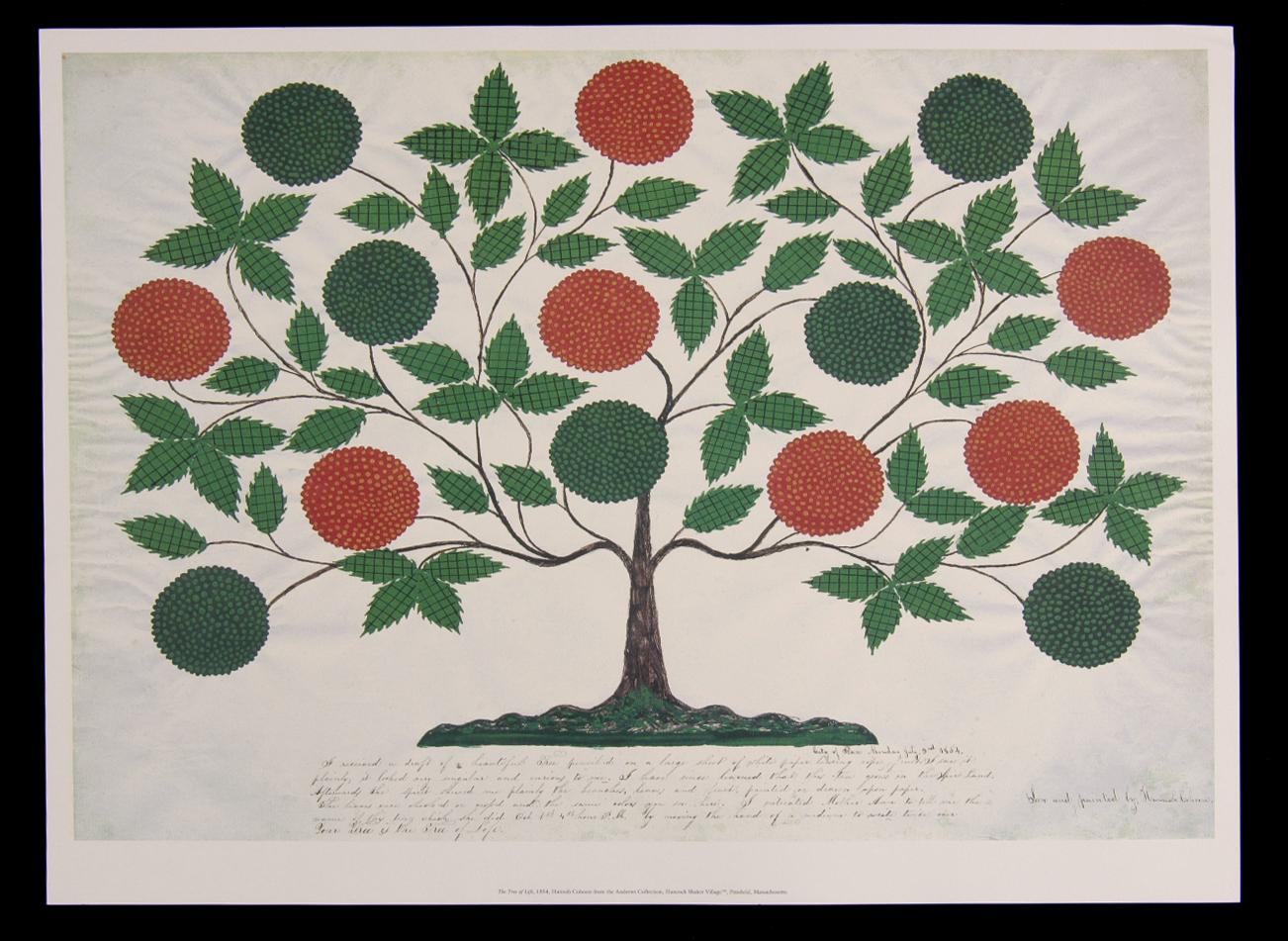
Tree of life. Creative Commons License.

Bowen’s influence is clear: the faded glory of the Irish country house and the Anglo-Irish cast, which are said to have been inspired by guests Murdoch met at Bowen’s Court.

Yet it was another female author who came to mind when I read the opening of The Unicorn. Its gothic setting and the simultaneous presence and absence of the mistress of the house was redolent with echoes of Rebecca.

It quickly became obvious, however, that Murdoch’s approach to the gothic differed from that of Daphne du Maurier. As I read on, I began to feel that The Unicorn shares more of its DNA with Northanger Abbey. Like Jane Austen before her, Murdoch self-consciously plays with gothic conventions, calling them into question and sending them up.

Even more prominent still, is Murdoch’s engagement with Charlotte Bronte’s Jane Eyre since, like its predecessor, The Unicorn features an imprisoned mistress of the house. But Murdoch makes Hannah Crean-Smith a more central character than Brontë’s Bertha, and the novel investigates the question of her sanity.

Critics have tended to interpret Hannah Crean-Smith as an enchantress: apparently pure but ultimately revealed as an evil manipulator. I see her more as a damaged being, fashioned by the scarring experiences of torture and imprisonment.

I would love to sit beside my cousin in her Cornish conservatory, sipping gin and finding out what she made of Hannah Crean-Smith. But Nic died last year in a sunlit room, our family reading to her right up to the end. When I talk with Wendy and Emily about The Unicorn – and about Murdoch’s other novels, which I will surely now read – my memories of Nic will inform this conversation between my sisterhood of readers, just as Austen and Brontë and du Maurier lived on as Murdoch’s literary mothers.

Can You Help Us?

We’re hoping that one of our online sisterhood of readers might know of a female writing friendship enjoyed by Daphne du Maurier. If so, please could you tell us about it by using the comment tab below or by using the ‘Contact Us’ form. We’d love to profile du Maurier on this site.

Who Cares?

Someone recently told me that she considered my sister’s life to have no value.

My sister has severe autism and cerebral palsy, so she requires constant support from family, friends and paid carers. I stayed with Lou recently and, during this time, it was me who cut up her food into bite-size pieces, bathed and dressed her, held her hand to help her safely cross the road.

It would seem unthinkable now to dismiss Helen Keller’s life as valueless. And yet, many people must have written off this deaf-blind girl and pitied those who looked after this hot-tempered child.

In fact, Keller’s disabilities enabled her to look at our world from a distinctive vantage point – one that came to be valued by prestigious literary journals, world leaders and the general public alike.

As with many of the literary women we’ve featured on this site, it is difficult to prise apart Keller’s dazzling abilities from her apparent disabilities. Could Emily Dickinson have written such wildly challenging verse if she had conformed to the demands of the outside world? Could Jean Rhys have penned Wide Sargasso Sea without her own feelings of imprisonment? Could Virginia Woolf have rendered Septimus Smith’s shell shock had she not experienced the loosening grip of her own sanity?

The courage, determination and soaring talent of these writers were supported by the care and commitment of their family, friends and employees. Infamously reclusive, Dickinson underwent surgery on her eyes and a recent biographer claims that she may also have had epilepsy. Her writing life was facilitated by her siblings, and she received invaluable support from fellow writer Helen Hunt Jackson during a time when few others recognised the genius of her work – a subject we’ve written about for Shooter Literary Magazine.

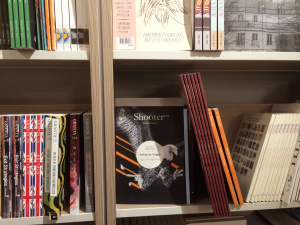
Shooter Literary Magazine available from Foyles

During our interview with Diana Athill, she told us that Rhys relied in her youth on ‘helpful men’ to guide her through the trials of everyday life, while in later years ‘she was rescued by nice women like me’. Leonard Woolf – his wife’s most prized reader – helped to nurse her through dark times, never doubting her brilliance.

Throughout her long and dignified life, Keller relied on others night and day. Those who helped her were privileged to glean insights on how to value and be valued by a fellow human being. The support, of course, went both ways. Indeed, when Keller turned down offers from world-famous filmmakers in favour of the inexperienced Nancy Hamilton, she acted out of deep care for her friend.

During the past weeks, while I was helping my sister to bathe and dress and eat, she was looking after me in ways that were subtle but just as significant. Before travelling up to stay with her, I had been feeling uncharacteristically low. By welcoming me into her daily routine, Lou reminded me that joy can be found in all sorts of places: her face would light up when she selected an outfit from the clothes I’d laid out on her bed; in the cinema, she sang along to ‘Tomorrow’ with Annie, clapping her hands above her head; one evening, she dragged me around the marine lake at sunset, forcing me to run against the wind and laughing all the way.

Lou bringing a smile to my face

Later that night we went to a gig and Lou shook hands with all and sundry, repeating her favourite phrases: ‘What’s your name? You’re a ratbag! I like college.’ In this way, we got chatting to a young man, who – full of despair – had just dropped out of university. Lou reached across me to take hold of the young man, and they sat hand in hand for a long time. I like to think that she was helping him that night just as she was helping me: that her zest for life was rubbing off on him; that he would value – as I did – her reminder that there can be dignity and kindness in seeking and accepting care.

The Ship has set sail

We are delighted to announce that yet another of our guest bloggers has a book out this month. What’s more, Antonia Honeywell’s The Ship asks wise and searching questions about the value of life and what it really means to care.


Work and Play

Inspired by Helen Keller – who encouraged her friend Nancy Hamilton to turn her hand to something new – this month Emily shared an aspect of her life that was, until now, foreign to me.

Visiting the Gallery for Russian Arts and Design

Emily and I exchange long-treasured books, swap outfits and befriend many of each other’s pals. We trade critiques of early drafts, seek support during painful times and feel at ease in each other’s homes.

But there’s a central aspect of my friend’s life about which I know very little.

When Emily embarked on a story set in a remote children’s dance school, she reconnected with her own history of ballet by enrolling in a weekly class. Through my friend’s writing, I have become familiar with the intricacies of a dancer’s kit: the toe pads and foot tape, the pink stitches darned across a pointe shoe’s hard-blocked end. But I have never seen Emily’s own ballet kit. I feel as if I have met my friend’s fictional dance school principal – the eccentric Miss Violet who inspires distrust and adoration in equal measure. And yet, I have never asked Emily about the women who first encouraged her to take up ballet. I may have watched my friend’s characters warm up at the barre, but I have never seen Emily perform.

Last week, Emily took me to the Gallery for Russian Arts and Design to see an exhibition about a ballet that I had never even heard of before: The Bolt by Dmitri Shostakovich. It turns out that I may not be alone in my ignorance since the ballet was banned by Stalin back in 1931 after only one performance.

It was at first difficult for us to discern what the authorities found so troubling. After all, The Bolt celebrated the lives of Soviet factory workers and the communist league came up trumps.

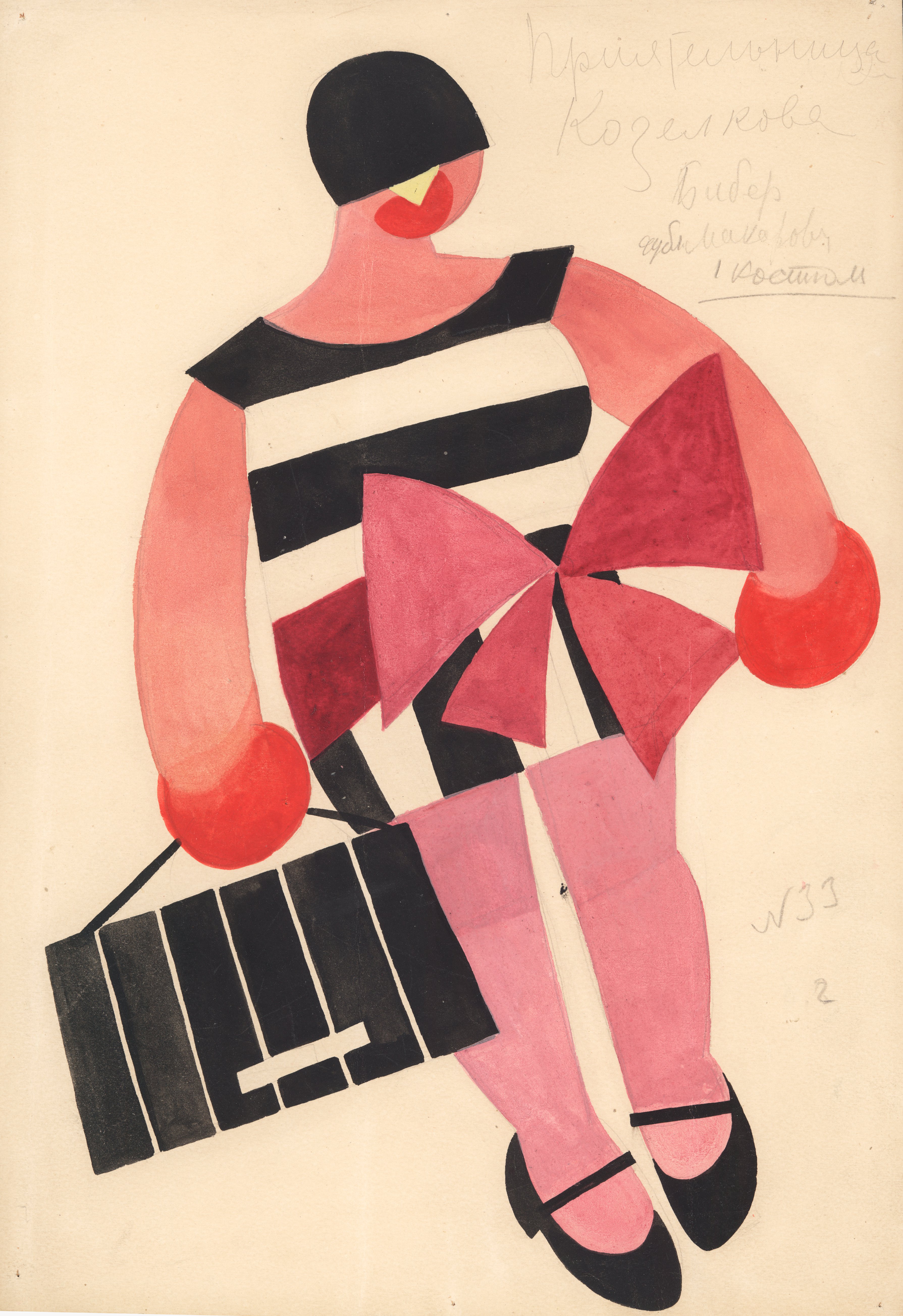
As Emily and I explored the exhibition further, however, it became clear that the production’s playfulness had likely proved controversial. Perhaps, like us, audiences would have been more drawn to the bold colours and extravagant designs of the bourgeois baddies’ costumes than the sackcloth uniforms of the party faithful. These vaudeville designs were matched by the score, which Soviet critics condemned as flippant satire.

Tatiana Bruni, Kozelkov's Girlfriend, Costume Design for The Bolt, 1931, Courtesy GRAD and St Petersburg Museum of Theatre and Music
Tatiana Bruni, Kozelkov’s Girlfriend, Costume Design for The Bolt, 1931, Courtesy GRAD and St Petersburg Museum of Theatre and Music

I had expected that our outing would reinforce my sense of Emily’s self-discipline: her finely-tuned writing schedule matched by her rigorous ballet training. But I came out of the exhibition reminded that this aspect of my friend’s character is matched by her playfulness: the way she laughs uncontrollably when something tickles her, the uninhibited way she’ll get up on a stage or pose for a photograph, her willingness to take risks in her writing.

I may never be able to join my friend at the barre, but our daytrip showed me that there’s so much about exuberance and joie de vivre that I stand to learn from showing more of an interest in this part of Emily’s world.

Hot Off the Press!

We are delighted to announce that two of our guest bloggers have books out this month, and both of them promise to take us to new and unexpected places.

Beautiful and brutal, Emily Bullock’s novel The Longest Fight recreates the gritty boxing world of 1950s London. And her writer friend Ann Morgan has just launched her non-fiction debut Reading the World: Confessions of a Literary Explorer, which invites us to join her on a quest to read a book from every nation.

Having stood by each other through their fair share of knocks, it is cheering to see this pair of writer friends experience knockout success together too.