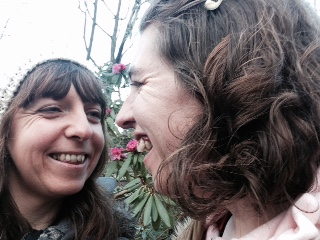
Elizabeth Barrett Browning and Mary Russell Mitford

After our summer hiatus, we are back this month with the story of a friendship between two much-loved nineteenth century writers. We are grateful to Lydia at Persephone Books for recommending we profile this literary pair.

Elizabeth Barrett Browning - this image is in the public domain.
Elizabeth Barrett Browning (1806-1861) – this image is in the public domain.

Elizabeth Barrett Moulton Barrett was always fiercely ambitious. Growing up, her juvenile literary output was so great that her father nicknamed her the ‘Poet Laureate of Hope End’ – this being the name of the family’s picturesque Herefordshire estate.

Her mother showed support for the girl’s talent by transcribing many of her poems for household ‘publication’. Later in life, eight years after Mrs Barrett’s death, another influential maternal figure would take the author, then aged thirty, under her wing.

Mary Russell Mitford was almost fifty when she and, a decidedly nervous, Browning were introduced in 1836. Unlike Browning, Mitford, had, from a young age, often needed to write to make ends meet – thanks to her father’s spending of his wife’s inheritance on political campaigns, entertaining and gambling. By the time the two women became friends, Mitford was the highly successful author of poetry, plays and prose – including, most famously, Our Village: Sketches of Rural Life and Scenery.

Browning, who had yet to meet her fellow-poet husband Robert, greatly appreciated the encouragement of a well-established figure like ‘ever dearest Miss Mitford’ as she was soon calling the writer in her letters. Such support had arrived at just the right moment: Browning’s book, Seraphim, and other Poems, would come out the following month and the early years of their friendship coincided with a time when the literary establishment was beginning to take notice of her work.

But this was also a turbulent period. Browning’s personal life was blighted by serious bouts of illness and family tragedy, culminating in the deaths of two of her brothers in swift succession.

800px-Mary_Russell_Mitford_by_Benjamin_Robert_Haydon
Mary Mitford Russell (1787-1855) by Benjamin Robert Haydon – this image is in the public domain.

The accidental drowning of ‘Bro’, her favourite brother, hit Browning particularly hard, and she confided in Mitford that the experience was ‘a very near escape from madness, absolute hopeless madness’.

In addition to their frequent correspondence, Mitford consoled her friend through these darkest times by sending her gifts. As well as the regular delivery of flowers, in 1841 she gave her the spaniel Flush, the offspring of her own dog, (and later to be immortalised by Virginia Woolf in her imaginative biography of the same name).

A decade on, the friendship hit shakier ground when Mitford published her Recollections of a Literary Life. In a section intended as a warm tribute to Browning, she related the sad tale of Bro’s death, deeply upsetting her friend who believed that such personal details should have remained private.

The pair had experienced tensions before – not least in Mitford’s initial disapproval of Robert Browning. Thankfully, on this occasion too, they ultimately managed to negotiate this bump in the road and their relationship survived until the end of Mitford’s life.

Although today, she is the less well-known of the two, she is remembered, not just for her most popular work Our Village, but also the witty and engaging correspondence she maintained with many famous nineteenth century figures – most importantly, her closest literary friend, Elizabeth Barrett Browning.

Activity

Mitford went to great lengths to console her friend after the loss of her brother. This month, we will reflect on the role consolation played in other literary friendships that we have profiled on Something Rhymed.

Successes and Surprises

Butterfly-Fish-204x300
We sought permission from Jacaranda Books to use this image.

Last week, I had the pleasure of attending the book launch of one of our former guest blogger’s debut novels. Butterfly Fish by Irenosen Okojie has just been published by Jacaranda Books.

I first got to know Irenosen through her work as a Prize Advocate for the SI Leeds Literary Prize, an award that celebrates the writing of Black and Asian female writers, and for which I was delighted to be a runner-up in 2012. I am grateful to Irenosen for the support she’s given me with my writing, and so it was great to be able to go along last Wednesday to give my support to her.

It is this kind of reciprocity that takes a relationship away from a purely work-based arrangement and into the realms of friendship. Of the writer pairs we’ve profiled on Something Rhymed, some – like Maya Angelou and Toni Morrison, or George Eliot and Harriet Beecher Stowe – enjoyed similar phenomenal levels of literary success. Others – such as Jane Austen and Anne Sharp, or Emily Dickinson and Helen Hunt Jackson in their day (Dickinson being the unknown one) – were poles apart professionally. But what they all had in common was a high regard for their friend’s opinions and talents, and, in almost all cases, a desire to celebrate their successes with them.

Prior to beginning Something Rhymed, Emma Claire and I were not at all sure that we’d be able to find so many heartening examples of female solidarity – not necessarily because we doubted these kinds of relationships existed through history, but because we feared that the evidence might no longer be there.

So it was good to learn about Jane Austen and Anne Sharp. While Austen’s books enjoyed great popularity during her lifetime, the plays of her friend Sharp remained unperformed outside the home. Nonetheless, a level playing field always remained between the two when it came to discussions of their work. After the publication of her novel, Emma, Austen sought out Sharp’s critical opinions. Sharp expressed admiration for the book, but she wasn’t afraid to let Austen know that she found the character of Jane Fairfax – inspired in part by Sharp herself – insufficiently complex.

Emily Dickinson’s extrovert friend, Helen Hunt Jackson, author of the novel Ramona, made several attempts to even things out professionally between the two of them by raving about Dickinson’s writing in her own literary circles and encouraging her reclusive friend to publish her poems. Although Dickinson largely resisted these efforts, such an endorsement must surely have done wonders for her confidence and perhaps even had an impact on her prolific output, which totalled nearly 1800 poems.

As Emma Claire mentioned in last week’s post, over the many months during which we have been researching female literary friendships, we have been surprised by the historical sources that do indeed exist, and how often they have been overlooked or misinterpreted.

Just as unpublished material in the Austen family’s papers revealed new insights into her friendship with Sharp, the close transatlantic bond  between George Eliot and Harriet Beecher Stowe was illuminated for us by the letters between them – letters that have too often been dismissed as a correspondence between mere acquaintances. Going back to the diaries of Virginia Woolf allowed us to see that Katherine Mansfield was her greatest literary confidante rather than her bitterest foe.

These last two were not always willing to share in the joy of each other’s achievements, and occasionally even revelled in their friend’s disappointments. But they were ready to lavish praise when they felt it was due, and even collaborated together on Mansfield’s Prelude, published by Woolf through her Hogarth Press.

Setting every single letter of her friend’s story with the wooden blocks of her hand-press was a drawn-out and laborious process. For me, this image stands as a strong symbol, not just of the value Woolf accorded to Mansfield’s work, but also of one woman helping another – as a friend and a fellow writer.

Buying Ballet Shoes as a Grown-up

One of the struggles Emma Claire and I face when we compose our profiles on each month’s literary pair is how to condense many years of friendship into just a few hundred words. Interesting episodes and key details about each woman’s personality often have to go by the wayside for the short-form writing we do here on Something Rhymed.

Marianne Moore’s commitment to lifelong learning, well into old age, was an aspect of her life that almost failed to make the cut. Moore’s enthusiasm for dance and even creative writing classes, though intriguing, didn’t seem to be quite relevant enough to her friendship with fellow poet Elizabeth Bishop.

But when we thought of the great affection with which Bishop had written about this aspect of Moore’s character, we decided it was something we wanted to explore through our writing this month.

The subject of adult education had, in fact, been floating around my mind ever since February’s Something Rhymed challenge, when I took Emma Claire to see a gallery exhibition about the Russian ballet The Bolt.

This image is in the public domain.

Ballet has been a love of mine for many years, and – having previously had lessons from the ages of four to eighteen – I took it up again as a hobby a few years ago. Like Emma Claire’s morning yoga sessions, it is an activity that hovers around the fringes our friendship. I’ve occasionally met her before or after an evening at the studio, and have mentioned class to her in passing, but a lack of shared vocabulary means I’d never thought to talk of it in detail, thinking it would be boring for her.

That trip to the gallery made me rethink my reticence, though – its costumes, rehearsal photographs and choreographer’s notes sparking questions from Em, not just about the exhibition itself, but also my own long-held fascination with this dance form. I was soon recalling the elderly babysitter, Mrs Tomlinson, who had enchanted my imagination at four-years-old with her crayon drawings of the Nutcracker’s Sugar Plum Fairy and the sad story of Swan Lake. I told Em of my childhood (highly unrealistic) dream of becoming a professional dancer, and also the rewarding but humbling experience of returning to ballet as an adult after such a long hiatus.

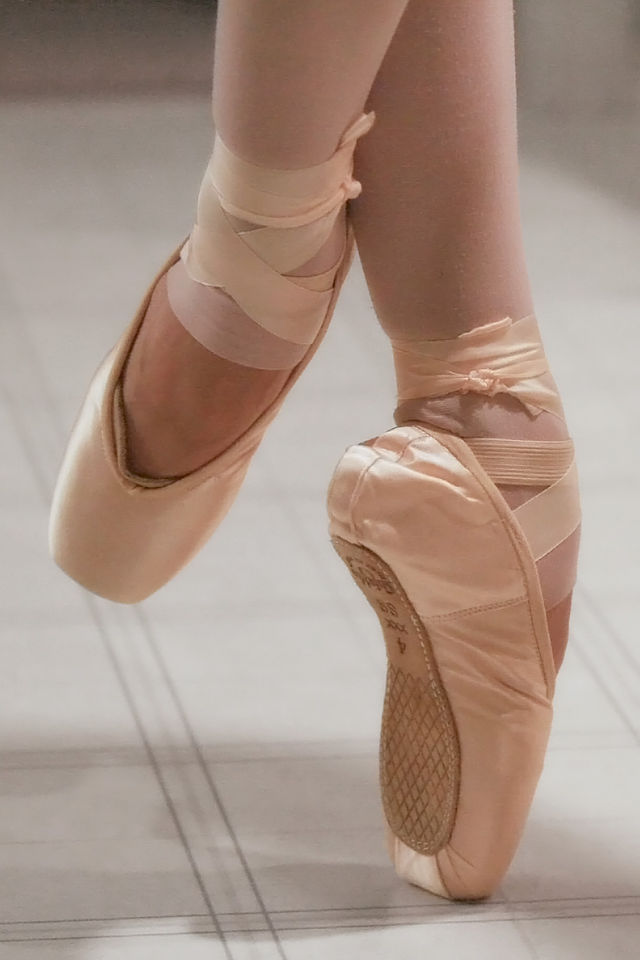
An idea for a story about dancing had pushed me to take the plunge and buy a new pair of ballet shoes. I’d wanted to immerse myself in that world again, because I wanted to write about it.

But taking class has, in fact, enriched my life in other unpredicted ways. It’s a part of the week to which I now always look forward. An hour-and-a-half of ballet makes for a wonderful way to change gears after several hours at my desk. The concentration required to try to master the steps empties my mind of any work-related stresses, and afterwards I feel refreshed and more enthusiastic about whatever I have to do tomorrow.

Being an initially extremely rusty student has also helped me in my work as a teacher. The experience of being unable to remember where to place my arms, and finding my feet no longer seem to work as they used to, has served as a great reminder of how daunting it might be for one of my adult writing students, who finds themself sitting in a classroom again after many years out in the world of work.

Though it’s unlikely we’ll ever find ourselves standing together at the barre, I’d been wondering, since our visit to the Bolt exhibition, about other ways in which Emma Claire and I might enjoy ballet again together. Then I heard about the Royal Ballet’s new production Woolf Works – based on the writing of Virginia Woolf – which opens in London this month.

Emma Claire and I have just bought tickets, and I’m excited to go and see a performance with her for the first time. Not only should it give me the chance to share with her something more of my love of ballet, but the subject matter will surely open up new conversations about one of Em’s own great passions, the writing of Virginia Woolf.

Travellers on the Same Road

Image by Luke Detwiler (Creative Commons Licence).

Agatha Christie and Dorothy L. Sayers never shared the extraordinary levels of closeness enjoyed by their contemporaries Vera Brittain and Winifred Holtby, who saw each other as literary ‘travelling companions’.

Neither were they spurred on by the kind of highly motivating personal rivalry that fired the bond between modernists Katherine Mansfield and Virginia Woolf, another pair of author friends of a similar generation.

What Christie and Sayers had instead was a solid working friendship, and, for them, this was presumably enough. For Emma Claire and me it never has been, though.

As some of our readers will already be aware, we got to know each other at a time when we were both living carefree lives as young English teachers in rural Japan. It was still some months before we’d admit to anyone else – and each other first – that we had serious ambitions to write, and so, although I remember us sometimes talking about books we were reading, writing was not a big part of our friendship. We spent our time doing other things: travelling the country, going to parties, and sampling the wares of local noodle shops and bars.

Back then, I would have been delighted to be told that, once we’d ‘come out’ to each other as would-be authors, the similar direction in which we’d chosen to travel would allow us to support each other through the years to come: celebrating individual triumphs as a pair, providing each other with a sympathetic ear when necessary, and –  through our mutual interest in female literary friendship – eventually finding a way to write together.

Image by maroubal2. Creative Commons licence.
Image by maroubal2. (Creative Commons Licence).

This would have sounded fantastic, and of course it is. What could be better than your closest co-worker also being one of your closest friends?

The only niggling problem is that recently it began to dawn on us that, bit by bit over time, our whole friendship had become consumed by work. When we went out for the evening, supposedly for fun, our thoughts would soon turn to ideas for feature articles we could write together. When one of us invited the other over for dinner, we’d find ourselves talking about the next literary event we’d be doing together, or our jobs at the universities at which we both teach.

Now that we’ve become aware of this, we’ve started to make a concerted effort to have times when we turn off the ‘shop talk’, although sometimes it can be hard. As I write this, I’m acutely aware that, despite having sent Emma Claire three emails today and talked with her on the phone, each of these conversations was about our various joint projects.

That’s why it was especially good to go out for cocktails and noodles recently. The drinks were fancier than the cans of alcoholic fruit Chu-hi that we used to buy in our twenties. The ramen broth was floating with all sorts of extra ingredients unseen in the traditional joints we used to frequent. But there was something about the night’s holiday atmosphere that took me back to those heady, early days in Japan.

It reminded me that, though a working writers’ friendship is a wonderful thing, to have found someone with whom you can truly ‘travel’ is many, many times better.

Elizabeth Bowen and Iris Murdoch

The Anglo-Irish writer, Elizabeth Bowen, is remembered for surrounding herself with the most lauded of literary women.

Elizabeth Bowen
Image used with the kind permission of Vintage Books.

Never allowing her severe stammer to get in the way of her role as a garrulous hostess, she entertained the likes of Carson McCullers, Rosamund Lehman, Eudora Welty and Virginia Woolf.

We were surprised to discover that Iris Murdoch had attended one of the glittering salons at Bowen’s Court since she was twenty years younger than her hostess and has often been mythologised as something of an honorary man. Famously dismissive of her female contemporaries, she refused to read any of Barbara Pym’s novels, despite (or because of) repeated and hearty recommendations from the men in her life.

Iris Murdoch
We sought permission from Harper Collins to use this image.

It turned out that Murdoch and Bowen were first drawn together by their shared Anglo-Irish heritage and admiration for each other’s novels.

The salons at Bowen’s Court, mostly known for their decadence, were, in fact, full of creative ferment. Passages from Murdoch’s The Unicorn are so indebted to Bowen’s style and subject matter that they could almost have been written by the older author. Similarly, Bowen’s Eva Trout is influenced by the ‘demoniac’ subversion that she so admired in the work of her acolyte.

But it was confessions about their romantic relationships that cemented the intimacy of their inter-generational friendship. Murdoch confided her fears about agreeing to wed her lover, the fellow academic, John Bayley: as a married woman, she would be forbidden from continuing in her post as an Oxford don. Bowen, who had felt liberated rather than hemmed in by her own marriage, advised the younger author to embrace the opportunity to spend more time on her novels.

The pair visited each other regularly and commented on each other’s work, developing a deep and mutually influential friendship that lasted for nigh on two decades.

During this time Murdoch’s unconventional marriage endured, in some ways following the example mapped out by the flamboyant Bowen, whose husband was quite an introvert. Indeed, one party guest at Bowen’s Court stumbled into a cupboard in search of the loo only to find him crouched amongst the mops and brooms with a tray of food on his knees. Their successful union was more companionable than erotic, and Bowen sought sexual fulfilment elsewhere – most notably in a thirty year love affair with a Canadian diplomat.

Murdoch was similarly open to extramarital encounters. Most interesting among her affairs, perhaps, was her lesbian relationship, break-up and reconciliation with fellow philosopher, Philippa Foot. And yet, like Bowen, Murdoch was devoted to her husband, as, in both cases, the support of these men helped their creativity to thrive.

Not only did the older author show the younger one how to carve out erotic and creative freedom within a lifelong and nurturing marriage, Bowen also demonstrated by example how to extend wisdom and generosity to the next generation. And so, Murdoch – previously wary of her female contemporaries – ended up taking the young A.S. Byatt under her wing.

Activity

This month, Emma Claire will be reading The Unicorn by Iris Murdoch and Emily will be reading Eva Trout by Elizabeth Bowen.

Who Cares?

Someone recently told me that she considered my sister’s life to have no value.

My sister has severe autism and cerebral palsy, so she requires constant support from family, friends and paid carers. I stayed with Lou recently and, during this time, it was me who cut up her food into bite-size pieces, bathed and dressed her, held her hand to help her safely cross the road.

It would seem unthinkable now to dismiss Helen Keller’s life as valueless. And yet, many people must have written off this deaf-blind girl and pitied those who looked after this hot-tempered child.

In fact, Keller’s disabilities enabled her to look at our world from a distinctive vantage point – one that came to be valued by prestigious literary journals, world leaders and the general public alike.

As with many of the literary women we’ve featured on this site, it is difficult to prise apart Keller’s dazzling abilities from her apparent disabilities. Could Emily Dickinson have written such wildly challenging verse if she had conformed to the demands of the outside world? Could Jean Rhys have penned Wide Sargasso Sea without her own feelings of imprisonment? Could Virginia Woolf have rendered Septimus Smith’s shell shock had she not experienced the loosening grip of her own sanity?

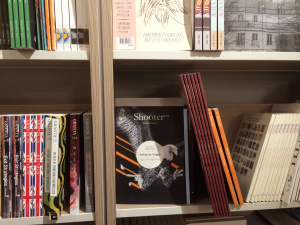
The courage, determination and soaring talent of these writers were supported by the care and commitment of their family, friends and employees. Infamously reclusive, Dickinson underwent surgery on her eyes and a recent biographer claims that she may also have had epilepsy. Her writing life was facilitated by her siblings, and she received invaluable support from fellow writer Helen Hunt Jackson during a time when few others recognised the genius of her work – a subject we’ve written about for Shooter Literary Magazine.

Shooter Literary Magazine available from Foyles

During our interview with Diana Athill, she told us that Rhys relied in her youth on ‘helpful men’ to guide her through the trials of everyday life, while in later years ‘she was rescued by nice women like me’. Leonard Woolf – his wife’s most prized reader – helped to nurse her through dark times, never doubting her brilliance.

Throughout her long and dignified life, Keller relied on others night and day. Those who helped her were privileged to glean insights on how to value and be valued by a fellow human being. The support, of course, went both ways. Indeed, when Keller turned down offers from world-famous filmmakers in favour of the inexperienced Nancy Hamilton, she acted out of deep care for her friend.

During the past weeks, while I was helping my sister to bathe and dress and eat, she was looking after me in ways that were subtle but just as significant. Before travelling up to stay with her, I had been feeling uncharacteristically low. By welcoming me into her daily routine, Lou reminded me that joy can be found in all sorts of places: her face would light up when she selected an outfit from the clothes I’d laid out on her bed; in the cinema, she sang along to ‘Tomorrow’ with Annie, clapping her hands above her head; one evening, she dragged me around the marine lake at sunset, forcing me to run against the wind and laughing all the way.

Lou bringing a smile to my face

Later that night we went to a gig and Lou shook hands with all and sundry, repeating her favourite phrases: ‘What’s your name? You’re a ratbag! I like college.’ In this way, we got chatting to a young man, who – full of despair – had just dropped out of university. Lou reached across me to take hold of the young man, and they sat hand in hand for a long time. I like to think that she was helping him that night just as she was helping me: that her zest for life was rubbing off on him; that he would value – as I did – her reminder that there can be dignity and kindness in seeking and accepting care.

The Ship has set sail

We are delighted to announce that yet another of our guest bloggers has a book out this month. What’s more, Antonia Honeywell’s The Ship asks wise and searching questions about the value of life and what it really means to care.


A Year of Hidden Friendships

When we first launched Something Rhymed, a year ago now, concerned well-wishers expressed scepticism about whether we’d discover twelve pairs of historic female writer friends to profile each month over the course of 2014.

Thanks to our close-knit community of readers from around the globe, the reverse has in fact been true. You’ve helped us to unearth many more female collaborations than we could possibly have envisaged at the beginning of the year. With such a treasure trove of hidden friendships still to explore, we intend to keep sharing our findings here in 2015.

Old treasure chest
Creative Commons License

The collaborations we’ve explored so far were sometimes illicit, scandalous and volatile; sometimes supportive, radical or inspiring. And so, we’ve increasingly found ourselves asking why they have been consigned to the shadows.

To mark the end of Something Rhymed’s first year, here are our top ten ideas on why the friendships between some of our most famous female writers still have a cloak of secrecy about them:

  1. Women writing in the past had more opportunities to converse in the parlour than in the pages of literary magazines.
  • For reasons of propriety, for example, Harriet Beecher Stowe felt that she could not write an obituary in the Atlantic for her long-time friend and confidante, George Eliot.
  1. The marked harmony and lifelong endurance of many of these writing partnerships cost them copy.
  • Charlotte Brontë and Elizabeth Gaskell bonded over their shared experience of infamy since they had both become mired in scandal for daring to pen biting social criticism. However, this enduring friendship often gets written off as a mere acquaintanceship. Could marked harmony also account for why so few of us have heard about the unlikely friendship between Ruth Rendell and Jeanette Winterson?
  1. Friendships between women are often neglected in favour of a female author’s intense or turbulent relationships with men.
  • On January 1st we will reveal an intimate friendship that fits into this category…
  1. The literary status of some of our writer heroines has suffered because their genre, style or subject matter was particularly associated with women.
  1. Some of the pairs shared an alliance so radical that others refused to believe that it could possibly have thrived.
  1. Other collaborations challenged core mythologies about female authors: the well-bred lady; the solitary eccentric; and the suffering genius.
  1. Popular perceptions of female friendship still struggle to allow for the kind of rivalry embraced by some of our writer forebears.
  1. Rumours of lesbian affairs sometimes actually seem easier for commentators to accommodate than the possibility of an intellectual partnership between women.
  1. Close friendships between girls might be all well and good but, after marriage, women have traditionally been expected to devote themselves primarily to their husband and offspring.
  1. Historically, female collaboration was considered subversive and therefore taboo.
  • And yet, the subversive nature of these friendships between women makes them powerful sources of transformation: Maya Angelou’s Nobel party for Toni Morrison, for instance, both celebrated the achievements of a fellow African American author and challenged their government’s failure to do so itself.

Working together on Something Rhymed this year, we have experienced some of the most jubilant moments in our own friendship (as well as some of the most fraught!). But, from Eliot and Stowe – who taught us the importance of candour – to Mansfield and Woolf – who showed us that rivalry can be a positive force – we are learning how to keep our own collaboration on course. And, with your support, we will continue to celebrate the secret sisterhood between our trailblazing forebears, finally bringing it centre stage.

So Many Unexpected Connections

As we mentioned in our first post of the month, it was one of our blog readers, Sarah Emsley, who told us about the friendship of L.M. Montgomery and Nora Lefurgey.

We’d got to know Sarah through her website and her support of Something Rhymed. Forming this kind of unexpected connection, often across the seas, has been one of the real pleasures we’ve encountered as a direct result of setting up our project.

Since beginning Something Rhymed at the start of this year, we’ve profiled the friendships of eleven pairs of female authors. But, of course, these women’s relationships with other writers didn’t stop with a single friend. Through our research we’ve learned about other important connections between different authors we’ve featured on this site.

Winifred Holtby, lovingly memorialised by Vera Brittain in Testament of Friendship, had earlier written a biography of her own: a book about Virginia Woolf. George Eliot, often believed to have been scornful of Jane Austen’s work, in fact studied the novels of her forebear in preparation for beginning to write her own fiction.

One of this month’s authors, L.M. Montgomery, felt a sense of affinity with Eliot. Mathilde Blind’s early biography of Eliot had such an impact on the then young and aspiring Montgomery that several of its words and phrases found their way into her own journals.

Elizabeth Gaskell was friends, not just with Charlotte Brontë, but also with Harriet Beecher Stowe. Stowe, as we wrote in October, was such an admirer of Charlotte Brontë that she once asked a medium to help her try to make contact with the late author’s ghost.

A planchette - the kind of device once used by Harriet Beecher Stowe, to try and make contact with the ghost of Charlotte Bronte. (Creative Commons licence)
A planchette – the kind of device once used by Harriet Beecher Stowe, to try and make contact with the ghost of Charlotte Bronte. (Creative Commons licence)

One half of next month’s pair of writers was also greatly influenced by Brontë, but she adopted a less other-worldly approach. Jean Rhys’s most famous book Wide Sargasso Sea resurrects the story of Antoinette Cosway, her reimagined version of the character of Bertha Mason, the ‘madwoman’ who’d previously languished in the attic of Brontë’s novel Jane Eyre.

We look forward to sharing more of Rhys’s own story with you in our first post of December, next week, and also continuing to discover many more important links between the great female authors – connections that often transcended their historical eras.

The Heroism of the Hostess

In the week that Emily and I will be holding a party for female writers, our conversation has turned to the historical significance of literary gatherings. Katherine Mansfield got to know Virginia Woolf – the fellow author whom she wanted to meet above all others – through their shared connection with Lady Ottoline Morrell. Famed as a society hostess, Morrell was sometimes cruelly lampooned by the very artists she supported. But her salons were more than glittering parties; they were occasions full of creative ferment.

Lady Ottoline Morrell Creative Commons License
Lady Ottoline Morrell
Creative Commons License

Morrell is said to have influenced two of Mansfield’s and Woolf’s best loved works: The Garden Party and Mrs Dalloway. In both texts, parties and hostesses play central roles. Mansfield’s collection of stories came out in 1922, during a period when her relationship with Woolf was especially riddled with misunderstanding. Woolf, afraid that Mansfield’s book would overshadow her own latest novel, admitted to feeling pleased when her friend failed to win the Hawthornden Prize. However, Mansfield’s title story must have exerted a powerful influence on Woolf, who that same year was beginning work on Mrs Dalloway. Both Mansfield’s story and Woolf’s novel invite us into the life of a hostess on the day of her party. In each case, the gathering is interrupted by the news of a man’s death – a man who, due to class division, would never have received an invitation to the heroine’s gathering.

Emily and I spoke about the relationship between these two texts during our interview with Steve Wasserman on Read Me Something You Love. The connections seemed glaringly obvious to us, and yet we subsequently discovered that they have largely gone unnoticed. Many a tree has been felled, on the other hand, to produce the reams of pages devoted to the influence on Mrs Dalloway of James Joyce’s Ulysses and T. S. Eliot’s The Waste Land.

The reason for this imbalance lies, in part, in the differing status accorded to certain subjects. Woolf’s textual conversations with her male peers are most often represented in terms of the impact of war on literature, and representations of the city: both topics that have long been embraced by the literary establishment. Any discussion about the influence of ‘The Garden Party’ on Mrs Dalloway  must emphasise the role of hostess, the domestic space, and the creative act of forging connections between friends. Such feminine spheres of influence fall outside those traditionally deemed valuable by the literary gatekeepers. As Woolf put it in A Room of One’s Own: ‘This is an important book, the critic assumes, because it deals with war. This is an insignificant book because it deals with the feelings of women in a drawing-room’.

We came up against this ingrained double standard when we realised that last month’s challenge had focused on clothing and this month’s involves throwing a party. Any reflection prompted by red dresses and Turkish cheesecakes, we worried, would inevitably be considered trivial. But following in the footsteps of our female forebears, we are encouraged to embrace our own realms of experience and proclaim them as valuable as any other.

Celebrating Female Friendship

When this month’s guest bloggers, Harriet Levin and Elizabeth L. Silver, let us take a look at one of their on-line chats, we felt privileged to be witnesses to a conversation that so clearly conveyed their mutual appreciation of each other’s support.

This has, of course, been a common theme in all of the guest posts this year. Like them, Rachel Connor and Antonia Honeywell, and Sarah Butler and Tessa Nicholson, have gone from living close to their writer friend to being separated by geographical distance. But they all wrote of how they’re still able to rely on their pal’s advice, even though they are physically far apart.

IMG_1146Jill Dawson and Kathryn Heyman, too, who live on opposite sides of the world, told us how their frequent phone conversations, about ‘writing, gossip, lipstick’ amongst other things, keep the relationship going.

Kadija ‘George’ Sesay and Dorothea Smartt spoke of the pleasures of working with each other professionally. Rima Haque shared a story about hearing valuable literary advice from Susan Barker on a crowded London night-bus.

Julie Sarkissian and Haley Tanner, and Emily Bullock and Ann Morgan, were keen to emphasise how much they valued having someone with whom they’ve been able to share the struggles and eventual triumphs of their books-in-progress.

We are grateful to all of this year’s guest bloggers for posting these inspiring words about the crucial role that the friendship of another woman has played in their writing lives.

Since launching Something Rhymed at the beginning of the year, we’ve often found ourselves wondering why the literary friendships of our most famous female writers are generally less well-known than those of their male counterparts.

Recently, we’ve been mulling over a number of theories, but one conclusion we’ve come to is that the all-too-common depiction of ambitious women as inevitable jealous rivals could have played a major part in this. Katherine Mansfield and Virginia Woolf are two writers, in particular, whose reputations have suffered in this way. This month’s pair, Maxine Kumin and Anne Sexton, are another, historically later, example.

At Something Rhymed, we’re keen to try and promote some more positive representations of women’s friendship, so with this in mind we’ve just launched our #SomethingRhymed hashtag on Twitter with this tweet: Women’s relationships are too often seen as bitchy & backstabbing. Tell us about a time when a female friend supported you. #SomethingRhymed

We’ll be sharing our own stories (in 140 characters or less!) of helping each other out personally or professionally. Whether you’re a writer or not, we’d love to hear about your positive experiences of female friendship too. If you’re not on Twitter, but would still like to add your voice to the conversation, why not leave a message in the Comments section below?

Remember

You can keep up-to-date with Something Rhymed by following our blog via email. Just type your email address into the box beneath the banner on the right hand side of the screen, and then click on the ‘Follow’ button beneath. On mobile devices, you need to scroll down to the bottom of the page to find the box and ‘Follow’ button.