As 2015 draws to a close, this feels like another good moment to look back on the friendships we’ve profiled on Something Rhymed, and the surprising, often intergenerational, connections between some of our literary heroines.
Daphne du Maurier, whose friendship with Oriel Malet we featured in June, is well-known to have been a fan of Haworth’s most famous sisters. Du Maurier’s most famous novel, Rebecca, has drawn comparisons with Charlotte Brontë’s Jane Eyre, and du Maurier also wrote a biography of Charlotte’s troubled brother, Branwell, published in 1960.
On reading du Maurier’s letters to Malet, though, we were surprised to find several references – not just to the Brontës – but also to Katherine Mansfield.
Katherine Mansfield – this image is in the public domain.
An admirer of Mansfield’s writing when she grew older, du Maurier’s fascination with the author of The Garden Party went all the way back to her earliest years. As a child, du Maurier used to look out of the night nursery window of her Hampstead home and see a light burning bright in the opposite house. She used to wave at the light each evening and wonder whose lamp it was.
Only years later would she discover that she had been looking in at the window of Mansfield’s bedroom, a place to which she was sadly often confined thanks to the health problems brought on by her tuberculosis.
Noticing these sorts of unexpected links between the different authors we have profiled has been one of the pleasures of our research into their literary friendships. This has been particularly so when we’ve stumbled upon these links by chance, when we were looking for other things.
And when we were studying the friendship between Elizabeth Bowen and Iris Murdoch the month before, we were delighted to learn that, in the 1940s, Bowen wrote a radio play for the BBC on the life of Jane Austen.
Over the two years that we’ve been running Something Rhymed, we’ve come upon so many of these unanticipated branches between our literary heroines that it’s become difficult to hold them all within our heads. So we’ve set ourselves the challenge this month of creating a ‘family tree’ depicting some of these fascinating connections.
We hope you’ll join us again next week to see the literary ancestral lines that we’ve traced back through the ages.
After reading our recent guest blog by Sarah LeFanu and Michèle Roberts, writer and 3:AM fiction editor Joanna Walsh got in touch to tell us about her friendship with writer and critic Lauren Elkin. In this month’s guest blog, the two share some thoughts on the things that make their relationship work…
Lauren
Joanna and I went to the Latitude festival together a while back. She was part of the festival, doing some kind of craftsy thing in the woods that involved making capes out of cellophane and spraying synthetic snow on them. I don’t remember why.
Joanna is a performance artist before anything else and she likes to make things. I am a critic and a writer, a dealer in abstractions. She makes the stuff herself. I admire that about her.
At this particular festival, it rained so hard and there was so much mud that we had to drink a lot to cope with it. We sat on a tree trunk masquerading as a bench, I think we probably put plastic bags down so we wouldn’t sit in the wet, and we drank beers, and talked about Lacan and Freud and twee Britannia, while all around us frolicked the fine fleur of British youth.
I was miserable, wet, and hungry. Joanna, when she is those things, gets kind of rascally, and makes it all much more bearable. Dinner was some chips, consumed while some boys we met recited ‘The Dream of the Rood’ in Old English. We drank even more. And then we camped.
My inevitable hangover the next day was so bad Joanna had to get the festival’s medical services to peel me off the floor of our tent and install me on a cot next to where Anna Calvi played a thudding set that seemed to go on for hours.
Because of my migraine we missed our train back to London and had to spend the night in nearby Southwold. A lesser friend would have wanted to kill me. But instead, as I recovered, Joanna and I walked next to the angry Northern Sea talking about Sebald and camping shoes and gastropubs and penis-bearing know-it-alls and how I really, really need to eat dinner when I’m drinking.
All of this has nothing and everything to do with why Joanna and I have an enduring friendship that both is and isn’t sustained by the fact that we’re both writers.
I don’t know what else to say about this except that as I told her last night, I feel like for someone to get me, they have to know her.
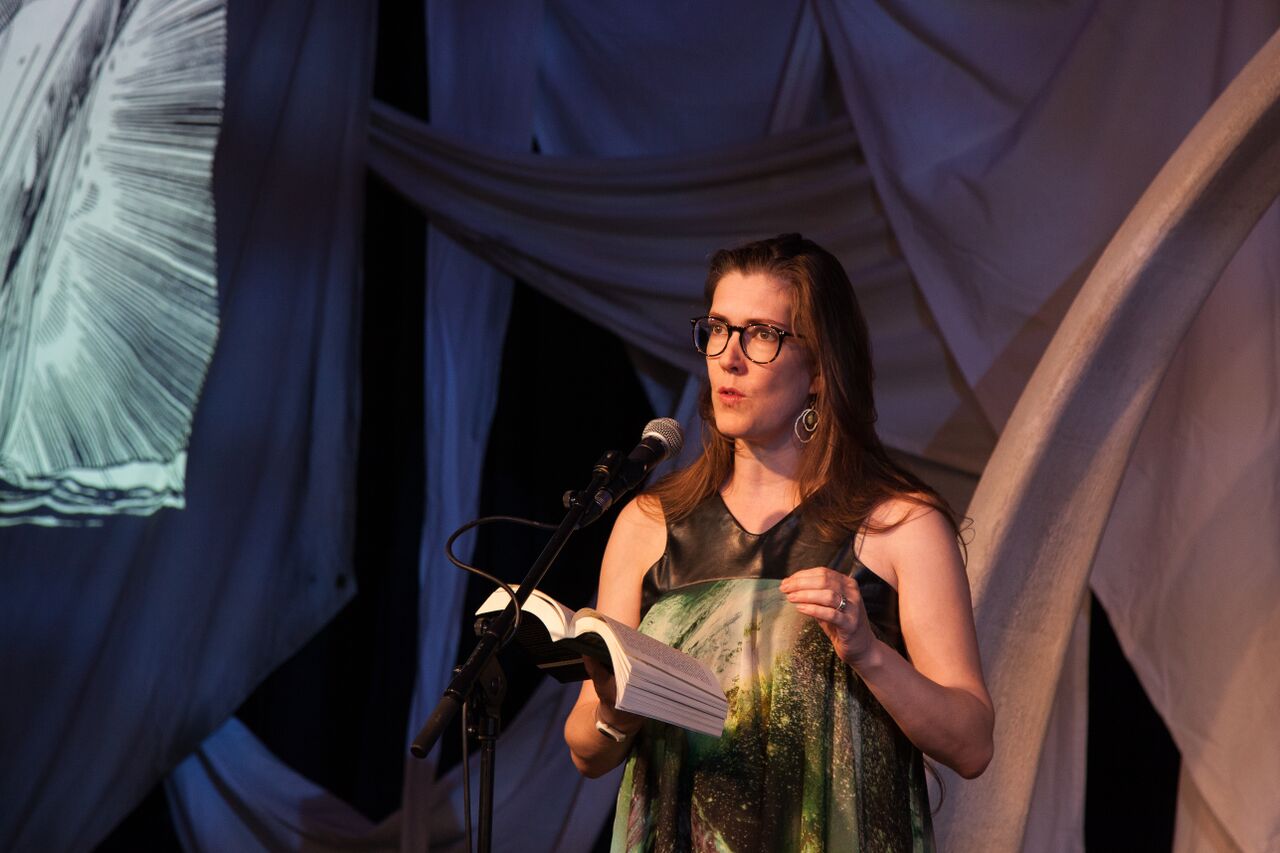
Lauren Elkin (left) and Joanna Walsh at their recent event at the Shakespeare & Company bookshop in Paris.
Joanna
So here we are, Snow White & Rose Red, Dorothy and Lorelei, Flaubert’s blonde and brunette (who are exactly like redheads, of course, so what’s the difference?). Lauren’s from the US, I’m from the UK (Lauren’s now French). Lauren’s a critic who writes fiction; I’m a writer who also reviews.
There’s enough distance (I think). There’s tension, but it’s the right kind of tension. We read each other’s work before publication, well, some of it. She reins me in when the rhetoric threatens the logic, or I’m just going off on one. She can tell me I’m wrong without our falling out (so far).
We both like to read, and drink, and look at expensive clothes we don’t buy. We have some of the same lipsticks, and a lot of the same books. We give each other our duplicate copies.
I’ve chaired her at events and she’s chaired me. I always wonder whether we’ll forget we’re in public and start talking about something private: it’ll happen one day…
When things are good, when things are bad, she’s the person I want to talk to: she knows it all. One day we’ll write something together. And we’re just as likely to talk about books behind closed doors.
Inspired by the evolving nature of Margaret Mason and Mary Shelley’s friendship, this month we’re reflecting on the moments of change that we have experienced. As Emily’s post revealed, some long-anticipated forks in the road have ended up continuing to lead us along parallel routes. But we have also stumbled on unexpected cross roads…
Emily and I first became friends when we were both living in Japan: her in a tiny apartment surrounded by carparks and convenience stores; me in a tatami-floored house that looked out onto rice paddies and groves of bamboo. In these very different environments, each of us picked up our pens.
Although we hadn’t yet come out to each other as aspiring writers, Emily and I began at weekends to take the three-hour round trip between her urban flat and my country home. This way, we forged our friendship in both the ice cream parlours of the neon-choked city and in bath houses hidden up dark mountain lanes.
This image is in the public domain.
But, after just one short season, we each had to decide in advance whether or not we would stay in Japan the following year. By the time the maple leaves had fallen from the trees, Emily had chosen to continue her unofficial writing apprenticeship in Matsuyama, enduring the chill of a second Japanese winter. I set my sights instead on a long trip with my boyfriend, imagining myself penning stories on sun-bathed verandas in Thailand, Vietnam and Laos.
Many messages pinged between the computer in Emily’s Japanese staffroom and the internet cafés I visited in Chiang Mai and Hanoi and Luang Prabang. On the surface, I was having the time of my life. But, although my boyfriend and I journeyed together all the way from Bangkok to Beijing, our relationship was falling apart.
While Emily was continuing to write fiction in between teaching lessons, I wasn’t jotting down much more than an angst-ridden journal. Looking back on it, I see just how easily I could have retreated into solitude during that time. And so I feel especially grateful that my faraway friend kept on making efforts to remain close.
When Emily and I both moved back to Britain, we continued our friendship – each of us, over the years, travelling thousands of miles across country to meet in Liverpool’s underground bars; riverside cafes in York; the walled garden of Ely cathedral; a Cumbrian bunkhouse; Portobello Market; a field in Herefordshire. More often than not, we’d come laden with drafts of each other’s novels that we had annotated in advance.
During those years of long-distance friendship, we anticipated the literary success of one before the other as a fork in the road, just beyond the line of sight. But, gradually, our writing lives became so intertwined and our vision of ‘success’ so complex and incremental, that jobs and awards and publications no longer felt like junctions that required much navigation.
This image is in the public domain.
I was delighted when, in 2011, Emily told me that she’d be moving to London. For the first time in a decade, she would live nearby. What’s more, she would be teaching at the same universities as me, so we’d also get to see each other each week at work.
Not long after Emily’s move, we embarked on co-writing literary journalism, sitting side-by-side at the same desk. I was newly single again, so it was all too easy to lose myself in work – especially work with Emily, which was so convivial, and always punctuated with shared meals: cinnamon buns; home-made soups; late-night dashes to the Turkish take-away for shish kebabs in spicy sauce.
But work, however fun, cannot replace a social life. This struck me one evening after a staff meeting, when Emily and I went off our separate ways. I’d come to miss our long-distance friendship, when we saw each other less often but, perhaps, prized our time together more highly.
When I eventually mentioned this to Emily, she immediately arranged a night out to a jazz bar, and we spent the evening listening to music and drinking cocktails and catching up on all those things we’d forgotten to tell each other while sat at a desk side by side.
As we mentioned in last week’s post, Margaret Mason’s relationship with Mary Shelley – the daughter of her former governess Mary Wollstonecraft – changed dramatically over the years. Thinking about the change in Mason and Shelley’s relationship prompted us to look back on some of the changes that have affected our own friendship.
It’s my great pleasure to be able to talk of this most recent one now…
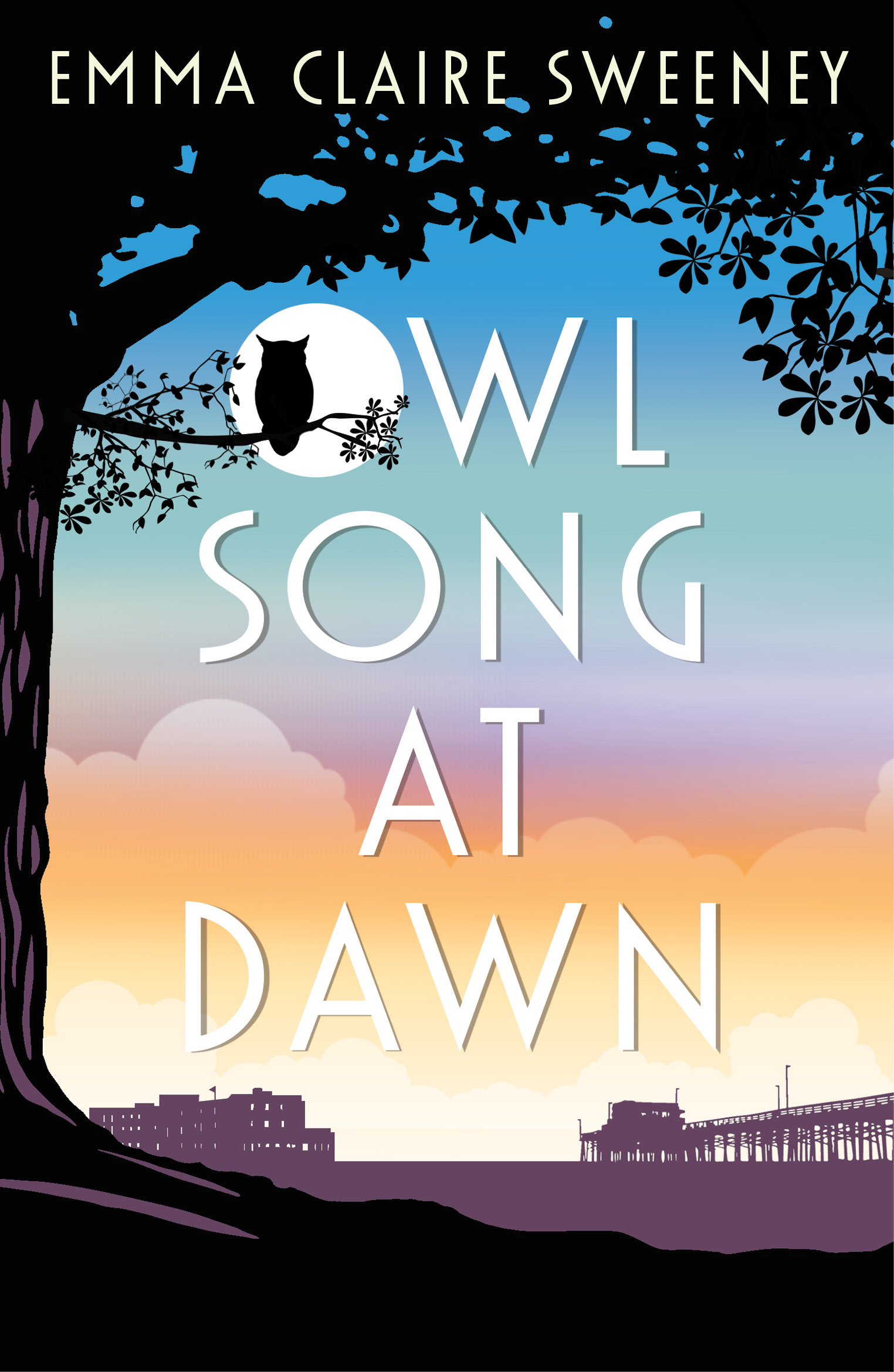
Some of our readers – particularly those who follow Emma and me on Twitter – will already know that the first of our novels will be published in 2016. I say ‘our’, but I want to make it clear that this is not a collaborative work of fiction.
Owl Song at Dawn is written by Emma Claire Sweeney. Emma is the one who imagined the characters of twins Maeve and Edie, who grow up together in a seaside boarding house and whose lives later take dramatically different courses. Emma created each sister’s distinctive voice – that of straight-talking Maeve and lyrical Edie, whose musical speech patterns are both enthralling and hard-to-fathom. Emma arranged the modern-day and 1950s story strands until they sang as a pleasing whole.
I cannot take credit for any of these things. And yet, because I have known Emma for so long, and because we have had so many conversations about her novel, I do feel that I am a part of the story behind Owl Song at Dawn.
Over the past few years, I have lived in several different places around Britain, and Emma’s novel-in-progress – like her friendship – has accompanied me from home to home.
I remember cooking dinner in the cramped kitchen of my flat at the time, while Emma – who’d come up on the train from London – stood, sipping wine, close by. Owl Song at Dawn existed only in fragments back then – some of them committed in embryonic form to paper, some still only in her mind. Keen not to give away the plot before she was in a position to show me a full draft, she was sparing with details. But as she talked, and I stirred the pan, I started to fit these snippets together until I began to get a fuzzed sense of the novel’s characters and the intriguing connections between them.
I remember us sitting, surrounded by metal railings and creeping honeysuckle, on the balcony of a different flat, us talking through all the notes I’d made on that first full draft. I remember other drafts in another flat, and later, emails flying back-and-forth between us about submission letters to literary agents, and then the book being sent out to publishing houses.
Back in the very earliest days of our friendship, I think both Emma and I assumed that – although we were already such a big part of each other’s writing lives – moments of success like these would be chiefly for one of us alone. While I’m sure we assumed we’d join in with our friend’s celebrations, I doubt either of us imagined just how collaborative those celebrations would feel.
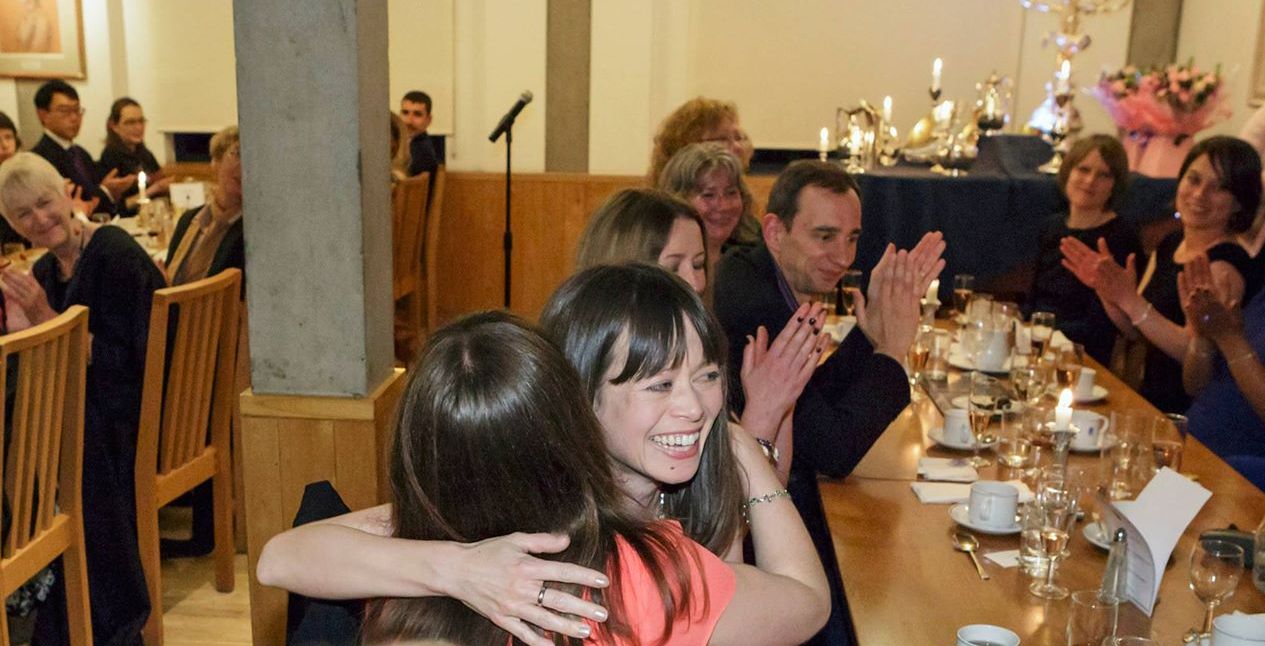
But when Emma called me up on the phone and told me the wonderful news that Owl Song at Dawn had been bought by Legend Press, I felt the same feeling I’d experienced at this year’s Lucy Cavendish Prize ceremony, just a few months ago: that this was an achievement not just for Emma or for me, but for us both as writer friends.
Celebrating together (copyright: Lucy Cavendish College)
Mary Shelley, the celebrated author of Frankenstein, needs little introduction, whereas her friend Margaret Mason may be less familiar.
Born into a wealthy Anglo-Irish family in 1773, Margaret King, as she was then called, spent her childhood years in the neo-Gothic surroundings of Mitchelstown Castle in County Cork.
The former Mitchelstown Castle, now demolished. This image is in the public domain.
Fate would set her on the path towards friendship with two of the most famous female authors of her era when a new governess-companion arrived at the castle in 1786.
Mary Wollstonecraft, then in her late twenties, was yet to embark on her illustrious career as an author. She was an instant hit with her teenage pupil, but frictions soon developed between the free-thinking English woman and her young charge’s aristocratic mother.
Portrait of Mary Wollstonecraft by John Opie. This image is in the public domain.
Unable to hide her disdain for Lady Kingsborough, Wollstonecraft found herself dismissed within the year, but she would leave a lasting impression on her former student. Over the decade that followed – a period during which Wollstonecraft’s radical writings, including most famouslyA Vindication of the Rights of Woman, were causing a stir – the two remained friendly.
Even after Wollstonecraft’s early death in 1797, following complications during the birth of her daughter Mary, Lady Mountcashell – as King had become on marriage – would remain an occasional visitor to the home of Wollstonecraft’s widower, the philosopher William Godwin.
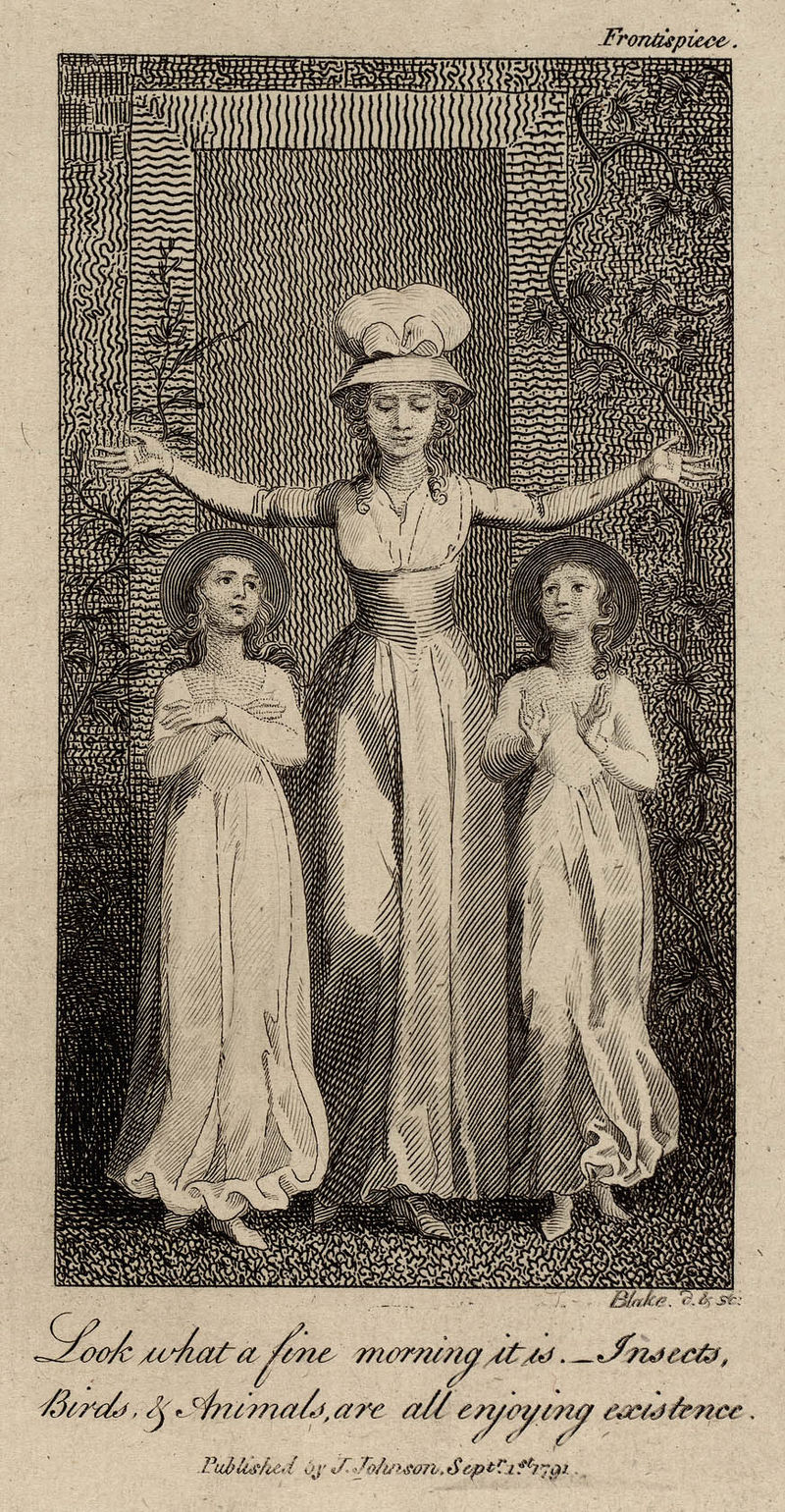
She was one of the authors who contributed to his ambitious Juvenile Library book series, tellingly adopting the nom de plume Mrs Mason, after the kindly teacher heroine of Wollstonecraft’s Original Stories from Real Life, her only work of children’s literature. Mason’s own books in Godwin’s series bear the influence of the practical, egalitarian teachings of the woman who was once her governess.
The fictional Mrs Mason – the inspiration for Margaret Mason’s name. The illustration is from the frontispiece of Original Stories (1791), engraved by William Blake. This image is in the public domain.
As a child, Mary Shelley must have regarded Mason chiefly as her father and late mother’s friend, but in later years she became close to her herself. That the two women should have bonded is perhaps unsurprising, since both – like Wollstonecraft before them – had a fierce unconventionality in common.
Despite Mason’s Anglo-Irish background, she played a part in the Irish rebellion of 1798; would don male dress some years later in order to study medicine (her six-foot figure allowing her to pass for a man); and, perhaps most scandalously of all, left her husband and eight children to elope to Italy with her Irish lover.
Interestingly, though, when Wollstonecraft’s daughter defied her father by fleeing abroad with the married Percy Bysshe Shelley in 1814, Mason was disapproving.
Following the suicide of Percy’s wife, Harriet, the Romantic poet was eventually able to marry Mary in 1816. Two years later, when the couple visited Mason’s home in Pisa, she introduced them to her social circles and helped them to set up a home in the city
Portrait of Mary Shelley by Richard Rothwell. This image is in the public domain.
When Shelley – by then the author of Frankenstein – went through a bout of serious depression following the deaths of her two children, Mason’s support and medical knowledge proved invaluable.
Relations between the two were not always rosy – Shelley, for instance, was saddened by Mason’s apparent coldness after the death of her poet husband – but the two still remained essentially on good terms. In fact, knowing of the widowed Shelley’s unhappiness, Mason counselled her friend to return to England and even supplied her with most of the funds to make the journey – a sum which Shelley could repay, she said, should she ‘ever grow rich’.
The pair continued to correspond by letter until Mason’s death in 1835. Though today Mason’s books are not well-known, she continues to be remembered for the fascinating personal link she provides between two of history’s most significant literary women.
Activity
Margaret Mason’s relationship with Mary Shelley changed significantly over the course of their lives, as Shelley matured from a girl into a woman. This month, we will each look back on a significant change that has affected our own friendship.
Just as Margaret Oliphant and Anne Thackeray Ritchie helped each other both professionally and personally, so too have this month’s guest bloggers, Katy Darby and Lucie Whitehouse.
Katy
I first met Lucie – er, probably at a party at university, as we were both student journalists (on rival papers). But we first met properly in the early 2000s, after we’d both graduated.
We met regularly in Oxford, and it was so useful, I kept going even after I moved to London. When we needed a new member, our mutual friend Toby recommended Lucie. She joined, and stayed even after she too moved to London to work for a literary agent. During that time we read and commented on what became her first novel, The House at Midnight.
I remember being really impressed by Lucie’s description and characterisation, as well as her determination and professional approach (I had graduated from waitressing to temping). She also cast her eye over the contract for almost the first piece of writing I got published and paid for: a one-act play for Samuel French called Half-Life. I was writing a very long dystopian sci-fi road narrative and she patiently read each chapter, though it ended up stuffed firmly in the bottom drawer.
Lucie has critiqued my work, written recommendations and given me quotes (including one that helped get me onto the UEA Creative Writing MA), and since she moved to New York in 2011, we’ve emailed. In some ways she has a big-sisterly role of doing everything first: publishing her first book, having a baby, and so I’ve always felt I can turn to her for advice both professional and personal. I’m always vicariously proud when I see her latest novel on the bestseller charts at Smith’s or picked as another book club choice (both Channel 4/Specsavers and Richard & Judy so far!).
Finally, I can honestly say that without Lucie’s example to give me a hard kick up the arse, I probably wouldn’t have finished my debut novel, The Whores’ Asylum (now The Unpierced Heart). At her launch party, I saw up close what I was aiming for and how worthwhile all the late nights, hard work, pernickety editing sessions and bouts of self-doubt would one day be.
Lucie Whitehouse
Lucie
If I’ve done everything first, it’s likely because I’m older…
Together, Katy and I show how there’s no one way to approach a writing career. If she was impressed by my professionalism and jobs in publishing, I admired her single-mindedness. In her company, I often guiltily felt that I was hedging my bets. (Not that I missed out on waitressing – I have fond memories of my time lugging plates at Café Rouge. Best upper-arm definition I’ve ever had).
Without Katy, I might have been sidetracked by agenting. I loved working with writers, talking books, reading manuscripts. She was an anchor for my creative side, a reminder that all my life, I’d wanted to write.
Practically, she was essential, too. She’s given me many great opportunities but her invitation to the writing group was a game-changer. Not only was I compelled to produce regular work in my cocktail-enhanced twenties but being critiqued by writers of such calibre catalyzed an enormous technical improvement in my work. Katy is fiercely clever and her comments were always – sometimes painfully – on the nail.
But above all, she is an extremely talented writer and that’s inspiring. When I heard that Penguin had bought The Whores’ Asylum, my first thought was, At last. I’ve long known that Katy is brilliant and when I see her on TV on Booker night, I’ll be doing a dance here. (And by the way, K, that dystopian sci-fi road novel deserves out of that drawer).
Due to family illness, Emily has not yet been able to post about her literary pilgrimage. However, we thought that perhaps those of you who missed it last time might be interested in an excerpt from the piece Emily wrote this time last year about her childhood visit to the Brontë Parsonage in Haworth.
Title page of an early edition of Jane Eyre, showing Charlotte Bronte’s pseudonym Currer Bell. Creative Commons licence.
I can’t remember a time when I didn’t have some sense of who the Brontë sisters were. My mother had named me Emily, after her favourite of the three, and, once she thought her daughters were old enough to appreciate the atmospheric setting – but some time, I think, before Erica or I had actually read any of the Brontës’ books – she took us to visit the Parsonage Museum at Haworth. This was a place famously popular with Japanese tourists, and somewhere Mum had got to know well herself through her related work for the regional tourist board.
There was a gift shop at the Parsonage, selling brooches bearing the sisters’ images. I, of course, bought an Emily Brontë brooch – thinking that, given my name – this was pretty much a requirement. I also remember feeling momentarily envious that Erica was able to make the choice for herself, by holding the Charlotte and Anne brooches up to the light and trying to decide whose picture she liked the most.
After much chivvying from our parents, who were no doubt keen to get us all outside for our lunchtime sandwiches, Erica finally selected the Charlotte brooch. Later, on the drive home in the car, we sat side-by-side in the back comparing our Brontë sisters. Unlike the dark colours of my miniature portrait of Emily, the Charlotte brooch was all cream and taupe with the merest blush of rose on her cheeks and lips.
There was something not-quite-there about the image, something that hinted at all the elements missing from the artist’s representation of his subject. You couldn’t guess, not from looking at the woman of that picture, that this was someone whose most famous novel had once made her a scandalous figure, because of the way its plot was believed to mount a dangerous challenge to contemporary patriarchal traditions.
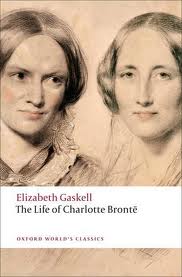
Image used with kind permission of Oxford University Press.
Even in the biography written by Elizabeth Gaskell, there are many elements missing in her account of Charlotte’s life because, in order to try and resurrect her friend’s reputation she suppressed evidence, for instance, of her love of the married Constantin Héger, and tended to ignore details that might work against her aims of honouring Charlotte ‘as a woman, separate from her character as an authoress’.
Although later biographies have filled in many of these details, there is something aboutall three Brontë sisters, in fact, that remains enticingly enigmatic. It explains to me why my mother, a life-long lover of mysteries, should have been so drawn to their stories.
My research into Margaret Oliphant revealed that she grew up in my home region of Merseyside. History has neglected so very many aspects of Oliphant’s extraordinary life but her northern upbringing has remained especially shrouded in mystery.
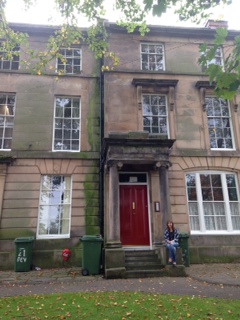
She is more often associated with London or Scotland, but, with some digging, I discovered that Oliphant spent the early years of her literary career living just a few minutes’ walk away from my family home. She moved to 24 Kenyon Terrace in 1850, the year after she published her first novel.
I’ve learnt so many things while investigating forgotten female friendships, but Oliphant’s residence in my hometown has perhaps moved me most profoundly. At first, I felt rather puzzled by the intensity of my reaction. But then it struck me that I had never before heard of any novelist hailing from Birkenhead.
Despite forever having my head buried in a novel or notebook, the dream of authorship never entered my mind during childhood or adolescence. It’s not that I lacked ambition. When I was a teenager, I aspired to write the blurbs on book jackets. It simply didn’t occur to me that I could become (or even dream of becoming) the woman who actually wrote the books.
And why would it have done? The authors whose novels I devoured did not much resemble me: Jane Austen lived in genteel poverty and was not expected to work outside the home; Virginia Woolf’s annual allowance funded her room of one’s own. Where was the maternal literary line through which I could trace examples of female authors based in industrial northern towns, women who found a way to earn their living by the pen?
These women did exist, I realise now. We’ve profiled some of them on this site: Elizabeth Gaskell and Winifred Holtby spring to mind. I can’t help but wish that I’d known about this tradition, back when I was growing up in Birkenhead. How inspiring it would have been to learn that in 1850 a twenty-two-year-old woman wrote a novel at a dining table less than a mile from the room in which I made my own first tentative attempts to write.
This weekend just gone, I peered through the bay window into this very dining room. My mother at my side, I imagined the young Oliphant entranced by the world she was creating on the page while her own mother sat beside her, absorbed in her cross-stitching. Oliphant’s former home is now divided into bedsits, several wheelie bins crowding around the front steps. On one side, the adjoining house stands derelict, its windows boarded up. But the house on the other side offered more of a glimpse into the middle-class comforts that these buildings would have afforded in Oliphant’s day. Here the residents sat in armchairs, a chandelier illuminating them as they drank their coffees and read their papers.
All of life stands cheek by jowl here, and yet the autumnal streets through which I walked with my mother and sister are radically under-represented in British fiction. It took us some time to find Oliphant’s former home because the street numbers have changed since her day, and there’s no plaque to mark the fact that a great Victorian writer began her literary adventure here: an unsurprising yet poignant ending to a pilgrimage through a forgotten town in search of a forgotten female forebear.
The literary legacies of Margaret Oliphant and Anne Thackeray Ritchie have been overshadowed by those of their female forebears and descendants.
Yet the legendary women who came before and after recognised these author’s talents. Charlotte Brontë singled out Oliphant’s first novel for praise and George Eliot claimed that, with the partial exception of Trollope, Ritchie was the only modern novelist she cared to read. Virginia Woolf, related to Ritchie through her father’s first marriage, described her step-aunt as ‘a writer of genius’.
Margaret Oliphant. This image is in the public domain.
Oliphant and Ritchie recognised each other’s gifts too, communing on the page long before they met in person. Indeed, the twenty-three-year-old Ritchie, who had published The Story of Elizabeth anonymously in 1863, received her first ever review from Oliphant. The praise caused Ritchie’s father, the famous novelist William Makepeace Thackeray, to beam with pride. The endorsement meant a great deal to Ritchie too. She had considered the older author a torchbearer ever since her governess introduced her to Christian Melville, which Oliphant had penned at the tender age of seventeen.
When their paths eventually crossed, during a holiday in the Swiss Alps in the summer of 1875, Oliphant was a widow in her mid-forties and Ritchie a thirty-something singleton. Their literary reputations were already well-established but their personal lives were in disarray. As much as their shared vocation, it was a sense of mutual sympathy that drew the women together.
Richie found herself the brunt of snubs from fellow guests, who regarded her as an eccentric spinster. Oliphant – indignant that Ritchie’s sister laughed along at this casual cruelty – decided there and then to take the younger author under her wing. During the rest of their stay at The Bear Hotel in Grindelwald, Oliphant singled out Ritchie for her own brand of sisterly attention, abrasively taking her aside on the terrace each evening for rambunctious conversations beneath a bough of clematis in full flower.
Oliphant also had worries of her own. Following the death of her husband and the bankruptcy of her brother, she’d become the sole breadwinner for both families. Ritchie, who’d received a generous inheritance from her father – the wealthiest self-made author of his day – felt especially aware of her own privilege when she witnessed just how hard Oliphant had to work in order to make ends meet. Oliphant’s output was prodigious by any estimation: 98 novels, and over 50 short stories, 25 books of non-fiction and 300 articles.
Ritchie saw at close quarters the discipline required to write for a living – quite at odds with her own haphazard approach to creativity. Keen to alleviate the financial pressures on her new friend, Ritchie persuaded her brother-in-law, a magazine editor, to purchase two stories – each one generating the bulk of a year’s income. Oliphant later returned the favour: when she was appointed editor of a series, she immediately commissioned Ritchie to write one of the biographies.
Anne Thackeray Ritchie. This image is in the public domain.
But personal tragedies cemented their friendship even more than professional triumphs. The first of these occurred just a few months after their Alpine holiday, when Oliphant had invited Ritchie to Windsor for an overnight visit. While there, Ritchie received a telegram summoning her back to London. Her sister had died, suffering a massive eclampsia seizure, and the unborn baby had also failed to survive.
These female authors stuck together for better for worse, for richer for poorer, in sickness and in health, and for decades they remained the closest of friends.
Ritchie visited regularly during Oliphant’s final illness, sitting at the bedside of her lifelong friend and making her last goodbye in June 1897 to the woman in whom she had found ‘one of those people who make life’.
Activity
Margaret Oliphant and Anne Thackeray Ritchie shared an intrepid approach to travel. They were also both keenly aware of their indebtedness to the female authors of the past who had laid the way for their own literary and literal adventures. Inspired by both these qualities, we’ve decided to take pilgrimages to the homes of some of the authors we’ve featured on this site.
Sarah: I met Michèle in London in the summer of 1972. I saw her as a warm-hearted woman warrior, a bold feminist, a dragon-slayer. I was a student, with a holiday job as a waitress at a rather dodgy restaurant called Borscht’n’Tears. Michèle, two or three years older than me, had a proper grown-up job at the British Library. Whereas I had timidly attended a couple of student meetings about women’s liberation, held safely inside college doors, Michèle belonged to a group of women who braved ridicule and abuse to perform feminist street theatre.
Michèle: I remember arriving home late one night to find Sarah returned from work, sitting outside on the little balcony eating sausages and drinking cider. She seemed dashing, merry, insouciant, completely able to enjoy herself in the present moment. Very pretty, too, with her delicate face and curly auburn hair.
Sarah: We were thrown together by the spectacular disintegration of the relationship between a couple who lived in the flat that we were both staying in; to get away from the rows and recriminations we would creep out onto the balcony above the front door of the terraced house, and in the warm summer evenings we would sit and talk: about women’s liberation, socialism, books, boyfriends and all points in between. What began as an escape from what was going on behind us, soon acquired its own life.
Michèle: I remember watching Sarah pack her bag for her summer holiday. She wanted to travel light, but on the other hand she wanted to take plenty of books. I was impressed that she threw out clothes to make room for books. As I got to know her better, my sense was confirmed that she really enjoyed a good time: physical and intellectual pleasures both. For example, we would don our 1950s frocks then bicycle back and forth across London, going to parties and dancing most of the night. At the same time we took part in a Marxist study group with other friends, and we founded our own group of two to read Freud.
Sarah: We carried on these discussions by correspondence when I went off to work in Mozambique for two years. We shared a desire to understand the world and, of course, to change it.
In the early 80s, while Michèle was making a name for herself as a novelist and poet, I was working in publishing, at The Women’s Press. We published her first two novels,A Piece of the Nightand The Visitation. In the 90s we began teaching together for Ty Newydd and Arvon. And for nearly fifteen years now we’ve worked together in a writers’ group, along with novelist Jenny Newman (we call ourselves the Group of Three).
All of which is to say that our friendship is centrally concerned with work and writing and reading.
Or perhaps I should say the work of writing and reading.
Or perhaps I should say: the pleasure of it. Right from the early days we’ve done the reading and talking and writing alongside eating, drinking and partying.
Michèle Roberts (left) and Sarah LeFanu (right) at Sissinghurst in 1981.
Michèle: Sarah and I grew up in an era still overshadowed by Victorian notions of the respectable: teenage girls could go out and have fun but adult women, even if they had jobs, were supposed to make staying at home serving husbands and children their priority. It was radical in those days to assert openly that you were linked to other women, across the bonds of families and marriages, and that when you wanted or needed to you put women first.
Men had higher status. They valued each other highly and us far less. They did not believe we could be true friends with each other, if they even bothered to think about it, as they thought all women competed for male sexual favours.
Men dominated the literary scene, edited the journals, wrote memoirs about each other, created the literary canon, went out to meet each other at night in clubs and pubs, wanted ‘their’ women safely at home giving the children their tea.
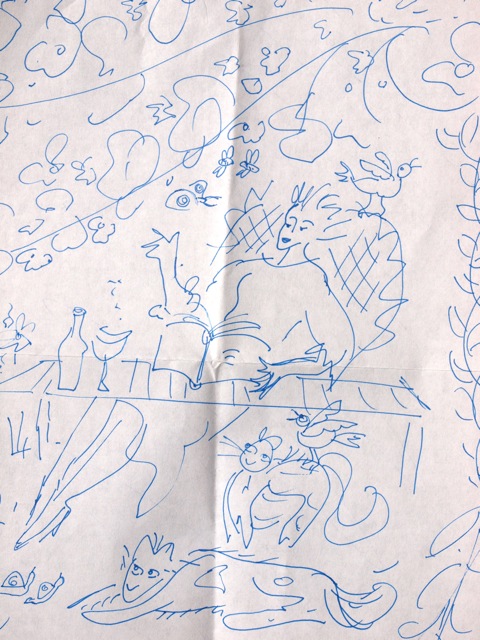
Sketch by Michele Roberts. Many of Michele’s sketches ‘of women having a nice time’ are pinned up in Sarah’s study. They enrich her life ‘during good times, bad times and challenging times’.
Sarah: While I was struggling to write my first book, In the Chinks of the World Machine: Feminism and Science Fiction, Michèle gave me a whole afternoon a week of childcare – a blessed stretch of time – and later, on occasions when I was overwhelmed by domestic drudgery, she would think up ways and means of providing me with periods of release.
Michèle: I remember when Sarah got married vowing to myself that I would do my best not to be jealous or possessive, which would have been easy for me to do given how much I loved her. I got to know her husband and got to be fond of him. I was her witness at her wedding (as she was at mine) and she invited me to be godmother to her children. I love and feel close to them. So she helped me go on feeling close to her, feeling I still had a place with her, even though her life had changed so much, having three children and caring for them. She invited me to become involved.
Sarah: Male literary friendships have always been more visible. Men have always felt more entitled to inhabit public spaces – from the 18th century coffee shop to the Soho bars of the 1950s. The romantic idea of a literary friendship is that of two lonely (male) geniuses recognising each other as geniuses and then performing their friendship in front of a star-struck public. But male domination of public space has been, and is being challenged (by feminists then and now), so things are changing.
Michèle: The women’s movement helped to change that. Nowadays the male writers I know and am fond of acknowledge the power of women’s friendships. We know more than we used to about women’s friendships because for the last thirty or so years women have been writing about them, asserting their value and importance and exploring their meaning.
Those books got published because feminist women were working as editors and publishers, commissioning books, championing women writers. So my friendship with Sarah is connected to that history, those politics.
Feminists thought of each other as sisters, we valued each other, tried to listen to each other, tried hard not to obey the patriarchal rule which said that men always had to come first, we lived a public life of going out with each other, not confined to the home.
Sarah: At the same time, I’m going to make a claim for privacy, and the intimacy it allows. It’s more than forty years since Michèle and I met and talked on a balcony in Pimlico, when we cast ourselves off from the noisy goings-on behind us and floated high above the dusty summer streets of London. The intimacy of sailing with Michèle in that stone boat has remained for me an important and nurturing aspect of our long friendship.
Michèle: The Italian expression is: ti voglio bene. I feel Sarah and I wish each other well, at a profound level. Till death us do part.
Michèle Robert’s latest novel, Ignorance, was published by Bloomsbury. You can read more about her friendships and her feminism in her memoir, Paper Houses, published by Virago.










 Something Rhymed