The Heroism of the Hostess

In the week that Emily and I will be holding a party for female writers, our conversation has turned to the historical significance of literary gatherings. Katherine Mansfield got to know Virginia Woolf – the fellow author whom she wanted to meet above all others – through their shared connection with Lady Ottoline Morrell. Famed as a society hostess, Morrell was sometimes cruelly lampooned by the very artists she supported. But her salons were more than glittering parties; they were occasions full of creative ferment.

Lady Ottoline Morrell Creative Commons License
Lady Ottoline Morrell
Creative Commons License

Morrell is said to have influenced two of Mansfield’s and Woolf’s best loved works: The Garden Party and Mrs Dalloway. In both texts, parties and hostesses play central roles. Mansfield’s collection of stories came out in 1922, during a period when her relationship with Woolf was especially riddled with misunderstanding. Woolf, afraid that Mansfield’s book would overshadow her own latest novel, admitted to feeling pleased when her friend failed to win the Hawthornden Prize. However, Mansfield’s title story must have exerted a powerful influence on Woolf, who that same year was beginning work on Mrs Dalloway. Both Mansfield’s story and Woolf’s novel invite us into the life of a hostess on the day of her party. In each case, the gathering is interrupted by the news of a man’s death – a man who, due to class division, would never have received an invitation to the heroine’s gathering.

Emily and I spoke about the relationship between these two texts during our interview with Steve Wasserman on Read Me Something You Love. The connections seemed glaringly obvious to us, and yet we subsequently discovered that they have largely gone unnoticed. Many a tree has been felled, on the other hand, to produce the reams of pages devoted to the influence on Mrs Dalloway of James Joyce’s Ulysses and T. S. Eliot’s The Waste Land.

The reason for this imbalance lies, in part, in the differing status accorded to certain subjects. Woolf’s textual conversations with her male peers are most often represented in terms of the impact of war on literature, and representations of the city: both topics that have long been embraced by the literary establishment. Any discussion about the influence of ‘The Garden Party’ on Mrs Dalloway  must emphasise the role of hostess, the domestic space, and the creative act of forging connections between friends. Such feminine spheres of influence fall outside those traditionally deemed valuable by the literary gatekeepers. As Woolf put it in A Room of One’s Own: ‘This is an important book, the critic assumes, because it deals with war. This is an insignificant book because it deals with the feelings of women in a drawing-room’.

We came up against this ingrained double standard when we realised that last month’s challenge had focused on clothing and this month’s involves throwing a party. Any reflection prompted by red dresses and Turkish cheesecakes, we worried, would inevitably be considered trivial. But following in the footsteps of our female forebears, we are encouraged to embrace our own realms of experience and proclaim them as valuable as any other.

Zora Neale Hurston and Marjorie Kinnan Rawlings

Zora Neale Hurston and Marjorie Kinnan Rawlings seem destined to have grown close. Both women wrote about the landscape and communities of their beloved Florida, and they each achieved fame in the 1930s when Hurston was awarded a Guggenheim Fellowship and Rawlings won the Pulitzer Prize. What’s more, they greatly admired each other’s work.

Photo by Alan Anderson, courtesy of the Marjorie Kinnan Rawlings Papers, Special and Area Studies Collections, George A. Smathers Libraries, University of Florida, Gainesville, Florida.

And yet, theirs was a deeply controversial relationship. Simple acts of camaraderie – sharing a meal, trading ideas, visiting each other – came up against deeply ingrained prejudices, rigid social norms, and even the full weight of the law.

Hurston (the daughter of a former slave) met Rawlings (whose husband owned a white-only hotel) at a time when the Ku Klux Klan operated in parts of Florida and the ‘Jim Crow’ racial segregation laws were harshly enforced by the state.

Despite these almost insuperable barriers, when Rawlings gave a guest lecture to Hurston’s students at the all-black Florida Normal and Industrial College, she was so taken with her host that she invited Hurston to tea the next day at her husband’s white-only hotel.

Fear, prejudice, and conformity ran deep, however. Rawlings quickly regretted her invitation, telling her husband that she had ‘done something terrible’. They arranged for the bell-boy to whisk Hurston up to their private apartment to get her out of sight of their white guests. Their precautions proved unnecessary because Hurston, predicting that her presence might prove sensitive, entered through the kitchen and up the back stairs.

Remarkably, such squalid moral compromises did nothing to hinder their enjoyment of each other’s company. ‘I’ve never had so much fun,’ Rawlings told her husband, and Hurston described Rawlings as a ‘sister’.

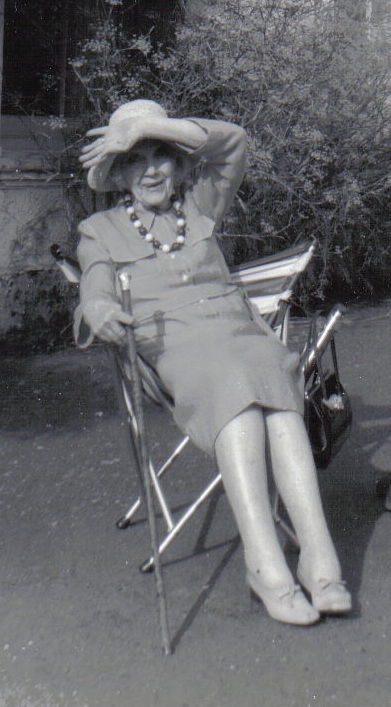
Zora Neale Hurston Every effort has been made to obtain permission to reproduce this photograph
Zora Neale Hurston
Every effort has been made to obtain permission to reproduce this photograph

Although their mutual admiration was assured, the ethical dilemmas didn’t stop there. When Hurston visited Rawlings’s country residence, for instance, they talked, laughed, and got tipsy together on her porch. But, when it became clear that Hurston was in no fit state to drive, Rawlings sent her friend to sleep out in the black servants’ quarters although there were plenty of spare bedrooms in the main house.

Hurston – who grew up in an all-black town, possibly the granddaughter of a white slave owner – was adept at navigating the ‘Jim Crow’ laws, and did not seem to hold Rawlings’s racial cowardice against her.

But Rawlings subjected herself to tough questions about her behaviour and, on a second overnight visit, she insisted that this time Hurston stay with her in the house. ‘I had to hurdle an awfully wide ditch!’ she admitted. ‘I was amazed to find that my own prejudices were so deep’.

From then on, Rawlings fought against racial segregation whereas Hurston fought to write about subjects other than race. Yet the world they inhabited was not yet ready to hear them. Rawlings’s reputation dwindled when her editor failed to recognise the quality of her later experimental stories, and Hurston died a pauper, buried in an unmarked grave.

This headstone was purchased by Alice Walker after she found Hurston's unmarked grave in an overgrown and snake infested cemetery. Walker later published an essay about it in Ms magazine, leading to something of a renaissance in Hurston's reputation. Photograph by Alan Anderson.
This headstone was purchased by Alice Walker after she found Hurston’s unmarked grave in an overgrown and snake infested cemetery. Walker later published an essay about it in Ms magazine, leading to something of a renaissance in Hurston’s reputation. Photograph by Alan Anderson.

Activity

Rawlings once threw a private party for Hurston. This month, we will host a Something Rhymed party. We’ll invite a few locally-based writers and supporters of the blog, and we’ll ask each of them to bring along one of their female writer friends. Find out how it goes when we blog about it in the coming weeks.

#SomethingRhymed

We’re keen to promote positive representations of women’s friendship, so with this in mind we’ve just launched our #SomethingRhymed hashtag on Twitter with this tweet: Women’s relationships are too often seen as bitchy & backstabbing. Tell us about a time when a female friend supported you.

We’d love to hear about your positive experiences of female friendship too. If you’re not on Twitter, but would still like to add your voice to the conversation, please do leave a message in the Comments section below.


A Contact You Can Smell on Your Skin: Harriet Levin and Elizabeth L. Silver

Like Maxine Kumin and Anne Sexton, this month’s guest bloggers spend hours critiquing each others work over the phone. Separated by long distances across America and different time zones, poet Harriet Levin and novelist Elizabeth L. Silver let us take a look at one of their online chats.

Elizabeth L. Silver
Elizabeth L. Silver

ELIZABETH: I remember the first time we met. You were the big shot director of the writing program at Drexel University in Philadelphia and I was a lowly adjunct with my first post-MFA teaching job. You were an Iowa grad, had a major book of poetry published, and were a Yaddo alum. But our personal backgrounds had so many similarities that I was instantly drawn to you. Those early conversations, which centered on our writing and our relationships, cemented what has become a truly beautiful friendship in my life.

HARRIET: Thank you, Liz. I’m going to hang this on my wall, and whenever I feel down, take a look at it. Truth to tell, it was you actually who inspired me. You were working on a novel and I saw how you went about it and then I literally watched you land an agent, because you were sending out emails from the computers in the Writing Center, while I was trying to write fiction for the first time and had no idea what I was doing.

ELIZABETH: I loved how when we met, we were both conceiving our novels, talking about the work and our approaches to writing fiction. You might not know how eager I was to see you every day, that  I came to my job at the writing center at Drexel just to find out how your novel was progressing and to share my struggles. I had no idea I inspired you at all.

HARRIET: You know when you meet someone whether it’s important. Not every meeting is like that. If you have a good olfactory sense, you can smell it on your skin, because you’ve made contact. I’m the sort of person who has to move her seat in a restaurant when the person beside me wears offending perfume or hairspray, and I’m also the kind of person who moves closer. It was like that with you, Liz, this sense I had (and still have) that life is always happening around you.

Harriet Levin Millan
Harriet Levin

ELIZABETH: Now that I’m going to print out and place next to my laptop when I feel down. Is it clear that Hari is a brilliant poet?

HARRIET: And boy did you help me with my work. I’ll never forget the day when, over the phone, I told you I had reached the climax of my novel, but didn’t know how to resolve it. I was out on the deck off my kitchen, gripping a broom handle in my free hand, raising it into the corner of the porch door to swipe off a spider web. I have an idea, you said, and then you spelled out the resolution for me! It was right there but I couldn’t see it and you were able to see it so clearly. I put down the broom and went into the house and wrote the next pages.

ELIZABETH: That’s so funny because we discuss plot and story all the time, but I don’t remember that exact bit. The truth is that I wish we still lived in the same city, but our friendship has really blossomed long distance. We share work over email and spend hours critiquing it over the phone. It is these long-distance workshops that I rely on, that I treasure, and that I seek at all points in the writing process.

HARRIET: What’s more, in this past week alone, we both discovered that we had started new novels.

ELIZABETH: I could hardly believe it when you told me! As we both enter this terrifying period of novelty with our new projects, I feel a calmness knowing that I will have you along my side in the process. Thank you.

HARRIET: And knowing about the success of your first book, Liz, convinces me that you can do it again. That we both can. Thank you.

Harriet Levin’s The Christmas Show was published by Beacon Press and Girl in Cap and Gown was published by Mammoth Books.

Elizabeth L. Silver is author of the novel, The Execution of Noa P. Singleton published by Crown  in the US and Headline Review in the UK.


An Unexpected Gift

Unlike Maxine Kumin and Anne Sexton, Emily and I have never been in the habit of swapping clothes. This is strange since aspects of our styles have become quite alike. Just recently, we unwittingly showed up at Maggie Gee’s book launch wearing outfits so similar that it prompted much comment.

One clothes-borrowing incident does spring to mind. We were co-writing a feature at Em’s place and, because it took far longer than expected, I ended up staying for days on end. I’d brought only one outfit, which I washed in the shower and hung out to dry overnight. It was still damp the next morning so I ended up going home in a tracksuit of Emily’s – which looked rather strange with my wedge heeled shoes.

This sort of thing would rarely happen to Em. She would have made sure to use the washing machine in good time so that her clothes would be dry for the journey home. She does her laundry on the same day each week; meticulously seams or darns anything that needs mending; hangs up all her clothes, even those waiting to be ironed.

I sometimes tease Em about her scrupulous attention to detail, but I secretly admire this quality in my friend. There is something soothing about the calm sense of order in her home, and her care extends from domestic and professional tasks to her sensitive treatment of all those she encounters.

And so, when I folded the outfit I’d chosen from Emily’s closet into a bag already overfilled with my laptop, notebook, washbag, and – I hate to admit it – pens, I immediately felt guilty. The last time I’d seen Em pack this item of clothing, she had carried it in a suit cover.

It’s the kind of top I associate with Em: loose-fitting, delicate material, subtle details, a pastel shade. I tend to wear more figure-hugging tops and bolder colours, fearing that floaty things might hide the fact I have a waist and that this palest of pinks might make me look pasty.

Emma Claire (right) with her book club friends.

Some of you might half-recognise this top since Emily is sporting it in her author shot. I wondered whether I would become self-conscious, wearing it out and about, or feel less like myself.

After my packing mistake, I took the kind of care with Em’s top that I knew she would take herself: putting it in the wardrobe as soon as I got home, making sure there was an anti-moth cedar ring on the hanger. And this level of attention seemed to rub off onto my treatment of myself. I was less slapdash than usual getting ready on the night I wore Em’s top, even though I was just popping over to my neighbour’s for our book club.

I very quickly stopped noticing that I was wearing an outfit that didn’t belong to me. I wasn’t terrified that I would tear it or spill my wine. And I certainly didn’t become as measured as Emily when we were discussing Eimear McBride’s A Girl is a Half-formed Thing.

Rather than feeling like an imposter in Em’s outfit, the sensation was of being a slightly more careful version of me – a sensation that encapsulates, in so many ways, one of the gifts I most value in our friendship.

Maxine Kumin and Anne Sexton

We considered featuring the brief friendship between Sylvia Plath and Anne Sexton, poets who are sadly as famous for their suicides as for the brilliance of their work.

But when we dug deeper, we discovered a longer lasting and more nurturing friendship. At around the same time that Sexton was meeting with Plath for martinis in the Ritz, she joined a local writing group where she got to know another female poet, Maxine Kumin.

When Sexton first set eyes on Kumin, she considered her ‘the most frump of the frumps’. While Kumin admired Sexton, who was ‘a little flower child, the ex-fashion model…totally chic’, she also found her terrifying. Certainly, Sexton’s more flamboyant style was reflective of her fiery nature, while Kumin was far more restrained and stable.

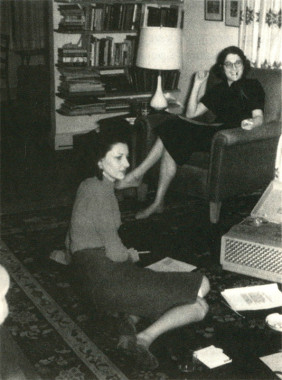
Anne Sexton (left) and Maxine Kumin (right)  at a creative writing workshop With kind permission from Nancy K. Miller.
Anne Sexton (left) and Maxine Kumin (right)
at a creative writing workshop. Every effort has been made to obtain permission to reproduce this photograph, credited to Doris Holmes Eyges.  

Perhaps because of these dissimilarities, Kumin and Sexton soon found in each other a deep creative support. They started to attend poetry readings together, hearing the likes of Marianne Moore and Robert Frost, and they reassured each other that their own work showed promise. Later, they even came up with titles for each other’s poetry collections.

It would be easy to assume that Kumin was the more nurturing of the pair, especially since she postponed moving to the country because she felt Sexton needed her close by. But Kumin was always keen to emphasise the mutual nature of their support. Sexton dropped everything, for example, to read Kumin’s novel draft when, during a trip to Rome, she received an airmail packet from her friend. Moreover, Kumin claims that Sexton ‘pulled me out of my shell’ and ‘made me see that the cerebral really needed a strong admixture of the visceral’.

As well as meeting up in person at least twice per week, they got into the habit of making regular calls, sometimes talking for hours on end, and even critiquing each other’s drafts over the phone.

During a period when both women had won prestigious fellowships at Harvard, and so were feeling ‘flush and important’, they went so far as to install a secret second phone line. They would sometimes keep their call linked for hours on end, interrupting their poetry discussions to make dinner or hang out the laundry, and then they would whistle into the receiver when they were ready to resume. Their illicit phone line allowed them to work together without having to worry about their husbands’ disapproval.

Indeed, the pair kept their mutually supportive friendship intensely private for many years.

Kumin, whose formal, reticent poetry won her a Pulitzer in 1973, had been represented by critics as the rival of Sexton, whose wild, confessional style had won her the same prize six years earlier.

Curiously, the pair felt so ‘ashamed’ of their friendship that they had allowed this myth of rivalry to continue for years before finally announcing that they were actually the closest of friends.

Their relationship would have felt more legitimate and less clandestine, they felt, if the women’s movement had existed when they first met. They were the women’s movement, they joked, they just hadn’t realised it.

Activity

After Sexton’s death, Kumin reminisced that ‘one of the joys of our relationship was the ease with which we traded dresses back and forth’, admitting that they practically fought over certain outfits, such as a red and white polyester dress that they both adored.

This month, we will follow in their footsteps by choosing outfits from each other’s wardrobes and then we’ll post about our experiences of wearing them.

Taking Stock

Seven months into our yearlong quest to discover the friendships enjoyed by famous female authors, it seems a good time to take stock.

Creative Commons License

We had the chance to do just that when we were asked to write a double page spread for the Independent on Sunday and a guest post for Writers and Artists.

When we first mooted the idea of Something Rhymed, we couldn’t have named twelve sets of famous female writer pals of old. We had no idea that Jane Austen risked her family’s disapproval by forging a radical relationship with a playwright who was one of the family’s servants. Who’d have thought that the mythically reclusive Emily Dickinson was a lifelong friend of the bestselling novelist Helen Hunt Jackson? As for Katherine Mansfield and Virginia Woolf, we’d heard that they were enemies.

But once we set up this blog, so many of you gave us such great tip-offs about women’s partnerships that it’s become tough to choose who to profile. We’ve become increasingly curious, therefore, about why such fascinating relationships have been misrepresented or written out of literary lore.

In our guest post for Writers and Artists, we put forward some of our theories on this.

We initially wondered whether these female alliances got overlooked because they were most often carried out within private domestic spheres. Unlike Charles Dickens and Wilkie Collins, Jane Austen and Anne Sharp never visited risqué music halls together; unlike F. Scott Fitzgerald and Ernest Hemingway, Charlotte Brontë and Elizabeth Gaskell never chronicled joint drinking binges in their published writings.

Even more significant, perhaps, is that whilst most of these men’s writing partnerships suffered spectacular bust-ups, many of the friendships we’ve featured were relatively harmonious. So it could also be that their frequent lack of drama has cost them newspaper column inches and lengthy entries in literary biographies.

Potentially most insidious, however, it that, unlike the camaraderie of Byron and Shelley, frequently recalled as robustly combative, the professional rivalry of Katherine Mansfield and Virginia Woolf was seen as entirely incompatible with female friendship.

As the year progresses, we’ve increasingly been led to wonder whether the lack of a level playing field lies at the root of it all. Although society has traditionally allowed men to accommodate healthy competition within their relationships, the same has been looked on much less favourably when it occurs between women.

We were able to explore this theory further in our feature for the Independent on Sunday.

In A Room of One’s Own, Woolf claimed that collaborative, intellectual friendship between women was considered taboo. The new feminists who we interviewed, however, were happy to celebrate such relationships. Laura Bates, author of Everyday Sexism, was keen to credit novelist and No More Page 3 campaigner Lucy-Anne Holmes for fuelling her own success. And co-writers of The Vagenda, Holly Baxter and Rhiannon Lucy Cosslett, friends since their student days, have relied on each other during periods when they’ve had to face down misogynistic attacks.

The sheer level of aggression faced by these friends suggests that although such relationships are no longer taboo, female solidarity is considered subversive even today.

Knowing When to Insist

Tea for Two in the Orchard at Grantchester (Creative Commons License)

In Emily’s moving post about the weeks after the death of her mother, she mentions that I was forthright in my opinion that she should stay off work until after the funeral. Her post reminded me of a time when she had made all the difference to me by refusing to go along with my plans.

I called Emily from Cambridge, where I was teaching on a summer school, to tell her that my boyfriend had left me. After seven years of on-again off-again, it was final this time.

Although this all happened some years ago now, I remember insisting that we should stick to our longstanding arrangement: Em and her partner should still come to visit the following weekend even though it would just be the three of us, rather than the two sets of couples as planned.

The man who had just left me had been my first real love, our tempestuous relationship dating back to my student days. I’d foolishly nurtured high hopes that he and I could make it work this time although deep down I knew that I had dived back in. It had not been our sensible conversations that had convinced me, nor the love he’d so eloquently expressed.

When we’d met up again, after our latest spell apart, it was his smell that got me – soapy, somehow, even after a long day, as if he’d climbed straight out of the bath. Then there had been the familiarity of his hands on mine, as he reached to me across the table. And his candour, which I’d half-forgotten: the way he mentioned about searching for me online, without realising that he was making a confession. I had also looked him up, of course, but I would never have admitted it with such ease.

With Emily, I could admit all this and more. I could be honest about just how much I’d wanted it to work; about having ignored the warning feeling in the pit of my stomach; about my humiliation that, after all these years, he’d ended the relationship via text message.

Em expressed her opinions on all this openly – something I particularly appreciated since she is never one to make rash judgments. But it was something else that made all the difference.

After our initial conversation, she called back and told me that her partner would not join her on her visit. I wanted to see him, I insisted, we’d have a fun weekend just as we’d planned. They’d decided, she said, that it would be too difficult for me, that the absence of my boyfriend would be too hard. What I needed, was time alone with her. I shouldn’t have to put a brave face on things.

That weekend in Cambridge has now merged with the many trips Emily made to see me during the summers when I used to work there: tea in the orchard in Grantchester; drives to Ely; mounds of Cypriot food at the Varsity Restaurant.

But I do remember quite clearly the conversation that preceded her trip, when she told me she would be coming alone. In an act of true friendship, Emily stood up to me. And, in doing so, she told me what I didn’t know I needed to hear.

Thinking Back Through Our Mothers

By coincidence, this month Emily and I both recommended authors who were deeply influenced by Charlotte Brontë.

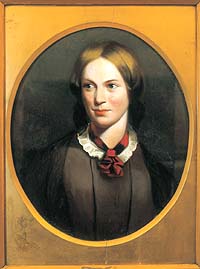
Portrait of Charlotte Brontë by J. H. Thompson  (Creative Commons License)
Portrait of Charlotte Brontë by J. H. Thompson
(Creative Commons License)

I will now treasure the copy of Jean Rhys’s After Leaving Mr MacKenzie, which Emily gave to me. Of course, Rhys’s most famous novel, Wide Sargasso Sea, which was inspired by Jane Eyre, imagines the first Mrs Rochester before she became consumed with madness and locked in the attic.

Rhys’s work, in turn, inspired Emily. She dedicated After Leaving Mr MacKenzie to me with the words: ‘When I first read this book, it changed the way I thought about writing forever’.

Just as Rhys’s descriptions of dingy hotel rooms and low-lit streets have lingered long in Emily’s imagination, I feel as if I have sat at the cocktail bar in A Tiny Speck of Black and then Nothing, Emily’s novel, chatting with the blind barman. There’s a scene in which the heroine searches for her missing friend in the labyrinthine alleyways of Osaka that has become so lodged in my own mind that I could almost mistake it for a memory. Moreover, the melodic quality of Emily’s novel sets up in duet with Rhys’s melancholic song.


Jean Rhys in the 1970s (Creative Commons License)
Jean Rhys in the 1970s
(Creative Commons License)

I also chose for Emily a writer whose work I engage with in my own writing. Virginia Woolf, although she famously overturned taboos of madness and sexuality, claimed that ‘one could hardly describe’ the life of her half-sister who was diagnosed with ‘imbecility’.

When I began my novel, The Waifs and Strays of Sea View Lodge, I set out to prove Woolf wrong by writing from the perspective of twin sisters, one of whom has profound learning disabilities. However, I ended up turning back to Woolf’s novels for inspiration on how to write about our flawed yet valiant attempts to read each other’s minds.

Woolf had an ambivalent relationship with Charlotte Brontë, whose genius she felt was hindered by her attempts to ape a male type of writing rather than creating a voice of her own. However, like Rhys’s Wide Sargasso Sea, it seems to me that Woolf’s Mrs Dalloway also owes a debt of gratitude to Charlotte Brontë’s Jane Eyre.  

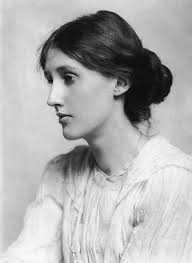
Virginia Woolf (Creative Commons License)
Virginia Woolf
(Creative Commons License)

I first read Mrs Dalloway when I was in my late teens, and I still remember the passage that seduced me: ‘Like a nun withdrawing, or a child exploring a tower, she went upstairs, paused at the window, came to the bathroom. There was the green linoleum and a tap dripping. There was an emptiness about the heart of life; an attic room’.

How odd that this depiction of sexual grief so captured my adolescent imagination. I now wonder whether I subconsciously related it back to Bertha, Charlotte Brontë’s ‘mad woman in the attic’, whose story I found even more fascinating than that of Jane Eyre.

‘We think back through our mothers if we are women,’ Woolf claimed in A Room of One’s Own. In Mrs Dalloway and Wide Sargasso Sea we catch a glimpse of two authors doing just that: befriending and confronting their predecessor on the page. This, in turn, has been the founding philosophy of our quest on Something Rhymed. Together, Emily and I are gleaning tips about how to sustain our valuable friendship by thinking back through the successes and mistakes of our literary mothers – a lineage that runs from Brontë to Woolf and Rhys.

Sharing the Knocks and Knockouts: Emily Bullock & Ann Morgan

Emily Bullock & Ann Morgan

In this month’s guest blog, long-time writer friends Emily Bullock and Ann Morgan take up the June challenge to send each other a book with a dedication inside.

Emily Bullock

Ann and I first met on the interview day for UEA’s Creative Writing MA… So she tells me, and over the years I’ve come to think of her memory as my own. We were then lucky enough to be in the same writing workshop. Was I first drawn to the person or the pen? I no longer recall that either. But I do know that I liked both a great deal. Ann spent some nights on my airbed, which sealed the new friendship, and all these years later we are still friends.

The book I have chosen for Ann was inspired by her Year of Reading the World. Through this project, she came across a writer who didn’t get to read a novel until she was a teenager. The anecdote stayed in my mind because Ann is such a good storyteller. The first novel this writer got to read also seems the right selection for Ann because of her adventures in reading a book from every country, and the writing journey we have both been on, which will finally result in our debut books coming out next year.

In the words of all the best DJs – Ann Morgan, this one’s for you: Around the World in Eighty Days by Jules Verne.

Around the World in Eighty Days
Image used with the kind permission of Penguin Pocket Classics

And my dedication:

‘What had he brought back from this long and weary journey?’

The airbed has deflated but we go on: friends and writers. I feel fortunate to have you as a travelling companion.

Ann Morgan

Emily’s right: we did meet at the interview day for our master’s. I can even remember the book she was reading – Salt: A World History by Mark Kulansky.

If it seems a bit freaky that I can recall so much, it’s no doubt testament to how well we got on. Almost from the word go, we were chatting easily and seemed to understand each other’s take on books and writing. The friendship was particularly important for me as I was commuting from London to study on the course in Norwich – hence the airbed (in case you were wondering).

Ten years on, we remain great friends. We’ve seen each other change, grow, struggle and succeed, and it’s lovely that our debut books, The Longest Fight and Reading the World: Postcards from my Bookshelf, will be coming out at roughly the same time in 2015.

In recognition of this, I’ve chosen a novel that links together our projects: Seconds Out by Martín Kohan.

Seconds-Out
Image used with the kind permission of Serpent’s Tail

It’s the book I read from Argentina during my Year of Reading the World and centres on boxing, which is the subject of Emily’s novel. The story also seems appropriate because I think both of us would agree that the journey to publication has been a bit like a battle on occasions. As a result, my dedication reads:

‘It has felt like the longest fight at times, but it’s been great to share the knocks and knockouts with you. Here’s to the next bout.’


Emily Bullock’s novel The Longest Fight will be published by Myriad Editions in spring 2015.

Ann Morgan’s non-fiction book Reading the World: Postcards from my Bookshelf will be published by Harvill Secker, also in spring 2015.

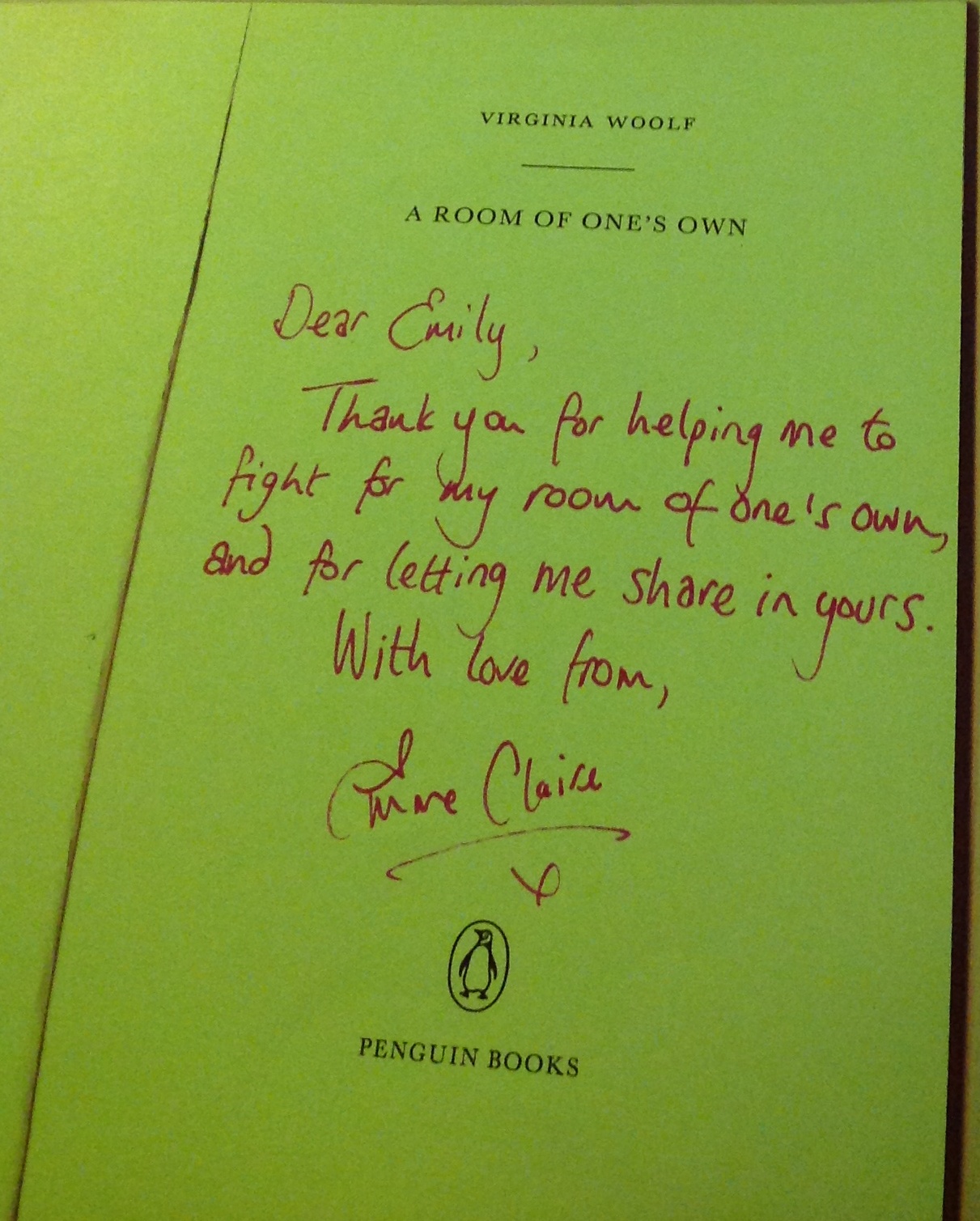
A Room of One’s Own to Share

A Room of One's Own by Virginia Woolf
A Room of One’s Own by Virginia Woolf

My gift for you, Emily, is A Room of One’s Own by Virginia Woolf – a book to which I have returned so many times during my quest to find a literal and psychological writing space.

When I first read this extended essay on women and creativity in my college bedroom, we hadn’t yet met. The very fact that I was studying in Cambridge was evidence, perhaps, that the world had begun to listen to Woolf’s argument that women should receive the same access to education as men. Her words particularly resonated, since I read them from the other side of doors that had kept her locked out.

I don’t think I’d admitted to anyone that I wanted to become a writer myself but when the opportunity arose to run the college literary society, I jumped at the chance.

The first female writer I ever met was Bernice Rubens, and I got to take her to dinner in college. The drinking society members were downing glasses of wine and playing a game called ‘no hands pudding’, which involved them thrusting their faces into their food. ‘You don’t fit in here,’ Rubens told me. ‘You’ll look back and feel proud that you don’t.’

Cambridge introduced me to some brilliant and kind academics, to some very dear friends, and to many varied and wonderful books. But it was a world still relatively unused to northern state school educated women, so Ruben’s observation had been astute. I am profoundly grateful for the room I found during my time at Cambridge, but it wasn’t quite yet a room of one’s own.

I re-read the essay a few years after graduation, when I was by then trying to forge my way as a writer. In order to work on my first novel, I slept on a friend’s floor, shared a bunk bed with a flatmate, and lived as a warden in a raucous halls of residence. Woolf’s argument that ‘A woman must have money and a room of her own if she is to write fiction’ had taken on, for me, a pressing significance.

Although I was still struggling to find a literal room of one’s own, I had by then found a figurative one in my friendship with you. In you, I discovered someone else who was also trying to carve out enough time and money and space to write, someone else who shared the conviction that it was worth the fight.

Most recently, I re-read A Room of One’s Own in the study in my backyard – my very own creative refuge. You have your own study now too. We have sat side-by-side at both of our desks, writing together about friendships between literary women. In this way, you have given me a gift that perhaps exceeds even Woolf’s hopes for the female writers who would follow her. With your help, I have been lucky enough to find not only a room of one’s own, but also a room to share.