Memories of Jean Rhys: our interview with Diana Athill

We recently wrote to one of this month’s profiled authors to ask if she would be willing to answer some questions about the late Jean Rhys. We were delighted when Diana Athill responded with a charming picture postcard and an invitation to come and visit her. December’s guest blog is the result of our conversation.

Jean Rhys in older age (1970s). Creative Commons licence

Diana Athill, now in her mid-nineties, has often spoken about how much she likes living at this residential home in north London. The greatest wrench she experienced when she moved out of her old flat in Primrose Hill was the need to give up a lifetime’s worth of books.

There is a single tall bookcase to the left of the chair where she is now sitting. Although it holds a great many more volumes than my similarly-aged grandparents had in their entire house, Athill’s collection previously ran into the thousands. In fact, the mammoth task of being forced to reduce it caused her such stress that she ended up spending a night in hospital.

From the chairs she’s instructed us to pull up – warning me apologetically that mine won’t be very comfortable – we count several titles by Jean Rhys, the author whose career Athill helped to resurrect through her work as an editor at André Deutsch.

Readers of our first December post will know what a long wait Athill had in store for her when Rhys told her she could have the final draft of Wide Sargasso Sea in ‘six or nine months’, and of her support and encouragement over the nine years it took for Rhys to finally deliver her manuscript.

Did Athill ever feel frustrated with her, we wonder. ‘I quite often felt frustrated’, she says, ‘but on the hand it became sort of a habit… She was fun to be with, you see, when she was being happy. And she was great as a writer.’

In relation to her writing, Athill remarks that Rhys was ‘steely’. ‘She knew exactly what she wanted and she was always dead right. In relation to ordinary life, I think she got stuck at about the age of eight.’

But because she could be charming, people wanted to come to her aid: ‘When she was young and a very, very pretty woman, she was rescued over and over again by helpful men. When she became older, she was rescued by nice women like me.’

When we ask Athill about her happiest memories of Rhys, she responds with laughter. She recalls the times when she stayed at Rhys’s cottage in Devon, saying that they were ‘hardly happy… but fun’.

Rhys once described the village she lived in as ‘a dull spot which even drink can’t enliven much’. Athill reserves comment on the geographical location, but she was clearly horrified by the small house itself: ‘When I first saw it I thought, how could anybody live here?’

But although she and others spent hours trying to find the author an alternative home, Athill tells us that Rhys would always say, in the end, ‘I think not. Better the devil I know.’

After the publication of Wide Sargasso Sea and republication of her earlier novels brought her greater financial stability, Rhys’s friends arranged for improvements to be made to the house, which resulted in it becoming warmer. The shed beside the building was converted into a spare room.

‘The funniest time really’, Athill laughs, was ‘when I went there and I was staying in this awful little shed’. It was a windy night and the surrounding bushes were banging against its outer walls. She woke up thinking: ‘Oh goodness, it’s making even more of a noise, and so I opened my eyes and what did I see? My handbag flying through the air out of the window!’

It would turn out that a thief with a hook on a long wooden rod had whisked her bag away. Athill leapt out of bed, but the boy vanished immediately.
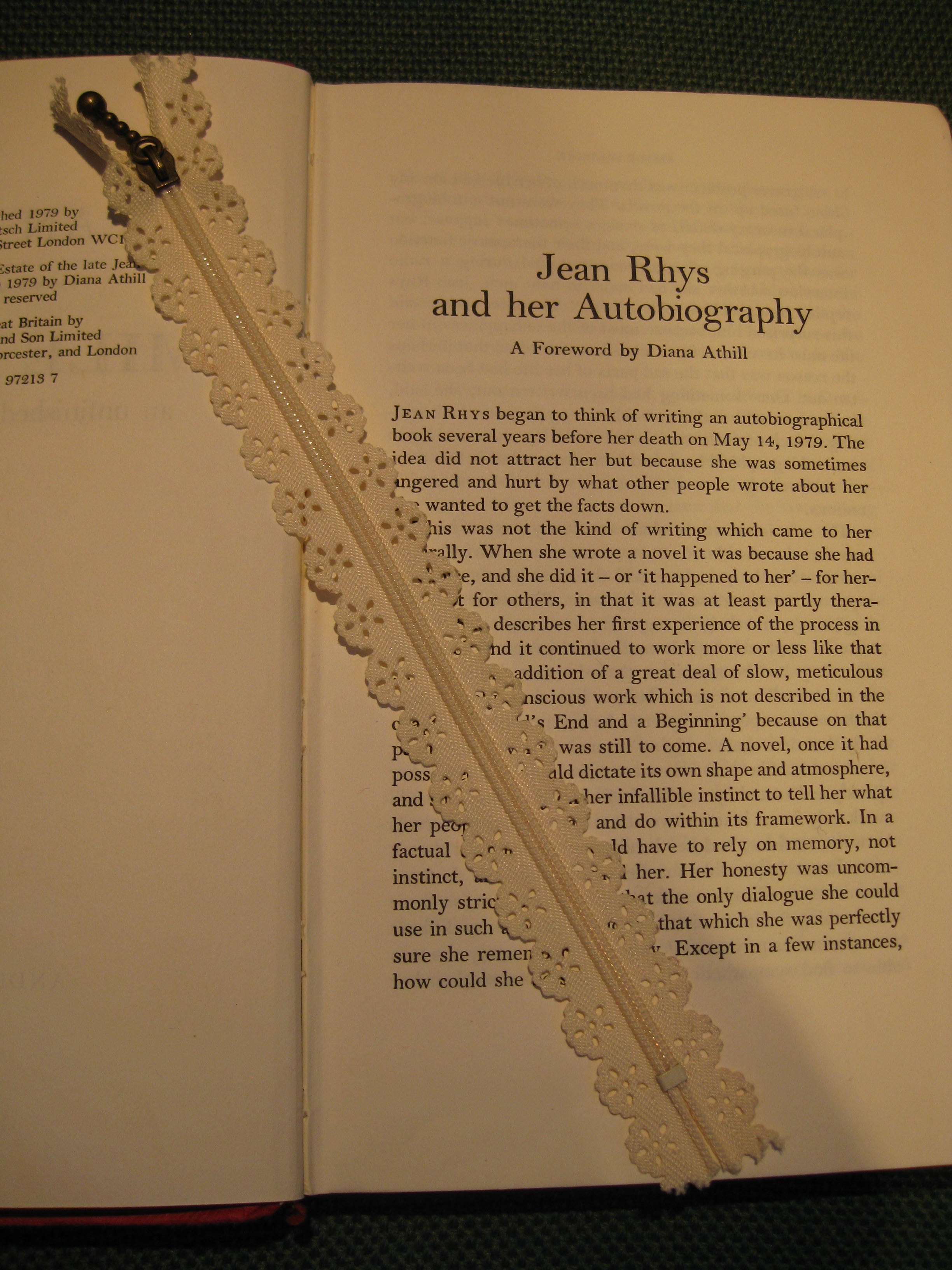
First page of the introduction to Smile Please by Diana Athill, Jean Rhys's unfinished autobiography.
First page of Diana Athill’s introduction to  Smile Please, Jean Rhys’s unfinished autobiography.

When she told Rhys about the incident the next morning, the author’s reaction was: ‘“Oh good!” Because she’d been telling people that she’d heard suspicious people creeping about outside at night and they’d all told her she was imagining it.’

Rhys was famously paranoid – something she herself admitted. ‘Victim’ is another term readily associated with her, although this was something that used to make her angry. ‘There was a lot of violence in Jean’, Athill says. ‘She used to get very, very cross when people said she was a victim because she knew perfectly well, in her heart of hearts, that she was pretty fierce.’

Rhys’s literary ferocity combined with her helplessness in everyday matters created the circumstances for her collaboration with Athill – one of the most important in recent literary history.

Diana Athill’s collection of short stories Midsummer Night in the Workhouse is published by Persephone Books. Her selected memoirs Life Class is published by Granta Books.

What I’ve Learned from Emma Claire Sweeney

Drawing inspiration from Diana Athill and Jean Rhys, this month we take up the challenge to let each other know some of the things we’ve learned from the experience of regularly reading our friend’s writing.

The first time Emma Claire and I swapped pieces of work, we each printed out a short story we’d written, tucked it into an envelope fixed with airmail stamps and then waited with considerable trepidation for a postal reply.

I was living on the Japanese island of Shikoku at the time. Emma Claire, whose home had previously been a ninety-minute drive away, was now back in Britain, at her parents’ house in Birkenhead. A year had passed since we’d each confessed our secret ambitions to write, but it had taken us all this time to get up the nerve to show the other what we were working on.

View from Matsuyama Castle (the town where I used to live) by Jyo81 (Creative Commons licence)

Today, when Em and I exchange writing so frequently, this seems, on the one hand, extremely timid. But on the other, we probably did have some cause to worry – not just that our own efforts wouldn’t be good enough – but about how our friendship would be affected if we didn’t like each other’s prose styles.

Thankfully, the opposite turned out to be true, which is not to say that those early stories were much good. We were still grappling with the basics: how to pace a story, when to show and when to tell, and (in my case) how to write in grammatical sentences.

Nonetheless, Emma Claire’s use of language, infused with sensory detail, immediately pulled me in. In those early years, the stories she sent me were most often inspired by her experiences of living in Japan and her backpacking travels around South East Asia. I still easily recall a scene aboard a cramped Mekong river barge, ‘a garland of white jasmine petals and pink carnations’ swinging ‘hypnotically’ at the boat’s bow.

More recently, her fiction has centred on places closer to her roots. Like the novel she’s close to finishing, my favourite short story of hers is set in the seaside town of Morecambe. ‘The Taj Mahal of the North’, exemplifies so much that I admire about Em’s writing: the warmth of her voice on the page; her compassion for her characters; her ability to make the ‘ordinary’ seem suddenly startling and new.

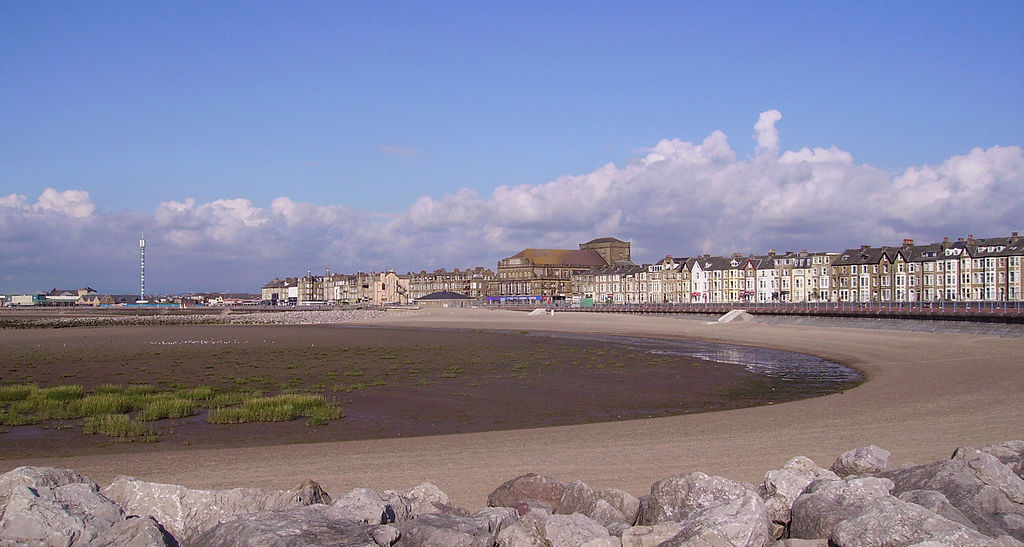
Morecambe by Immanuel Giel (Creative Commons licence)

I love her descriptions of the thriving resort of yesteryear – ‘the thick scent of the sea… the honky-tonk noises of the amusement arcades, and the couples sharing sundaes in the ice-cream parlour’. There’s a melancholy beauty to the Morecambe of today too, as seen through the eyes of the elderly male narrator who laments the demise of ‘the bath-houses and theatres’ where he spent his youth, ‘all standing derelict and converted into discotheques’.

This is writing that flows with ease. A reader would never know how many revisions it’s been through, how boldly its author has reshaped her story, removing characters, reordering scenes and, as Athill once recalled Rhys saying, being ready to ‘cut, cut, cut’.

Emma Claire’s example has encouraged me to stick with many a project that isn’t working yet and to take brave decisions when it comes to rewriting, completely replotting a novel for instance, or ditching a once-loved narrator: decisions that are made that bit easier when you know you’re guaranteed to have a writer friend beside you, every step of the way.

Diana Athill and Jean Rhys

Prostitution, abortion, failed marriages and alcoholism: accounts of Jean Rhys’s story tend to paint her as a tragic femme fatale. But these facets make up only part of the colourful life that she’d weave so hauntingly into her fiction.

Of white Creole heritage, Ella Gwendoline Rees Williams was born in 1890 on the Caribbean island of Dominica. After emigrating to Europe in her late teens, she attended a girls’ boarding school in Britain, and later spent years living a financially precarious existence in bohemian Paris and London. This included periods as a chorus girl and artist’s model – experiences she’d later draw on in her lyrical early novels.

But works like Voyage in the Dark and Good Morning, Midnight – which takes its title from a poem by Emily Dickinson – initially met with only limited success.

In middle age, Rhys retreated from the gritty glamour of her earlier existence. Now living in a remote country cottage, she upped her alcohol intake to a bottle of whisky a day and all but disappeared from the public’s consciousness.

Literature lovers owe a great debt to the editor Diana Athill for the part she played in putting Rhys back on the literary map. When Athill’s publishing house, André Deutsch, committed itself to Wide Sargasso Sea, Rhys’s daring prequel to Jane Eyre, the author let the firm know that they could have the completed manuscript within six to nine months.

Image used with the kind permission of Penguin Books.

Six to nine months turned into a year. A year turned into five, six, and then seven… Throughout this period, Athill, along with her fellow editor Francis Wyndham, encouraged Rhys by letter, and neither of them ever lost their belief in her phenomenal talent.

Athill was already a published writer herself, of short stories and a first volume of memoir by that stage. Born close to two decades after Rhys, Athill, who’d grown up on a thousand-acre estate in the British county of Norfolk, came from a very different social background. But she too flouted convention: by going to Oxford University and then into a career in publishing, rather than settling down to married life as so many of her female friends had done.

The two, who’d been corresponding for seven years, had still never met when Rhys agreed to bring her almost-finished manuscript to London. They’d arranged to have lunch together, but, the day before, Athill received a panicked phone call from the manager of the hotel where the author was staying. Rhys had suffered a heart attack.

Instead of the planned champagne celebrations, she was rushed into hospital, and so the pair first really got to know each other during the following weeks of Rhys’s convalescence. Later, Athill would recall that the experience ‘with all the usual intimacies of nightdress washing, toothpaste buying and so on, plunged us into the deepest end of friendship’.

Although there had only been a few lines missing from Rhys’s manuscript at the time of her heart attack, it took her a further two years to complete it. But nine years after taking on the book as an editor, Athill travelled from London to Devon to collect Wide Sargasso Sea in person.

Its great success would bring Rhys the celebrated literary status that had always eluded her in her youth.

Athill, too, would go on to enjoy a hugely successful old age, with the release of several more books, including Stet, the memoir of her days as an editor, and the award-winning Somewhere Towards the End.

Image used with the kind permission of Granta Books.

Activity

Diana Athill has said that she learned much about concision and clarity from Jean Rhys – lessons that she was able to draw on in her own writing. This month, we’ll let each other know the lessons we’ve learned from many years spent reading and commenting on each other’s work.


So Many Unexpected Connections

As we mentioned in our first post of the month, it was one of our blog readers, Sarah Emsley, who told us about the friendship of L.M. Montgomery and Nora Lefurgey.

We’d got to know Sarah through her website and her support of Something Rhymed. Forming this kind of unexpected connection, often across the seas, has been one of the real pleasures we’ve encountered as a direct result of setting up our project.

Since beginning Something Rhymed at the start of this year, we’ve profiled the friendships of eleven pairs of female authors. But, of course, these women’s relationships with other writers didn’t stop with a single friend. Through our research we’ve learned about other important connections between different authors we’ve featured on this site.

Winifred Holtby, lovingly memorialised by Vera Brittain in Testament of Friendship, had earlier written a biography of her own: a book about Virginia Woolf. George Eliot, often believed to have been scornful of Jane Austen’s work, in fact studied the novels of her forebear in preparation for beginning to write her own fiction.

One of this month’s authors, L.M. Montgomery, felt a sense of affinity with Eliot. Mathilde Blind’s early biography of Eliot had such an impact on the then young and aspiring Montgomery that several of its words and phrases found their way into her own journals.

Elizabeth Gaskell was friends, not just with Charlotte Brontë, but also with Harriet Beecher Stowe. Stowe, as we wrote in October, was such an admirer of Charlotte Brontë that she once asked a medium to help her try to make contact with the late author’s ghost.

A planchette - the kind of device once used by Harriet Beecher Stowe, to try and make contact with the ghost of Charlotte Bronte. (Creative Commons licence)
A planchette – the kind of device once used by Harriet Beecher Stowe, to try and make contact with the ghost of Charlotte Bronte. (Creative Commons licence)

One half of next month’s pair of writers was also greatly influenced by Brontë, but she adopted a less other-worldly approach. Jean Rhys’s most famous book Wide Sargasso Sea resurrects the story of Antoinette Cosway, her reimagined version of the character of Bertha Mason, the ‘madwoman’ who’d previously languished in the attic of Brontë’s novel Jane Eyre.

We look forward to sharing more of Rhys’s own story with you in our first post of December, next week, and also continuing to discover many more important links between the great female authors – connections that often transcended their historical eras.

Nora Lefurgey and L.M. Montgomery

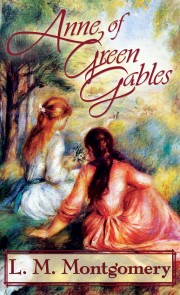
Anne-Green-Gables-fr-cover-180x295
Image used with the kind permission of ARose Books.

As girls, we were both great fans of the Anne of Green Gables series. Though we grew up in different towns on opposite sides of the Pennines, L.M. Montgomery’s fictional Canadian community of Avonlea was a haven we each knew well.

It was after we began Something Rhymed at the start of this year that we began to look back on those books. We remembered feisty Anne’s longing for a ‘kindred spirit’ and ‘bosom friend’, and wondered whether there was a real-life Diana Barry in her creator’s life.

We have one of this blog’s readers, Sarah Emsley, to thank for putting us on to this particular friend. Knowing of her interest in all things Montgomery, we asked Sarah if she had any ideas. She was kind enough to come up with a couple of possibilities, although it was Lefurgey that really captured our interest.

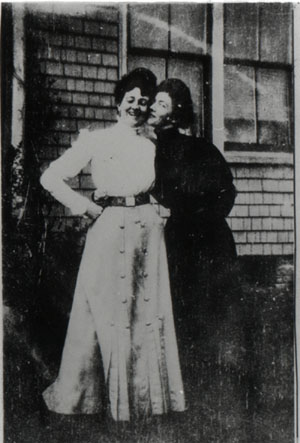
L.M. Montgomery (left) and Nora Lefurgey in 1903
L.M. Montgomery (left) and Nora Lefurgey in 1903. Image used with the kind permission of the Archival and Special Collections, University of Guelph Library, and Heirs of L.M. Montgomery Inc. L.M. Montgomery is a trademark of Heirs of L.M. Montgomery Inc.

She and Montgomery became pals in 1902, when Lefurgey was a young schoolteacher working in Cavendish, on Prince Edward Island, where Montgomery had spent most of her childhood and recently returned to care for her grandmother.

This was still some time before the publication of the novel that would catapult her to stardom, but her short stories were being regularly published by then and her literary earnings were beginning to grow.

Unlike Maud – as she was called by those who knew her – Lefurgey was not a professional writer. But she did produce an unpublished novel, belong to a writers’ club, and, like her new friend, keep a journal throughout her life. Most thrillingly for us, over a five-month period, when she’d left her previous lodgings to board with Montgomery and her grandmother, the two women kept a collaborative diary.

Whereas Montgomery’s personal journal entries of that time were often melancholic in tone, a very different side of her emerges in her lighthearted published writings of the era, and another side again in this joint-diary.

Here, she and Lefurgey indulge in tales of flirting with young men, and exaggerated neighbourhood gossip. They often use their separate entries to tease each other, seemingly in anticipation of how the other will react when she takes up the story. They decorated the book’s cover with interlocking hearts, perhaps a reference to their shared closeness or to the giddiness of the heightened romantic contents within.

A more naturally gregarious personality than Montgomery, Lefurgey seems to have filled a void in the life of an author who’d experienced a sometimes lonely childhood living under the strict care of her grandparents.

Her early impressions were that Lefurgey was ‘a positive godsend’. Although they were forced to part when Lefurgey left Prince Edward Island to be married, she re-emerged in Montgomery’s life twenty-four years later, and soon established herself as the main confidante of a woman who was by then one of Canada’s best-loved authors.

Activity

In their diary entries, L.M. Montgomery and Nora Lefurgey often reported on the same incidents from their differing points of view. This month, we’ll recall a day spent together and each write it up in our own style.

The Ghost of Charlotte Brontë

In our first post of October, we mentioned that George Eliot once received a letter from her friend Harriet Beecher Stowe in which she recounted a ghostly visit she’d received from the late Charlotte Brontë. Although Eliot brushed off this tale, telling Stowe that, ‘rightly or not’, she found it ‘enormously improbable’, the strange episode intrigued us. From which of the historic writers we’ve profiled on our website, we wondered, would we most welcome the chance of a visit?

The hardest thing about this month’s activity was making that choice. Katherine Mansfield, for instance, with her Bohemian ways, has always fascinated me. Having spent several months of this year immersed in Eliot’s letters to Stowe, I’ve become more and more interested in the life of the author of Middlemarch, and so I seriously considered writing about Eliot in this post, even though – given her reaction to Stowe – I’m not sure she’d have approved of the exercise.

But in the end I realised that, of all the authors we’ve profiled, it is the same writer that Stowe wrote of so excitedly to her British friend who has most haunted my own imagination over the years.

Title page of an early edition of Jane Eyre, showing Charlotte Bronte's pseudonym Currer Bell. Creative Commons licence.
Title page of an early edition of Jane Eyre, showing Charlotte Bronte’s pseudonym Currer Bell. Creative Commons licence.

Unlike Eliot or Stowe, Austen or Woolf, I can’t remember a time when I didn’t have some sense of who the Brontë sisters were. My mother had named me Emily, after her favourite of the three, and, once she thought her daughters were old enough to appreciate the atmospheric setting – but some time, I think, before Erica or I had actually read any of the Brontës’ books – she took us to visit the Parsonage Museum at Haworth. This was a place famously popular with Japanese tourists, and somewhere Mum had got to know well herself through her related work for the regional tourist board.

There was a gift shop at the Parsonage, selling brooches bearing the sisters’ images. I, of course, bought an Emily Brontë brooch – thinking that, given my name – this was pretty much a requirement. I also remember feeling momentarily envious that Erica was able to make the choice for herself, by holding the Charlotte and Anne brooches up to the light and trying to decide whose picture she liked the most.

After much chivvying from our parents, who were no doubt keen to get us all outside for our lunchtime sandwiches, Erica finally selected the Charlotte brooch. Later, on the drive home in the car, we sat side-by-side in the back comparing our Brontë sisters. Unlike the dark colours of my miniature portrait of Emily, the Charlotte brooch was all cream and taupe with the merest blush of rose on her cheeks and lips.

There was something not-quite-there about the image, something that hinted at all the elements missing from the artist’s representation of his subject. You couldn’t guess, not from looking at the woman of that picture, that this was someone whose most famous novel had once made her a scandalous figure, because of the way its plot was believed to mount a dangerous challenge to contemporary patriarchal traditions.

Image used with the kind permission of Oxford University Press.

Even in the biography written by Elizabeth Gaskell, there are many elements missing in her account of Charlotte’s life because, in order to try and resurrect her friend’s reputation she suppressed evidence, for instance, of her love of the married Constantin Héger, and tended to ignore details that might work against her aims of honouring Charlotte ‘as a woman, separate from her character as an authoress’.

Although later biographies have filled in many of these details, there is something about all three Brontë sisters, in fact, that remains enticingly enigmatic. It explains to me why my mother, a life-long lover of mysteries, should have been so drawn to their stories, and even perhaps why Stowe sat down in the dark well over a century ago now and tried to make contact with Charlotte Brontë.

From an Author and Editor Relationship to Something Bigger: Sheila Hancock and Kate Mosse

Today’s guest blog features our interviews with one of Britain’s most-loved actresses Sheila Hancock, also a bestselling author, and her friend, the bestselling author Kate Mosse. The two met in the 1980s, when Kate, then working in publishing, was given the task of editing Sheila’s first book – an experience both women recall with fondness.

‘I was a young editor’, Kate tells us, ‘sent to work with the great and legendary Sheila Hancock and I couldn’t really believe my luck. I was only twenty-five or something, out of university… I felt like I’d been thrust into the world of the stars’.

Kate Mosse Copyright: Mark Rusher. Picture used with the kind permission of Orion.
Kate Mosse
Copyright: Mark Rusher. Picture used with the kind permission of Orion.

Soon she was travelling to Sheila’s house every week to work with her on her memoir Ramblings of an Actress. Kate’s first impressions were that, in addition to being very witty and funny, Sheila was ‘an incredibly clever woman’ and ‘a person of great principle’, with a clear vision for her book – something that made working with her ‘a completely joyous job’.

As for Sheila, she says that Kate ‘was young and probably a bit nervy, but she certainly didn’t show it’. In fact, she remembers her as ‘a real little bossy knickers’, someone who gave her enormous encouragement ‘to keep at it and not lose my confidence and give up’.

Talking of Kate’s regular visits to her home, she tells us about an occasion when the then-editor sat down and informed her ‘I’m not leaving until you’ve finished that chapter’. Sheila says that she predicted even then that Kate ‘would eventually do something amazing’, although she wasn’t sure what. ‘I just knew that this girl was very, very special’.

Kate recalls a memory from around that time when the pair went to one of the famous women’s peace protests at the Greenham Common nuclear base. She describes ‘one terrible picture’ taken of the two of them there ‘although we could be anywhere!’ The day was an ‘extraordinary’ occasion and one that took them away ‘from the author and editor relationship to something bigger’ that was ‘more part of the women we were rather than the workers we were’.

Sheila Hancock We sought permission from Bloomsbury to use this image.
Sheila Hancock
We sought permission from Bloomsbury to use this image.

In the years that have passed since those early experiences, the two have continued to actively support each other. Kate recounts how her friend rang her up for some advice when, after the death of Sheila’s husband the actor John Thaw, she was preparing to write the memoir that would become The Two of Us. And when Kate’s novel Labyrinth  won a prize at the British Book Awards 2006, it was Sheila who presented the award to her.

More recently, Sheila, who has watched Kate’s career develop with ‘awe and pleasure’, attended the launch of Kate’s latest book The Taxidermist’s Daughter. On the 23rd of this month, Kate will be interviewing Sheila on stage at an event at London’s Bloomsbury Institute to mark the publication of Sheila’s novel Miss Carter’s War.

Though both women acknowledge the importance of solitude to the life of a writer, they also talk about the need for friendship. As Sheila says, ‘It’s nice to meet up with a friend to find out what they’re doing and what the life outside is like’. These relationships prevent her from getting into the world of her book ‘to the exclusion of all else’.

Kate tells us that she values friendships with other writers. Amongst her peers, she sees people ‘who have the same creative emotions that I do. We have the same mixture of success and failure… the same mixture of ambition and wanting to be invisible, and that’s how we sustain one another’.

Kate Mosse’s most recent novel The Taxidermist’s Daughter is published by Orion.

Sheila Hancock’s novel Miss Carter’s War will be published by Bloomsbury on 9 October.

George Eliot and Harriet Beecher Stowe

Mary Ann Evans, as she was born, did not easily inspire friendship amongst her fellow nineteenth century female novelists. Even before she found fame as an author, George Eliot was firmly entrenched in a London social circle that was unconventional, intellectual and predominantly male.

George Eliot, painted by Aged 30 by the Swiss artist Alexandre Louis François d'Albert Durade (Creative Commons Licence)
George Eliot, painted by Alexandre Louis François d’Albert Durade (Creative Commons Licence)

There was also the matter of her living ‘in sin’ with critic and philosopher George Henry Lewes – a state that kept many ‘respectable ladies’ away from her door. Elizabeth Gaskell, for instance, though she wrote to Eliot to praise her books Adam Bede and Scenes of Clerical Life, couldn’t help lamenting that ‘I wish you were Mrs Lewes’.

But perhaps the greatest obstacle to friendship was her formidable, and intimidating, reputation. Eliot had previously written to Gaskell to congratulate her on Mary Barton and Cranford, but she was often less generous to other female authors of the era.

Withering public pronouncements, for instance in her essay ‘Silly Novels by Lady Novelists’ (1856), can have offered little encouragement to the majority of writing women who might have wanted to get to know her better.

Some, though, were undeterred, including the author of Uncle Tom’s Cabin, Harriet Beecher Stowe, who first wrote to her in 1869. Though this was their first direct contact, Stowe greeted Eliot as ‘my dear friend’, then quickly moved from opening pleasantries to praise but also bold suggestions about the British writer’s books, which she said she had recently re-read ‘carefully pencil in hand’.

Harriet Beecher Stowe by Gurney & Sons (Bowdoin College Museum of Art) (Creative Commons Licence)

Perhaps surprisingly, given Eliot’s well-known reserve, her response was enthusiastic. It marked the start of an eleven-year friendship that would continue until her death.

At first, it’s difficult to understand what could have drawn these two together. They must have quickly realised they’d never have an opportunity to meet. Although in that first letter, Stowe implored Eliot to visit America, the ill health of Lewes and Calvin Ellis Stowe meant neither felt able to travel far from home.

Their personalities were markedly different too, as were their views on religion. Stowe was a staunch Christian, whereas Eliot had stopped attending church as a young woman when her critical reading had convinced her to abandon her earlier evangelical fervour.

What seems to have cemented the relationship is a willingness to concentrate on areas in which their lives did converge: their status as hugely successful female authors, ‘marriages’ to eccentric intellectuals, and their interest in literature.

Communicating long-distance naturally meant enforced pauses in conversation, allowing Eliot to skirt away from trickier subjects, such as Stowe’s ardent enthusiasm for spiritualism, although she did take her more firmly to task on the occasion when Stowe wrote of being visited by the ghost of Charlotte Brontë, telling her that ‘whether rightly or not’ the account struck her as ‘enormously improbable’.

Their physical separation must also have made it easier than if they’d lived in the same country for Stowe to regard Lewes and Eliot simply as husband and wife. And it turned Eliot into an ideal confidante when on two occasions – Stowe’s notorious essay alleging incest between Byron and his sister, and later, her clergyman brother’s alleged adultery – the American author found herself the subject of explosive social scandal.

Sometimes there were significant gaps in their correspondence, but in each case the pair seems to have picked up the conversation again with little trouble, and the endurance of this unexpected friendship certainly throws a fascinating new light on the intellectual and private lives of these two nineteenth century literary giants.

Activity

George Eliot was far from convinced by Harriet Beecher Stowe’s assertion that she’d been visited by the ghost of Charlotte Brontë. Although we share her scepticism, something about this episode in their letters intrigued us. And so this month we’ll each be asking ourselves from which of the deceased authors we’ve featured on Something Rhymed we’d most welcome the chance of a visit.

It Began with a Mouse: Tania Hershman and Vanessa Gebbie

Zora Neale Hurston once invited her friend Marjory Kinnan Rawlings to give a lecture to her university students. For a time, they shared a publisher too. Like this month’s profiled pair, the bond between authors Tania Hershman and Vanessa Gebbie is both personal and professional. In September’s guest blog, they tell us about the public and private faces of their friendship.

Science Museum café, London, and a mouse scoots across the floor. T and V have just met face to face for the first time, having emailed for a while. How to react? There are a few seconds of silence, then two sets of giggles. A serious meeting (on our way to an event about writing short stories with science at the Dana Centre) plus laughter. That sets the tone for a friendship that is now in its eighth year.

20140906_201525
(L-R) Vanessa Gebbie and Tania Hershman at Gladfest at Gladstone’s Library

It began with generosity across continents – V, in the UK, emails to congratulate T, in Israel, for winning first prize in a flash fiction competition in which V wins second prize. It progressed to sharing the writer’s journey, ups and downs alike.

We were both at the start of our publication careers and decided to deal with it all with honesty, not hiding how many rejections our short stories were getting, even going so far as to set up a joint blog in 2007 documenting all our submissions statistics – acceptances, rejections, earnings.

This underpins our connection – honesty in sharing work, in giving feedback. Our writing styles are, of course, different, as are our approaches to teaching, but we believe in the No-Rules Rule – we apply it to each other and to everyone else we come into contact with.

We give each other permission to try anything, to take risks, to be a different kind of writer from the one we were yesterday, or last year. We are always trying something new, challenging each other – T inspires V with science, V has lured T into joining her WW1 obsessions through her annual writing group trip to The Somme.

We are both currently experimenting with poetry, sending each other poems-in-progress, wanting not just ‘Oh this is wonderful’ but ‘I think you don’t need this word/line/stanza’ too. We also share teaching techniques – and have taught workshops together.

We’d be firm friends whether or not we were writers, but writing definitely provides some great highs. We’ve both had the joy of being there when the other has received fantastic news – T’s first short story collection, V’s first novel. Each other’s successes lift us both.

We have been fortunate enough to win some prizes, get some awards and residencies, and we make sure that we allow ourselves to celebrate – which is not always easy for writers with a tendency towards introversion – but we both hate complacency and won’t go there, ever!

Eight years later, we live in the same country, though several hours apart, and we see each other more regularly. Wherever we are, the phrase that always gets uttered (mostly by V) is: ‘Shall we write?’ And we always do, not just at home, but in cafés (where cake somehow manages to make an appearance), parks, railway stations.

The Science Museum café might have altered its menu. The mouse might not be with us any more. But some things don’t change.

Tania Hershman’s latest short story collection My Mother Was an Upright Piano is published by Tangent Books.

Vanessa Gebbie’s novel The Coward’s Tale is published by Bloomsbury.


The Something Rhymed party

From the mad tea party in Alice’s Adventures in Wonderland to The Great Gatsby’s  glamorous shindigs to the almost unbearable occasion to mark Blanche’s birthday in A Streetcar Named Desire, literature is full of social occasions that linger on in the minds of its audiences.

In the hands of a writer, the bringing together of a sizable cast of characters can lead to moments of revelation, conflict or panic. In Larry’s Party by Carol Shields, the whole plot builds towards the titular gathering. A devastating mistake made at a party by the timid protagonist of Rebecca signals an important shift in Daphne du Maurier’s novel. A mysterious soirée in A Murder is Announced marks the shocking point at which Agatha Christie’s village mystery truly begins.

Emma Claire and I were hoping for considerably less drama at our party – the first we’d ever organised together – and yet, we wanted it to be an occasion that would remain as a memory, in a good way, for all those who were there.

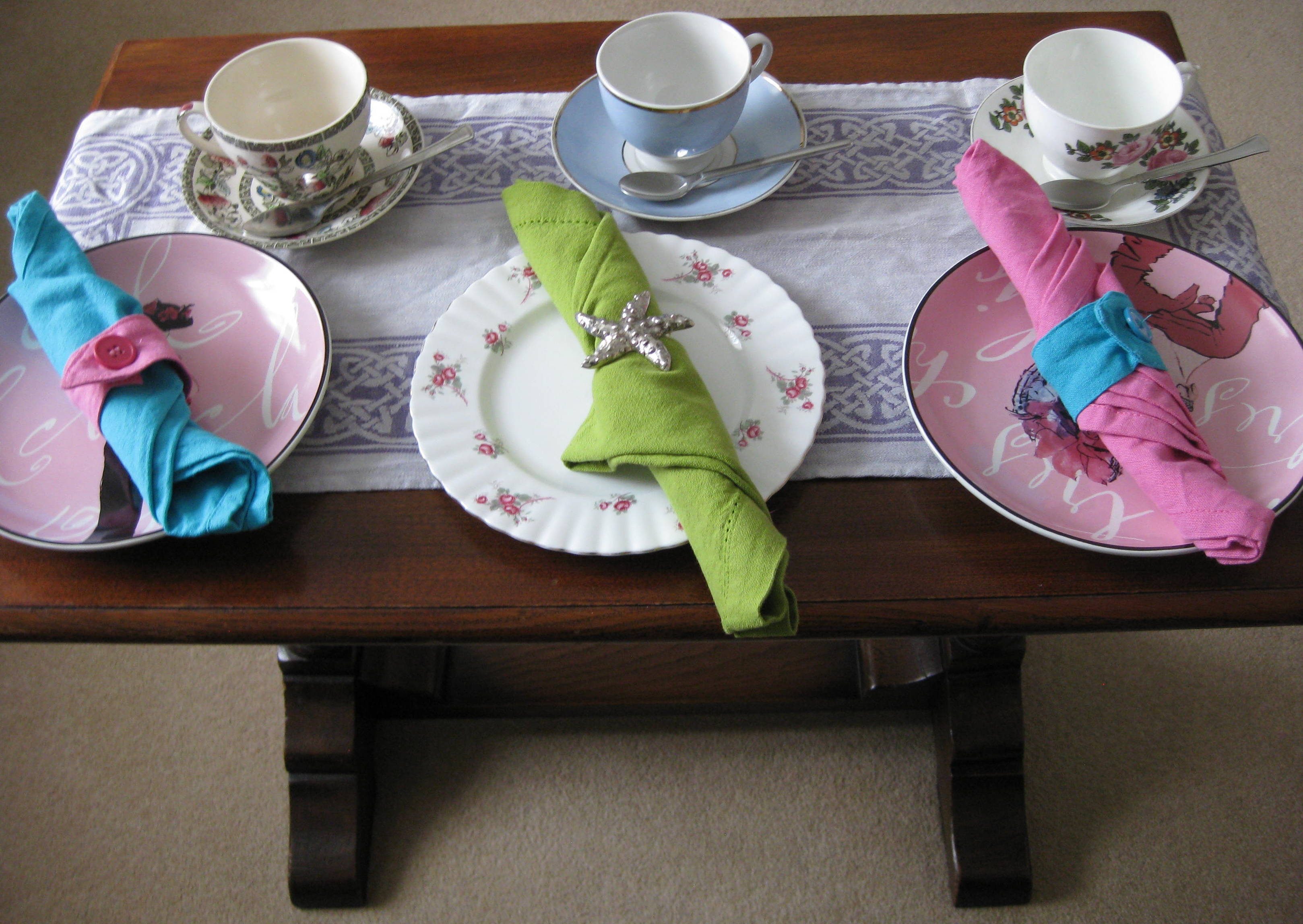
We decided to make an occasion of it with a traditional British afternoon tea.

We were inspired by Marjorie Kinnan Rawlings, who once organised a get-together for Zora Neale Hurston, and also a feeling that we wanted to provide an opportunity for female writers we knew to make new writer friends. Owing to the size of my London flat, we were forced to keep things small-scale, so we invited just four writing women and asked each of them to bring along a female writer friend.

Our guests were Susan Barker, Emily Bullock, Ann Morgan, Irenosen Okojie, Yen Ooi, Denise Saul and Rima Haque – some of whom will be known to Something Rhymed readers through their guest posts on our blog.

IMG_1153In a written story, it is often the things that go wrong at a party that cement it in the reader’s imagination. We thought we might have a situation like that on our hands when, only five minutes before our first guest turned up, I opened the freezer door to get some ice and suddenly discovered two forgotten bottles of fizz – one smashed to pieces and one that promptly exploded everywhere when Emma Claire eased out the cork.

It’s the sort of incident that, if you’re hosting on your own (or feel that sole responsibility for a party’s success lies with you), can become magnified out of all proportion. In The Garden Party by Katherine Mansfield, though the majority of family members are remarkably untroubled by the genuinely terrible news that arrives halfway through the tale, there is much concern earlier on about the feared disappearance of the little flags for the sandwiches.

But as the two of us struggled to leap out of the way of the flying foam, we found we were unable to stop laughing: a reminder that, having the right friend at your side at moments like these swiftly transforms them from catastrophe to comedy.

Zakia Uddin, Denise Saul and Susan Barker listening to Emily Bullock reading an extract from her forthcoming novel, The Longest Fight.
Rima Haque, Denise Saul, Susan Barker and Emily Bullock (reading from her forthcoming novel, The Longest Fight).

Amazingly, too, the sparkling wine down Em’s dress seemed to dry out in record time and had virtually disappeared by the time everyone arrived. We’d wondered earlier – completely unnecessarily as it turned out – if, with a group of people who didn’t really know each other, conversation would be initially stilted. So we’d asked each writer to bring along a sample of her work as a way of introducing herself. In between the sandwiches, cakes and replenishing of glasses, we were treated to extracts from novels and short stories, and some of Denise’s poetry.

We talked about professional issues too. Questions about book launches, ways of spreading the word about our work, and university programmes were just some of the things we discussed. If I had to sum up the occasion in a few words, I’d say it was five hours of warmth and good conversation, and lots of laughter: not the conflict of great literature perhaps, but – for Emma Claire and me, and we hope for all our guests – the stuff of a great party for writers.