Crying Tears of Laughter: Irenosen Okojie and Yvette Edwards

In her work as a reviewer for the Sunday Times, Dorothy L. Sayers often took the opportunity to praise the work of her friend Agatha Christie – calling Murder on the Orient Express, for example, ‘a murder mystery conceived and carried out on the finest classical lines’. Inspired by this, we asked April’s guest bloggers, Yvette Edwards and Irenosen Okojie, to each sing the praises of their writer friend.

They met when they appeared together at a literary event, a couple of years ago. Irenosen takes up the story:

SONY DSCIt was a platform to showcase new writers; at that point the buzz had started to build about Yvette’s writing. When she read, her work immediately captured me. It was evocative, fearless and powerful.

Not only that but she was very warm, generous and humble. She was the star attraction on the bill but she didn’t behave that way and she didn’t distance herself from me or the other writer. She was incredibly chatty, curious about our writing journeys and happy to offer advice.

One of the images I never forget from that evening was Yvvettes’s mother managing her stack of books being the literary equivalent of a roadie. I enjoyed this tiny window into their relationship.

We all exchanged details; afterwards, I bought a copy of her book A Cupboard Full of Coats. It was so engrossing I read it in one sitting. What I really loved was that the female protagonist was complex and darkly drawn, unapologetically so. It is a brilliant debut novel, a heartbreaking read worth every penny.

One of the things I admire about Yvvette is her tenacity. She didn’t have an easy writing journey but she never gave up.

Over the next year, we’d bump into each other at literary gatherings, our friendship developed from there. We’d email back and forth and she’d encourage me to keep writing when things were difficult. Writing can be such an isolating endeavour that friendships and support are invaluable.

My favourite thing about her other than her literary prowess is her humour. She’s one of the most hilarious writers I know and is never without a funny anecdote or encounter. I cry with laughter whenever we meet up. She could have been a stand-up comedian had she not wanted to go into fiction writing. She’s a natural storyteller. When you engage with her, this becomes apparent.

It’s been fun and heartening watching her journey so far being both a fan and a friend.

Yvette says:

iphone pics 202

Irenosen is a power ball of energy that continually amazes me. She is always busy, is always writing as well as juggling various projects, passionate about everything literary, from the craft itself to championing events, interviewing other authors, getting involved in awards and prizes, reading, judging, spreading the word.

I think her website is a perfect reflection of her as a person and as a creative.  It is warm, full, interesting, regularly updated, filled with information about her own work as well as the projects she’s involved in.

It is vast and varied and quirky. You could pop in, intending only a short visit and a quick browse, and hours later still be clicking into tabs and links, discovering fabulous pics, astute observations and confident commentary, writing that’s rich, humorous, profound. It’s impossible to sum up either Irenosen or her website with a mere handful of words.

And that’s what her writing is like. It defies strait-laced and simple definition.  It doesn’t slip into any pre-packaged boxes or notions or expectations.  You can never exactly anticipate the journey she’ll take you on, or the destination you’ll reach, but you can be confident it will be interesting, that there will be surprises in store, that you will be challenged and entertained along the way, that you’ll emerge from your journey both heady and giddy, like stepping off a super roller coaster at a different place to where your journey began.

And if you do decide to take the matter up with her, there is every possibility she’ll hug you, throw her head back and laugh.

A Cupboard Full of Coats (Oneworld) by Yvette Edwards was longlisted for the Man Booker Prize and the International IMPAC Dublin Literary Award, and shortlisted for the Commonwealth Writers’ Prize.

Irenosen Okojie’s first novel, Butterfly Fish, and a collection of short stories, Speak Gigantular, will be published in June 2015 by Jacaranda Books.

Travellers on the Same Road

Image by Luke Detwiler (Creative Commons Licence).

Agatha Christie and Dorothy L. Sayers never shared the extraordinary levels of closeness enjoyed by their contemporaries Vera Brittain and Winifred Holtby, who saw each other as literary ‘travelling companions’.

Neither were they spurred on by the kind of highly motivating personal rivalry that fired the bond between modernists Katherine Mansfield and Virginia Woolf, another pair of author friends of a similar generation.

What Christie and Sayers had instead was a solid working friendship, and, for them, this was presumably enough. For Emma Claire and me it never has been, though.

As some of our readers will already be aware, we got to know each other at a time when we were both living carefree lives as young English teachers in rural Japan. It was still some months before we’d admit to anyone else – and each other first – that we had serious ambitions to write, and so, although I remember us sometimes talking about books we were reading, writing was not a big part of our friendship. We spent our time doing other things: travelling the country, going to parties, and sampling the wares of local noodle shops and bars.

Back then, I would have been delighted to be told that, once we’d ‘come out’ to each other as would-be authors, the similar direction in which we’d chosen to travel would allow us to support each other through the years to come: celebrating individual triumphs as a pair, providing each other with a sympathetic ear when necessary, and –  through our mutual interest in female literary friendship – eventually finding a way to write together.

Image by maroubal2. Creative Commons licence.
Image by maroubal2. (Creative Commons Licence).

This would have sounded fantastic, and of course it is. What could be better than your closest co-worker also being one of your closest friends?

The only niggling problem is that recently it began to dawn on us that, bit by bit over time, our whole friendship had become consumed by work. When we went out for the evening, supposedly for fun, our thoughts would soon turn to ideas for feature articles we could write together. When one of us invited the other over for dinner, we’d find ourselves talking about the next literary event we’d be doing together, or our jobs at the universities at which we both teach.

Now that we’ve become aware of this, we’ve started to make a concerted effort to have times when we turn off the ‘shop talk’, although sometimes it can be hard. As I write this, I’m acutely aware that, despite having sent Emma Claire three emails today and talked with her on the phone, each of these conversations was about our various joint projects.

That’s why it was especially good to go out for cocktails and noodles recently. The drinks were fancier than the cans of alcoholic fruit Chu-hi that we used to buy in our twenties. The ramen broth was floating with all sorts of extra ingredients unseen in the traditional joints we used to frequent. But there was something about the night’s holiday atmosphere that took me back to those heady, early days in Japan.

It reminded me that, though a working writers’ friendship is a wonderful thing, to have found someone with whom you can truly ‘travel’ is many, many times better.

Agatha Christie and Dorothy L. Sayers

Despite some parallels in their childhoods, and their shared status as ‘Golden Age’ queens of crime, the differences between Agatha Christie and Dorothy L. Sayers were far more profound.

Agatha Christie (Creative Commons licence)
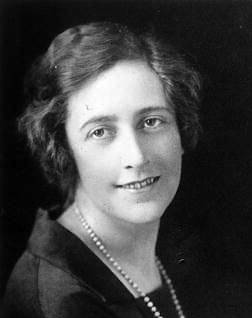
Agatha Christie, 1890-1976 (Creative Commons licence)

Agatha Mary Clarissa Miller was schooled largely at home. Her mother had wanted to hold her back from reading until she was eight, but by the age of five the impatient girl managed to teach herself.

While Christie’s learning was relatively ad hoc, and focused ultimately on helping her to find a good husband, the parents of Dorothy Leigh Sayers (who also educated her at home) kept her to a rigorous schedule.

Dorothy L Sayers
Dorothy L. Sayers, 1893-1957 (Image used with the kind permission of the Dorothy L. Sayers Society.)

Sayers eventually won a scholarship to Somerville College at the University of Oxford (also the alma mater of writer friends Vera Brittain and Winifred Holtby) and went on to a series of jobs, most successfully in the advertising industry.

Later in life she would return to academia, her translation of Dante’s Divine Comedy becoming the work of which she felt most proud. But most remember her as the author of the Lord Peter Wimsey novels, and it was this position as a writer of detective fiction that led her into a friendship with Christie.

Both were members of the Detection Club. This group of leading crime writers, who met regularly to socialise and talk shop, had to abide by a strict set of literary rules designed to give the reader a fair chance of guessing the guilty party in their books. They also jointly-penned several mysteries, three of which – the novel The Floating Admiral and two radio serials – included both Christie and Sayers as contributors.

Each woman’s attitudes to these activities illustrate the contrast in their personalities. Sayers devised the club’s elaborate initiation rituals, threw herself into ceremonies with gusto, and took on the formidable task of organising her fellow writers for their collaborations.

The reserved Christie, on the other hand, merely submitted to her initiation. When she accepted the role of president (succeeding Sayers) it was on the condition that someone else be appointed to make speeches and chair events.

When working on the radio serials, she often proved elusive, leading to frantic phone calls and letters between her and Sayers when at last she’d been tracked down. But Sayers also sent notes praising Christie’s recent fiction and divulged her exasperation at what they both saw as unnecessary interference by J.R. Ackerley, their BBC producer.

The feeling, incidentally, appears to have been mutual. Ackerley later recalled that, though Christie was one of his favourite detective fictionists, he believed she was a ‘little on the feeble side’ as a broadcaster – adding that ‘anyone in that series would have seemed feeble against the terrific vitality, bullying and bounce of that dreadful woman Dorothy L. Sayers’.

Able to earn far more from other writing endeavours, Christie’s sense of loyalty to Sayers was probably a major reason why she agreed to take part in even as many of these joint ventures as she did. But Sayers also came to her friend’s aid on several occasions, including joining in with the search for the author during her famous 1926 ‘disappearance’. She also provided a vital supporting vote when disgruntled members of the Detection Club, unhappy with the ‘unfair’ plot of her Poirot mystery The Murder of Roger Ackroyd, called for Christie to be expelled.

It has been said that, partially due to her shyness, Christie had few intimate female friends. But with Sayers she established an important working friendship, and one on which each woman was able to draw for support through the glory years of their success.

Activity

The Detection Club often held their official dinners at London’s Café Royal. This month, we will visit this historic venue for a cocktail or two. Since the Detection Club sometimes wrote collaboratively and also came up with a series of rules to abide by, we will come up with a list of ‘rules’ for the writing we do together.

Eva Trout: a Woman in Need of a Friend

For this month’s Something Rhymed activity, Emma Claire and I decided to each read something by one of our current profiled authors: Eva Trout by Elizabeth Bowen and The Unicorn by Iris Murdoch. Both of these books are said to have been influenced by the work of one author on the other.

This image is in the public domain.

I came to Eva Trout afresh, with no prior knowledge of its plot. Since I was going to be reading not only for pleasure but also for this website, I suppose I set out with a preconceived idea that the post I eventually wrote could be about one of the friendships enjoyed by the eponymous heroine.

But that’s the trouble with preconceived ideas. Long before the late stage in the novel when Eva declares ‘I have no friend’, I had been struck by the fact that my original intention wasn’t going to work at all.

The huge gap left by the lack of a true trusted confidante for much of Eva’s life was something I kept turning over in my mind as I moved through the chapters of the novel.

When the reader first encounters Eva at the start of the book, she is a young woman still waiting to come into the fortune left to her by her late father. Despite her personal wealth, Eva has not had an easy start in life. Her mother abandoned her when she was a child, only to be killed in a plane crash soon afterwards. Since her father’s suicide some years later, Constantine Ormeau, a man who appears to have been Eva’s father’s lover, has been her unsympathetic legal guardian.

Constantine regards Eva as a problem, and even Iseult Arble, a former schoolteacher who previously showed a great deal of interest in the girl and has allowed her to move into the home she shares with her husband, has begun to feel increasingly wary towards her youthful lodger.

Eva’s social awkwardness and hard-to-predict behaviour are a puzzle to most of the novel’s other characters, isolating her from those who surround her. As a reader, I don’t mind admitting that I was left somewhat puzzled, not just by the central character but aspects of the novel as a whole.

Certain episodes will undoubtedly live on in my mind – the unbearably stilted conversation that takes place between Mr and Mrs Arble as they wait for Eva to come home one evening; or the restaurant scene during which Iseult tucks into a plate of oysters in a way that is ‘at once methodical and voluptuous’, for instance. But, overall, there was something about the book that I didn’t quite ‘get’ – not in the way that I got  The Death of the Heart, Bowen’s novel from thirty years earlier, or her moving short story ‘The Visitor’ – both of which thoroughly engaged me.

Like several notable readers I’ve since discovered, I struggled with some of Bowen’s decisions about language and structure, aspects of the book which I felt cut me off from the story and characters – particularly interesting in view of Murdoch’s likely influence on Bowen’s approach.

By the time I reached the final page, my thoughts on the subject of friendship had moved away from wishing for a lasting friend for Eva and onto wishing instead that my friend had read this book, so that we could discuss it together.

So, I suppose that this post has ended up as a request to Emma Claire to do just that, because I know for certain that, whether she agrees with my take on Eva Trout or not,  conversations with her always provide me with interesting new ways to think about literary works. And as I mentioned in one of my posts from last month, this is something I’ve really come to value in our friendship.

Get Involved

Reading Bowen’s novel got me thinking about depictions of female friendship in literature. Anne Shirley and Diana Barry in L.M. Montgomery’s Anne of Green Gables, Jane and Prudence in the novel of the same name by Barbara Pym, and the women of Amy Tan’s Joy Luck Club, are all examples that popped quickly into my mind. If a female friendship from a story, poem or play has left a lasting impression on you, we’d love to hear about it.

Please get in touch by leaving a comment below, or send a tweet via Twitter using the hashtag #SomethingRhymed.

Elizabeth Bowen and Iris Murdoch

The Anglo-Irish writer, Elizabeth Bowen, is remembered for surrounding herself with the most lauded of literary women.

Elizabeth Bowen
Image used with the kind permission of Vintage Books.

Never allowing her severe stammer to get in the way of her role as a garrulous hostess, she entertained the likes of Carson McCullers, Rosamund Lehman, Eudora Welty and Virginia Woolf.

We were surprised to discover that Iris Murdoch had attended one of the glittering salons at Bowen’s Court since she was twenty years younger than her hostess and has often been mythologised as something of an honorary man. Famously dismissive of her female contemporaries, she refused to read any of Barbara Pym’s novels, despite (or because of) repeated and hearty recommendations from the men in her life.

Iris Murdoch
We sought permission from Harper Collins to use this image.

It turned out that Murdoch and Bowen were first drawn together by their shared Anglo-Irish heritage and admiration for each other’s novels.

The salons at Bowen’s Court, mostly known for their decadence, were, in fact, full of creative ferment. Passages from Murdoch’s The Unicorn are so indebted to Bowen’s style and subject matter that they could almost have been written by the older author. Similarly, Bowen’s Eva Trout is influenced by the ‘demoniac’ subversion that she so admired in the work of her acolyte.

But it was confessions about their romantic relationships that cemented the intimacy of their inter-generational friendship. Murdoch confided her fears about agreeing to wed her lover, the fellow academic, John Bayley: as a married woman, she would be forbidden from continuing in her post as an Oxford don. Bowen, who had felt liberated rather than hemmed in by her own marriage, advised the younger author to embrace the opportunity to spend more time on her novels.

The pair visited each other regularly and commented on each other’s work, developing a deep and mutually influential friendship that lasted for nigh on two decades.

During this time Murdoch’s unconventional marriage endured, in some ways following the example mapped out by the flamboyant Bowen, whose husband was quite an introvert. Indeed, one party guest at Bowen’s Court stumbled into a cupboard in search of the loo only to find him crouched amongst the mops and brooms with a tray of food on his knees. Their successful union was more companionable than erotic, and Bowen sought sexual fulfilment elsewhere – most notably in a thirty year love affair with a Canadian diplomat.

Murdoch was similarly open to extramarital encounters. Most interesting among her affairs, perhaps, was her lesbian relationship, break-up and reconciliation with fellow philosopher, Philippa Foot. And yet, like Bowen, Murdoch was devoted to her husband, as, in both cases, the support of these men helped their creativity to thrive.

Not only did the older author show the younger one how to carve out erotic and creative freedom within a lifelong and nurturing marriage, Bowen also demonstrated by example how to extend wisdom and generosity to the next generation. And so, Murdoch – previously wary of her female contemporaries – ended up taking the young A.S. Byatt under her wing.

Activity

This month, Emma Claire will be reading The Unicorn by Iris Murdoch and Emily will be reading Eva Trout by Elizabeth Bowen.

Taking a Closer Look

Inspired by profiled writers Nancy Hamilton and Helen Keller, this month we each decided to introduce our friend to something new…

I must admit that when Emma Claire first suggested we visit a snowdrop trail together, I had my doubts that this was quite in the spirit of the challenge we’d set ourselves.

True, we’d be going to a new location for me, London’s Chelsea Physic Garden. But as for the snowdrops themselves, well, I thought I was already well-acquainted with those white-petaled flowers that emerge each year out of the coldest winter chill.

IMG_1186I could understand why Emma Claire was keen to go to this event. Snowdrops play a part in her novel, The Waifs and Strays of Seaview Lodge, but, recalling that I’d been able to identify one of these plants since the age of three or four, I wondered whether our planned morning would really provide me with enough new material on which to base this post.

Of course, as Emma Claire must have anticipated thanks to her research for her novel, the snowdrop varieties on show at the garden extended far beyond the Common and Double types with which I was familiar.

IMG_1183Some grew taller than any I’d previously seen; some had distinctive green markings; or uneven surfaces; or petals that extended outwards like wings. And without the accompanying signage, I’m not sure I would have recognised some of them as snowdrops at all.

Thinking about the morning afterwards, I remembered that when Emma Claire first suggested we consider profiling Helen Keller on Something Rhymed I’d had a similar reaction.

Although I was vaguely aware that this legendary deafblind woman had written an autobiography, I wasn’t sure whether that was enough to place her in the same category of ‘literary heroine’ as the other women whose friendships we’d been considering on this website.

But it turned out that the rather sugar-coated impression I’d had of Keller was formed almost entirely from a single book that I’d treasured as a child. Encouraged by its author, I can recall closing my eyes and blocking up my ears with my fingers to try and gain an inkling of how Keller experienced the world. From these pages, I’d learned of her amazing achievements, personally, and as a campaigner for others with disabilities.

But I had gleaned next to nothing about Keller’s wider political activism, as a socialist and supporter of women’s suffrage for instance. I didn’t know about her style of writing, or the spirited voice that shines through in essays like this one. Other than her student-teacher relationship with Anne Sullivan, who famously spelled out the word ‘water’ on the young Keller’s hand – I was in the dark about Keller’s other female friendships.

IMG_1197Over the years, Emma Claire’s influence has encouraged me to take a closer look at many things I’d once thought I understood. I have returned to books I disliked purely on the strength of her enthusiasm. I’ve adjusted my views on all sorts of subjects thanks to the back-and-forth of our conversations.

But until we went to see those snowdrops together, I don’t think I had truly noticed that this was one of the aspects I most value about our friendship. So, perhaps in the end, this was the real ‘something new’ I experienced as a result of this month’s challenge.

In the Hands of Chance?

Image by Angela Monika Arnold (Creative Commons licence)

A chance meeting in the ladies’ lavatory at a wedding marked the start of the friendship between last week’s guest interviewees, Polly Coles and Liz Jensen.

This got us thinking about some of the other unplanned first encounters of writers we’ve featured on Something Rhymed.

Susan Barker and Rima Haque, for instance – saw their paths collide back in 1999 at the Statue of Liberty, where they both had summer jobs. Rachel Connor and Antonia Honeywell formed an immediate connection when they happened to be paired as students in advance of their first MA Novel Writing workshop at Manchester University.

Of the monthly profiled writers, some like Charlotte Brontë and Elizabeth Gaskell and Harriet Beecher Stowe and George Eliot knew of each other by reputation before they met. Diana Athill formed a connection with Jean Rhys through her job as an editor at André Deutsch, and the friendship between Maya Angelou and Toni Morrison really blossomed when they both found themselves appearing at the Hay Festival in Wales.

But others, especially those who met early on in their literary careers, got to know each other under circumstances largely governed by happy twists of coincidence.

What would have happened if Vera Brittain and Winifred Holtby hadn’t each passed their university entrance exams and found themselves at the same Oxford college? Or if the teacher’s job in L.M. Montgomery’s hometown on Prince Edward Island had been given to someone other than Nora Lefurgey? Or Anne Sharp hadn’t gone to work as a governess with Jane Austen’s family?

Some might say that, with such similar political views and overlapping fields of work, Brittain and Holtby would likely have met eventually, but one can more easily imagine a life in which Austen had to manage without Sharp’s friendship, and Montgomery never found a kindred spirit in Lefurgey.

And since both Brittain and Holtby were always keen to credit the other for the role they had played in shaping their own success, this raises the question as to whether each woman’s life might have run a quite different course without the help of her valued friend.

Unlike the vast majority of our monthly guest bloggers and featured authors, who were already well on their way with their writing careers by the time they became acquainted, regular readers of Something Rhymed will know that when Emma Claire and I met neither of us had published a single article or story.

In fact, we had been scribbling in secret up until then, and hadn’t had the courage to share our ambitions to write with anyone else.

It’s nice to think that, having so many things in common, we would have found each other, perhaps on-line, eventually – an advantage female writers of today have over those in Montgomery or Austen’s times.

But it’s far nicer to be able to recall the fact that we’ve been there for each other through all the ups and downs of our writing journeys, and to think that, as Brittain once said about Holtby: ‘although we didn’t exactly grow up together, we grew mature together, and that is the next best thing’.

Two Lives, Lived in Different Ways: Polly Coles and Liz Jensen

Like Mary Lamb and Dorothy Wordsworth before them, writers Polly Coles and Liz Jensen have enjoyed many years of friendship. In our first guest interview of 2015, they give us some insights into what makes their relationship work.

SR: How did you become friends?

Liz: Where else but in the Ladies? It was at the wedding of two mutual friends twenty years ago. Polly had already made an impression on me at the ceremony, where she wore a lovely chocolate-brown outfit with a lace collar, and read a poem aloud. Beautifully.

She seemed so serene and poised, which is the exact opposite of how I felt in those days. In the Ladies I overheard her talking to someone – very eloquently and cool-headedly – about the fact that she was writing, and finding it hard. I was writing at the time too, and also finding it hard. So I accosted her.

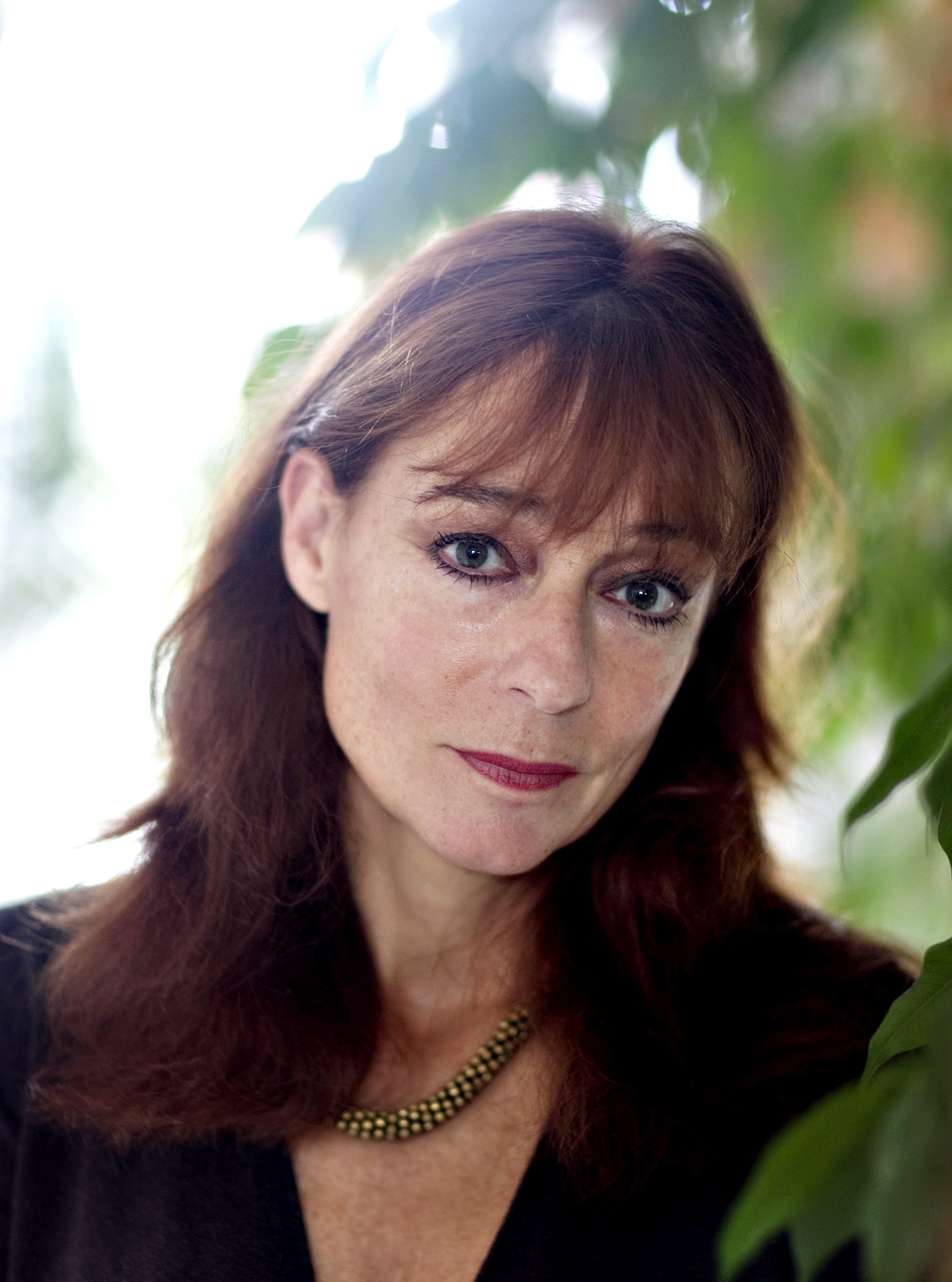
Liz Jensen, photograph by Jacob Ehrbahn.

SR: Can you tell us about some of the ways in which you have you supported each other over the years?

Polly: Soon after we first met we began meeting every few weeks and exchanging chapters of the novels we were then writing. Liz’s work became her first novel, Egg Dancing. Mine was called Utopia Station. I sent it to a couple of agents and then, although I felt it was an honourable first try, I decided that I’d see it as a kind of apprentice piece and go on to a second one. I went through the same process with the next novel and in 2013 I had a non-fiction work published.

After I stopped writing with the same focus as Liz (some time around when my twins were born and I had three kids under three), I went on editing her novels. I hugely enjoy editing and in fact my work as an abridger for Radio 4 is the mother of all edits – massive cuts are needed, whilst one must also retain the continuity of prose style and narrative.

So – it always came easily and pleasurably to me, the more so because Liz is always very generous and appreciative of any help. I think this matters. It’s not that you expect to be acknowledged, but it’d be disingenuous to say it isn’t nice to be appreciated.

Polly Coles, photograph by Laurie Lewis.

SR: Would you say that writing lies at the heart of your friendship?

Liz: As I remember it began as quite a formal writing/editing partnership but it quickly developed, not just because we complement one another so well (she is the wise one, I am the hysteric) but because after a few months of exchanging chapters and editing one another’s first novels, we both fell pregnant. It was a very happy surprise.

Our boys were born just a couple of weeks apart. Quite independently of one another we hit on archangel names: Gabriel and Raphael. Raphael was my second child, and I stopped at two. But Polly went on to have three more babies in quick succession.

So inevitably, our writing careers diverged. Because it happened in such an organic way, it didn’t feel like a problem. That said, with Polly’s writing mostly on hold, and my novels now being published at two-year intervals, there was an imbalance: she was helping me as much as ever, but I wasn’t reciprocating.

I knew one day she’d write something astonishing, and that it would be published: it was something I never, ever doubted. And sure enough, she has: her astute, philosophical, sharp-eyed memoir, The Politics of Washing: Real Life in Venice.

SR: Have you ever experienced any feelings of literary rivalry or envy?

Polly: None whatsoever, which might sound strange, given that she was a rising and active literary star and I, despite my literary aspirations, had taken a very different path. I did do some freelance work over the years, but I was mostly at home with my children and although I never stopped writing, I just never quite got round to pushing myself forward in any significant way.

I suppose success or the absence of it can spawn envy, but as I said, I chose to be a full time mother and I always believed that my time could come, so even there, it just was never an issue. I’m afraid this all sounds rather goody two-shoes. It’s not. It’s just two lives, lived in different ways. And a friendship.

The Politics of Washing: Real Life in Venice by Polly Coles is published by Robert Hale. The Essay – Venice Unravelled, her five programmes on life in modern Venice, was recently broadcast on BBC Radio 3.

Liz Jensen’s latest novel is The Uninvited. She is also the author of The Ninth Life of Louis Drax, which will be released as a film this year. Both books are published by Bloomsbury.

At the Risk of Disapproval

Since the beginning of our friendship in the early 2000s, Emma Claire and I have chalked up many dozens of hours of late-night conversation. Like her, I have happy memories from the period when we were in our early twenties and working as English teachers in Japan: of chatting, just the two of us, at parties.

On these frequent occasions when we slipped away from the crowd, I’m not sure if anyone cared, or even noticed, but I doubt it would have bothered me if they did. In my mind, this was where the real fun was happening: in us sharing revelations and laughter out in someone’s shadowed garden, or gossiping in a corner by the piled-up coats.

Bar in Lisbon - the scene of one of our late-night chats (in 2013).
Bar in Lisbon – the scene of one of our late-night chats (in 2013).

Over the decade and more that has passed since then, we’ve sat up talking well into the night in pubs and cocktail bars in many parts of Britain, and on holidays and writers’ retreats in various European cities.

But the vast majority of our after-dark talk over the years has taken place within the walls of our own homes.

In the days when we lived far away from each other, we would often arrange ‘writing weekends’ at either one of our houses. During these stays – and to the sheer bemusement of some we told about them – we’d spend much of our time, not in conversation at all, but writing in separate rooms. But we’d get together to discuss work-in-progress, and for meals and glasses of wine at the end of the day – times when our talk would meander through countless topics, but invariably keep circling back to writing, as the hours ticked by unnoticed.

Since moving to London a few years back, I now see Em most weeks, so whole weekends spent like this have become less common. But as she is still a frequent guest at the flat I share with my partner, our late-night chats at my place haven’t entirely come to an end.

Amongst the writers we’ve profiled on Something Rhymed, several had spouses or close relatives who seemed to view the time the woman in their life spent with her female friend as a negative thing.

L.M. Montgomery’s husband, for instance, once ‘jokingly’ pointed a gun at her writer pal Nora Lefurgey, and it’s hard to imagine that resentment of some kind wasn’t the cause. Dorothy Wordsworth, one half of this month’s featured pair, was temporarily banned from visiting Mary Lamb by her protective brother Charles (with whom she lived), because he feared that the two’s night-time conversations were depriving his sister from sleep and putting a strain on her fragile mental health. Poets Maxine Kumin and Anne Sexton, too, were so concerned that their friendship could provoke criticism from their husbands that they went as far as installing a secret phone line, so that they could chat to each other without the risk of being discovered.

It is a testament to the bonds of friendship between these pairs of women that they all continued with their literary relationships despite the possibility of more disapproval, and a reminder that it can be done. But I’m thankful that my partner has never voiced any annoyance at my closeness with Em –  even on those occasions when we’ve tied up the (non-secret) home phone line for several hours.

It helps, of course, that he likes Emma Claire too. But he also knows what a support she’s been to me over the years, and that my life would be much the poorer without her as my friend.

Memories of Jean Rhys: our interview with Diana Athill

We recently wrote to one of this month’s profiled authors to ask if she would be willing to answer some questions about the late Jean Rhys. We were delighted when Diana Athill responded with a charming picture postcard and an invitation to come and visit her. December’s guest blog is the result of our conversation.

Jean Rhys in older age (1970s). Creative Commons licence

Diana Athill, now in her mid-nineties, has often spoken about how much she likes living at this residential home in north London. The greatest wrench she experienced when she moved out of her old flat in Primrose Hill was the need to give up a lifetime’s worth of books.

There is a single tall bookcase to the left of the chair where she is now sitting. Although it holds a great many more volumes than my similarly-aged grandparents had in their entire house, Athill’s collection previously ran into the thousands. In fact, the mammoth task of being forced to reduce it caused her such stress that she ended up spending a night in hospital.

From the chairs she’s instructed us to pull up – warning me apologetically that mine won’t be very comfortable – we count several titles by Jean Rhys, the author whose career Athill helped to resurrect through her work as an editor at André Deutsch.

Readers of our first December post will know what a long wait Athill had in store for her when Rhys told her she could have the final draft of Wide Sargasso Sea in ‘six or nine months’, and of her support and encouragement over the nine years it took for Rhys to finally deliver her manuscript.

Did Athill ever feel frustrated with her, we wonder. ‘I quite often felt frustrated’, she says, ‘but on the hand it became sort of a habit… She was fun to be with, you see, when she was being happy. And she was great as a writer.’

In relation to her writing, Athill remarks that Rhys was ‘steely’. ‘She knew exactly what she wanted and she was always dead right. In relation to ordinary life, I think she got stuck at about the age of eight.’

But because she could be charming, people wanted to come to her aid: ‘When she was young and a very, very pretty woman, she was rescued over and over again by helpful men. When she became older, she was rescued by nice women like me.’

When we ask Athill about her happiest memories of Rhys, she responds with laughter. She recalls the times when she stayed at Rhys’s cottage in Devon, saying that they were ‘hardly happy… but fun’.

Rhys once described the village she lived in as ‘a dull spot which even drink can’t enliven much’. Athill reserves comment on the geographical location, but she was clearly horrified by the small house itself: ‘When I first saw it I thought, how could anybody live here?’

But although she and others spent hours trying to find the author an alternative home, Athill tells us that Rhys would always say, in the end, ‘I think not. Better the devil I know.’

After the publication of Wide Sargasso Sea and republication of her earlier novels brought her greater financial stability, Rhys’s friends arranged for improvements to be made to the house, which resulted in it becoming warmer. The shed beside the building was converted into a spare room.

‘The funniest time really’, Athill laughs, was ‘when I went there and I was staying in this awful little shed’. It was a windy night and the surrounding bushes were banging against its outer walls. She woke up thinking: ‘Oh goodness, it’s making even more of a noise, and so I opened my eyes and what did I see? My handbag flying through the air out of the window!’

It would turn out that a thief with a hook on a long wooden rod had whisked her bag away. Athill leapt out of bed, but the boy vanished immediately.

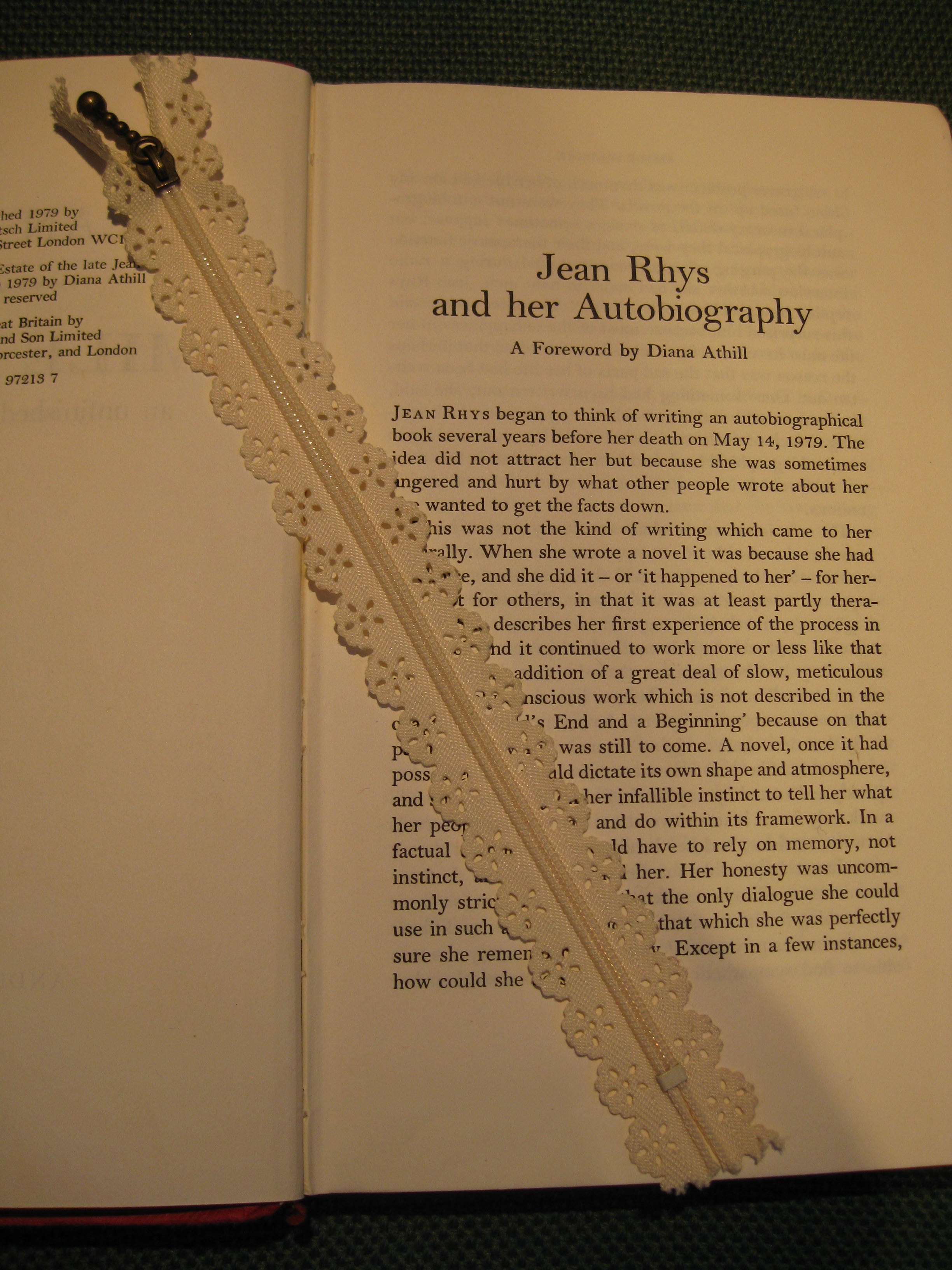
First page of the introduction to Smile Please by Diana Athill, Jean Rhys's unfinished autobiography.
First page of Diana Athill’s introduction to  Smile Please, Jean Rhys’s unfinished autobiography.

When she told Rhys about the incident the next morning, the author’s reaction was: ‘“Oh good!” Because she’d been telling people that she’d heard suspicious people creeping about outside at night and they’d all told her she was imagining it.’

Rhys was famously paranoid – something she herself admitted. ‘Victim’ is another term readily associated with her, although this was something that used to make her angry. ‘There was a lot of violence in Jean’, Athill says. ‘She used to get very, very cross when people said she was a victim because she knew perfectly well, in her heart of hearts, that she was pretty fierce.’

Rhys’s literary ferocity combined with her helplessness in everyday matters created the circumstances for her collaboration with Athill – one of the most important in recent literary history.

Diana Athill’s collection of short stories Midsummer Night in the Workhouse is published by Persephone Books. Her selected memoirs Life Class is published by Granta Books.