The List: Megan Bradbury and Lauren Frankel

Like many of the writer friends we’ve profiled so far, this month’s guest bloggers Lauren Frankel and Megan Bradbury enjoy tracking each other’s literary progress. But they gave this idea their own twist, thanks to something they call The List.

Lauren
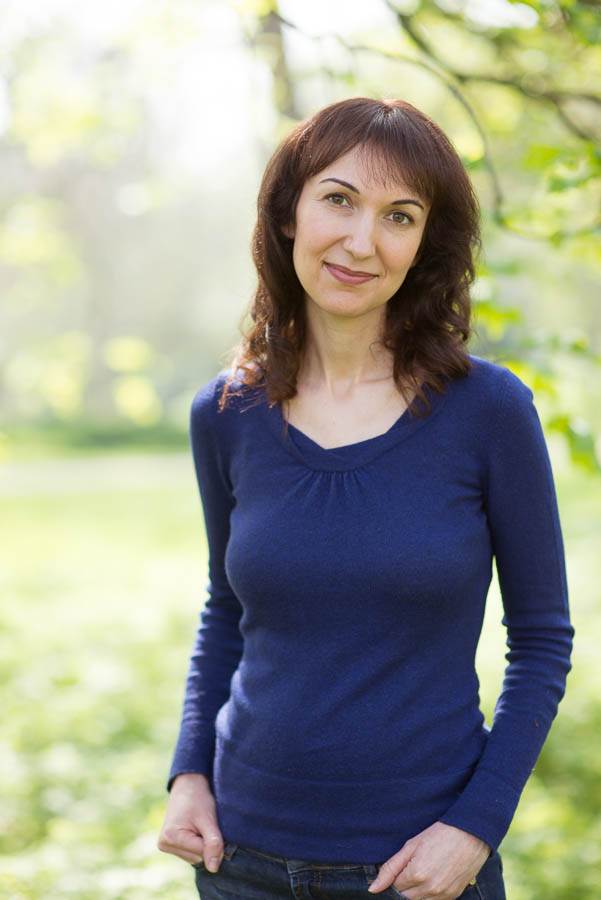
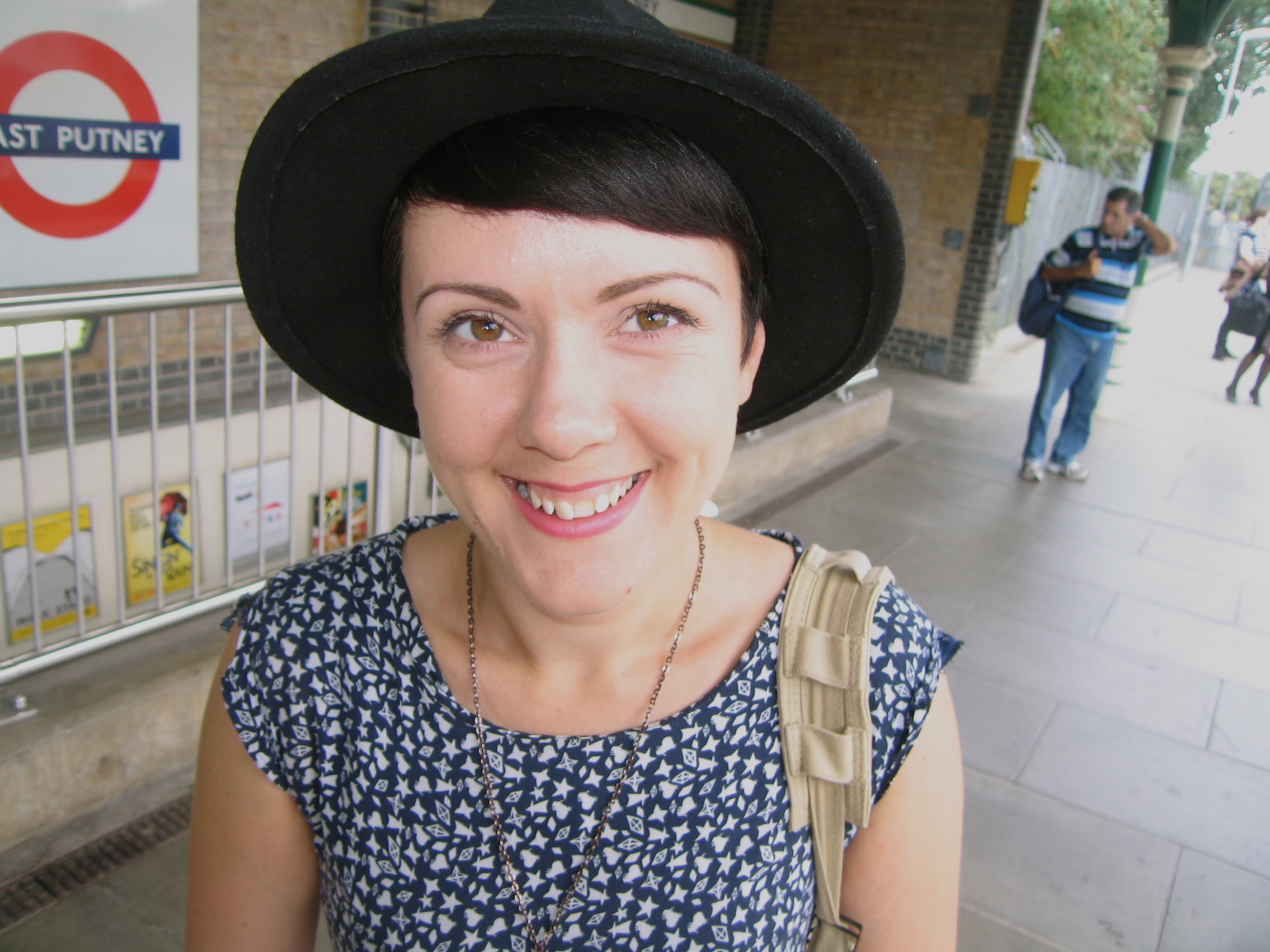
DSC_6096
Image by Rosalind Hobley.

I don’t think it’s an exaggeration to say that without Megan I wouldn’t be a published writer. Who knows? I might not have a six month old son, either.

Let me explain. Megan and I met on the UEA Creative Writing course some years ago. She was young but fiercely serious, with a great laugh and strong opinions. When other students trashed my writing, she would jump to my defence.

After we left UEA, I doubted that I would ever finish a novel. I was slow as molasses – a procrastinator and a perfectionist to boot. When you’re trying to write your first book, nobody cares whether you finish it or not. You don’t have an editor giving you praise, deadlines, or a bollocking.

Megan and I kept in touch, and hearing about my writer’s despair, she invited me to send her a list of my goals each week by e-mail. She and her friend had been sharing theirs, celebrating one another’s large (and small) achievements. Up until then, I hadn’t dared to give myself weekly targets. I thought it would be too depressing to see myself failing to reach them over and over. But I agreed to try it.

Each week, Megan, her friend Kirsten and I would share by e-mail what we’d achieved in the previous week and what we planned for the current one. Soon other writers were joining us in the e-mail ‘achievement’ chain, which meant that four people now cared how my work was going. As I reviewed their weekly goals and accomplishments, I felt spurred on to aim higher – and also to think more about the long term, a thing which had terrified me previously.

With Megan’s encouragement and the help of my ‘list’ friends, I finally managed to finish my novel. To rewrite it again and again when I wanted to give up.
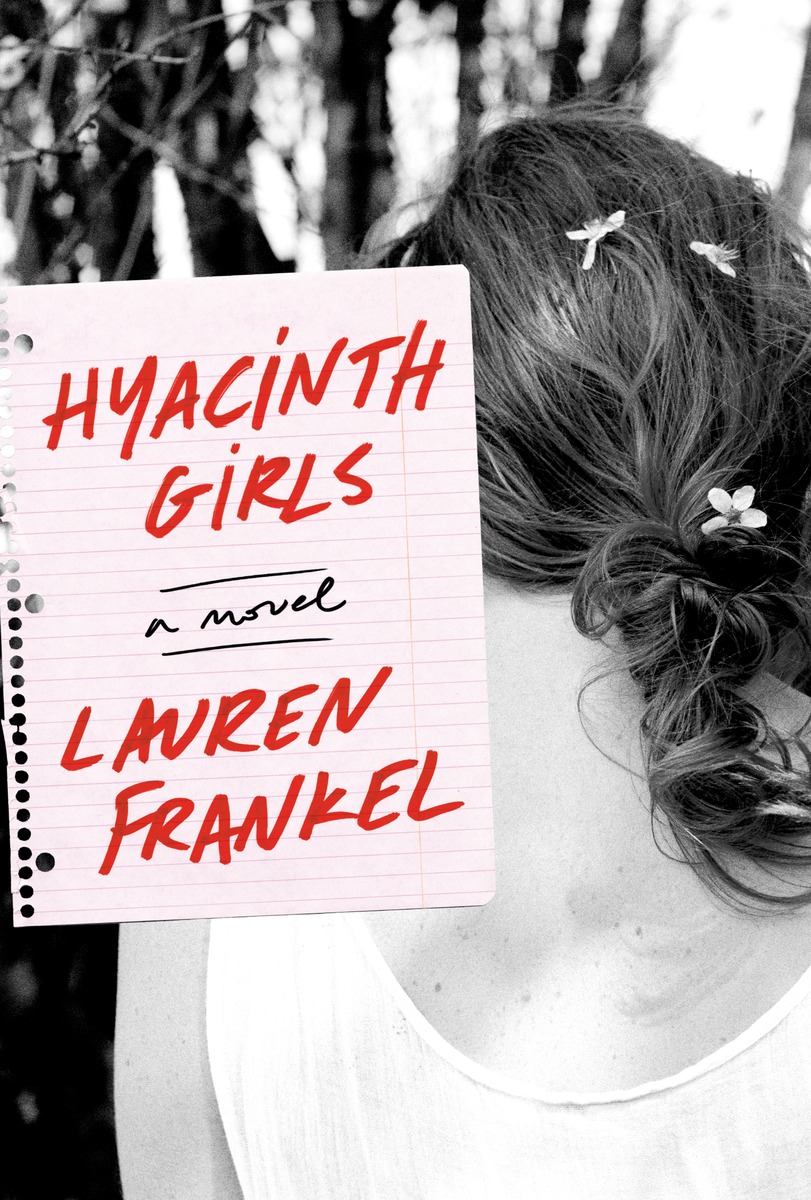
Hyacinth Girls - cover image
Image used with the kind permission of Crown Publishing.

And as for the baby… well. I never put having a kid on my shared ‘to do’ list. But I made a private list. And he was on it.

Megan
IMG_9123In the autumn of 2011, my partner and I drove 560 miles from Edinburgh to Penzance. We were moving to Cornwall to live with relatives who had offered us a room rent-free for a year – we would now be able to write full-time without distraction.

I was excited but also scared. We had given up our jobs and our home. We had travelled across the country with no plan other than to write.

As we drove into Penzance I visualised myself in twelve months’ time, driving back along the coast with nothing to show for my year – no money, no job, and no novel.

I spoke to my friend, the poet, editor and copy-writer Kirsten Irving, and together we came up with the List.

The idea behind the List is very simple. Every Sunday we write a list of things we plan to do in the week ahead, and when that week is over we review what we did (or didn’t do).

The List can include anything:

  • Write a chapter of the novel
  • Take shoes to be re-heeled
  • Drive mother-in-law to Morrisons

By including non-writing activities, the list makes the act of writing seem less precious. Most importantly, it shows what I have achieved in weeks when I feel I have done nothing. I may feel I have not written well, but I can see I have improved my running times or read an excellent book.

When I first met Lauren, I knew we’d be friends. She always gave superb editorial advice and could be relied upon to recommend interesting books. She made me feel my writing was special. A few years ago, when she mentioned she needed more support with her writing, I told her about the List and asked if she wanted to join.

I’ve been exchanging lists with friends every week now for four years. My fellow Listers pick me up and dust me down every Sunday. They are there for me when things go wrong.

I recently completed my first novel and it’s due to be published in the summer of next year. I know I couldn’t have written it without them.

Megan Bradbury’s debut novel Everyone is Watching will be published by Picador in summer 2016.

Lauren Frankel’s debut Hyacinth Girls, published by Crown, came out this month.

Louise Doughty and Jacqui Lofthouse: Tortoises Rather Than Hares

A Class Act

Jacqui: I first met Louise twenty years ago, at the University of East Anglia, on a photo shoot for the Sunday Telegraph. We had both studied there, for our MA in Creative Writing under Malcolm Bradbury, but in different years.

Class Act
Jacqui Lofthouse (middle in black) and Louise Doughty (behind her to the left in polka dots).

It’s a moody photograph (the photographer told us ‘don’t smile, you’ll look stupid’) but the actual mood was celebratory. Louise was wearing a sleeveless polka dot dress and had a brilliant suntan. She looked very stylish and cool. We were both excited about the publication of our first novels. Louise’s was already out and mine was about to appear. I still couldn’t quite believe that I was about to be published by Hamish Hamilton and was mixing with other published authors.

Louise: Jacqui struck me immediately as enviably calm and serene.  We swapped notes on being students on the UEA MA and how neither of us felt regarded as the stars of our year – we laughed about that, and about how we were tortoises rather than hares.

The Polymath and the Will of Steel

Jacqui: Louise has been more focussed than me over the years, in terms of her writing, whereas I’ve been more distracted by entrepreneurial ventures, such as setting up my business coaching writers, but also by other art forms, returning to my love of drama and even having an interlude training to be a drama teacher. Right now, for example, I’m developing the business, finishing a second draft of a play, in discussion with a filmmaker and attending screen acting classes. Louise is focusing on her latest novel full-time. Some of this relates to financial decisions, but I think it’s also about our character types. She has a will of steel and I can’t stop myself diversifying.

Louise: Jacqui is more of a polymath than me: she’s much more plugged in to social media, has trained as a coach and run her own business.  I’ve focused very much on the novels and although that’s paid off to a certain extent I think her life is more interesting and varied than mine.

The Unrest Cure

Jacqui: One dinner that particularly stays with me was the night when I told Louise I was planning to train as a secondary school drama teacher. In the end, it was only a two year interlude, but it felt hard breaking the news that I was going to do something so different and apparently out of character. I was ready for a change, what Saki calls the ‘unrest cure’. I wanted to give something back to young people, to be more ‘out in the world’ but I remember, at that time, also feeling somewhat jaded with the literary world and saying ‘but what would you do?’ I don’t think Louise had an answer but I imagine she was thinking ‘I’d rather starve in my garret than do something as crazy as that!’ But she was gracious enough not to try to hold me back from something that I so clearly wanted to do. Those two years, in fact, served to remind me how vital writing is in my life; how impossible it is for me to do without it.

Girl Novelists’ Dry Martini Club

Louise: At one point, just for a laugh, we formed something called the Girl Novelists’ Dry Martini Club.  There were five of us and an agreement that whenever one of us signed a book deal, we would all go out for martinis.  It started out as just an in-joke between a group of friends but it got picked up by the media – I think I mentioned it on Radio 4’s Midweek – and the next thing we knew it was mentioned in articles and we received letters from women asking if they could join.  I thought it was a hoot when the Club made it into Jacqui’s satirical novel The Modigliani Girl.  Almost every aspect of writing and the writing world gets satirised in that book.

Silent 3

Jacqui: Louise introduced me to the novelist Charles Palliser at a reading we did together. I was awestruck because an old beau of mine had bought me a copy of Charles’ novel The Quincunx so it was clearly the book to have! Meeting Charles, who had real literary kudos, made me feel incredibly grown up, but more importantly, he is now a genuine friend, whose devotion to writing and books never fails to inspire. In turn, Charles introduced me to a number of other writers and we still meet for an annual dinner each January at Louise’s home and talk about the year we’ve had, sharing the ups and downs of the writing life – and indeed, of life beyond writing.

Louise: This writing group is Silent 3 (don’t ask me why it’s called that, no idea), which was set up by Robert Irwin, a renowned Arabic scholar who also writes science fiction. The group used to be very large and meet in a pub in central London once a month but has shrunk to a hard-core now and every January we all have dinner at my house and review our writing years – another member brings the food and I do the long table etc.

Louise Doughty and Jacqui Lofthouse

Rollercoaster

Louise: When I look back over the twenty years I’ve been publishing, it strikes me just how essential my writing friends have been: my other close writing buddy is the novelist Jill Dawson, but along with her and Jacqui there is a wider circle of writing friends, mostly women but not exclusively, who I feel I have really grown up with.  Those friends are incredibly important, partly because you know each other’s personal and domestic lives as well, but also because you know that the successes are hard-fought for and well-earned and the disappointments often arbitrary.  A writer’s life is such a rollercoaster of success and disappointment that it’s invaluable having friends that will understand and support you whatever part of the ride you are on.  Friends are far more important, at the end of the day, than finding an agent or a publisher.

Louise Doughty is the author of seven novels including Apple Tree Yard and Whatever You Love, which was shortlisted for the Costa Novel Award and longlisted for the Orange Prize for Fiction. She is also a critic and cultural commentator and broadcasts regularly for the BBC.

Jacqui Lofthouse is the author of four novels including Bluethroat Morning and The Modigliani Girl. She runs a mentoring and literary consultancy service for writers The Writing Coach.


Eva Trout: a Woman in Need of a Friend

For this month’s Something Rhymed activity, Emma Claire and I decided to each read something by one of our current profiled authors: Eva Trout by Elizabeth Bowen and The Unicorn by Iris Murdoch. Both of these books are said to have been influenced by the work of one author on the other.

This image is in the public domain.

I came to Eva Trout afresh, with no prior knowledge of its plot. Since I was going to be reading not only for pleasure but also for this website, I suppose I set out with a preconceived idea that the post I eventually wrote could be about one of the friendships enjoyed by the eponymous heroine.

But that’s the trouble with preconceived ideas. Long before the late stage in the novel when Eva declares ‘I have no friend’, I had been struck by the fact that my original intention wasn’t going to work at all.

The huge gap left by the lack of a true trusted confidante for much of Eva’s life was something I kept turning over in my mind as I moved through the chapters of the novel.

When the reader first encounters Eva at the start of the book, she is a young woman still waiting to come into the fortune left to her by her late father. Despite her personal wealth, Eva has not had an easy start in life. Her mother abandoned her when she was a child, only to be killed in a plane crash soon afterwards. Since her father’s suicide some years later, Constantine Ormeau, a man who appears to have been Eva’s father’s lover, has been her unsympathetic legal guardian.

Constantine regards Eva as a problem, and even Iseult Arble, a former schoolteacher who previously showed a great deal of interest in the girl and has allowed her to move into the home she shares with her husband, has begun to feel increasingly wary towards her youthful lodger.

Eva’s social awkwardness and hard-to-predict behaviour are a puzzle to most of the novel’s other characters, isolating her from those who surround her. As a reader, I don’t mind admitting that I was left somewhat puzzled, not just by the central character but aspects of the novel as a whole.

Certain episodes will undoubtedly live on in my mind – the unbearably stilted conversation that takes place between Mr and Mrs Arble as they wait for Eva to come home one evening; or the restaurant scene during which Iseult tucks into a plate of oysters in a way that is ‘at once methodical and voluptuous’, for instance. But, overall, there was something about the book that I didn’t quite ‘get’ – not in the way that I got  The Death of the Heart, Bowen’s novel from thirty years earlier, or her moving short story ‘The Visitor’ – both of which thoroughly engaged me.

Like several notable readers I’ve since discovered, I struggled with some of Bowen’s decisions about language and structure, aspects of the book which I felt cut me off from the story and characters – particularly interesting in view of Murdoch’s likely influence on Bowen’s approach.

By the time I reached the final page, my thoughts on the subject of friendship had moved away from wishing for a lasting friend for Eva and onto wishing instead that my friend had read this book, so that we could discuss it together.

So, I suppose that this post has ended up as a request to Emma Claire to do just that, because I know for certain that, whether she agrees with my take on Eva Trout or not,  conversations with her always provide me with interesting new ways to think about literary works. And as I mentioned in one of my posts from last month, this is something I’ve really come to value in our friendship.

Get Involved

Reading Bowen’s novel got me thinking about depictions of female friendship in literature. Anne Shirley and Diana Barry in L.M. Montgomery’s Anne of Green Gables, Jane and Prudence in the novel of the same name by Barbara Pym, and the women of Amy Tan’s Joy Luck Club, are all examples that popped quickly into my mind. If a female friendship from a story, poem or play has left a lasting impression on you, we’d love to hear about it.

Please get in touch by leaving a comment below, or send a tweet via Twitter using the hashtag #SomethingRhymed.

Elizabeth Bowen and Iris Murdoch

The Anglo-Irish writer, Elizabeth Bowen, is remembered for surrounding herself with the most lauded of literary women.

Elizabeth Bowen
Image used with the kind permission of Vintage Books.

Never allowing her severe stammer to get in the way of her role as a garrulous hostess, she entertained the likes of Carson McCullers, Rosamund Lehman, Eudora Welty and Virginia Woolf.

We were surprised to discover that Iris Murdoch had attended one of the glittering salons at Bowen’s Court since she was twenty years younger than her hostess and has often been mythologised as something of an honorary man. Famously dismissive of her female contemporaries, she refused to read any of Barbara Pym’s novels, despite (or because of) repeated and hearty recommendations from the men in her life.

Iris Murdoch
We sought permission from Harper Collins to use this image.

It turned out that Murdoch and Bowen were first drawn together by their shared Anglo-Irish heritage and admiration for each other’s novels.

The salons at Bowen’s Court, mostly known for their decadence, were, in fact, full of creative ferment. Passages from Murdoch’s The Unicorn are so indebted to Bowen’s style and subject matter that they could almost have been written by the older author. Similarly, Bowen’s Eva Trout is influenced by the ‘demoniac’ subversion that she so admired in the work of her acolyte.

But it was confessions about their romantic relationships that cemented the intimacy of their inter-generational friendship. Murdoch confided her fears about agreeing to wed her lover, the fellow academic, John Bayley: as a married woman, she would be forbidden from continuing in her post as an Oxford don. Bowen, who had felt liberated rather than hemmed in by her own marriage, advised the younger author to embrace the opportunity to spend more time on her novels.

The pair visited each other regularly and commented on each other’s work, developing a deep and mutually influential friendship that lasted for nigh on two decades.

During this time Murdoch’s unconventional marriage endured, in some ways following the example mapped out by the flamboyant Bowen, whose husband was quite an introvert. Indeed, one party guest at Bowen’s Court stumbled into a cupboard in search of the loo only to find him crouched amongst the mops and brooms with a tray of food on his knees. Their successful union was more companionable than erotic, and Bowen sought sexual fulfilment elsewhere – most notably in a thirty year love affair with a Canadian diplomat.

Murdoch was similarly open to extramarital encounters. Most interesting among her affairs, perhaps, was her lesbian relationship, break-up and reconciliation with fellow philosopher, Philippa Foot. And yet, like Bowen, Murdoch was devoted to her husband, as, in both cases, the support of these men helped their creativity to thrive.

Not only did the older author show the younger one how to carve out erotic and creative freedom within a lifelong and nurturing marriage, Bowen also demonstrated by example how to extend wisdom and generosity to the next generation. And so, Murdoch – previously wary of her female contemporaries – ended up taking the young A.S. Byatt under her wing.

Activity

This month, Emma Claire will be reading The Unicorn by Iris Murdoch and Emily will be reading Eva Trout by Elizabeth Bowen.

In the Hands of Chance?

Image by Angela Monika Arnold (Creative Commons licence)

A chance meeting in the ladies’ lavatory at a wedding marked the start of the friendship between last week’s guest interviewees, Polly Coles and Liz Jensen.

This got us thinking about some of the other unplanned first encounters of writers we’ve featured on Something Rhymed.

Susan Barker and Rima Haque, for instance – saw their paths collide back in 1999 at the Statue of Liberty, where they both had summer jobs. Rachel Connor and Antonia Honeywell formed an immediate connection when they happened to be paired as students in advance of their first MA Novel Writing workshop at Manchester University.

Of the monthly profiled writers, some like Charlotte Brontë and Elizabeth Gaskell and Harriet Beecher Stowe and George Eliot knew of each other by reputation before they met. Diana Athill formed a connection with Jean Rhys through her job as an editor at André Deutsch, and the friendship between Maya Angelou and Toni Morrison really blossomed when they both found themselves appearing at the Hay Festival in Wales.

But others, especially those who met early on in their literary careers, got to know each other under circumstances largely governed by happy twists of coincidence.

What would have happened if Vera Brittain and Winifred Holtby hadn’t each passed their university entrance exams and found themselves at the same Oxford college? Or if the teacher’s job in L.M. Montgomery’s hometown on Prince Edward Island had been given to someone other than Nora Lefurgey? Or Anne Sharp hadn’t gone to work as a governess with Jane Austen’s family?

Some might say that, with such similar political views and overlapping fields of work, Brittain and Holtby would likely have met eventually, but one can more easily imagine a life in which Austen had to manage without Sharp’s friendship, and Montgomery never found a kindred spirit in Lefurgey.

And since both Brittain and Holtby were always keen to credit the other for the role they had played in shaping their own success, this raises the question as to whether each woman’s life might have run a quite different course without the help of her valued friend.

Unlike the vast majority of our monthly guest bloggers and featured authors, who were already well on their way with their writing careers by the time they became acquainted, regular readers of Something Rhymed will know that when Emma Claire and I met neither of us had published a single article or story.

In fact, we had been scribbling in secret up until then, and hadn’t had the courage to share our ambitions to write with anyone else.

It’s nice to think that, having so many things in common, we would have found each other, perhaps on-line, eventually – an advantage female writers of today have over those in Montgomery or Austen’s times.

But it’s far nicer to be able to recall the fact that we’ve been there for each other through all the ups and downs of our writing journeys, and to think that, as Brittain once said about Holtby: ‘although we didn’t exactly grow up together, we grew mature together, and that is the next best thing’.

In Praise of the Spinster

When we decided on this month’s challenge, I knew straight away which of our profiled authors I would like to raise from the dead.

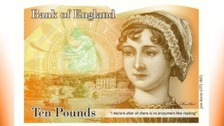
Even Jane Austen couldn’t sway me from beyond the grave, although it was a Wordsworth £1 classic edition of Emma that, as a young teenager, initiated me into the world of female authorship. I don’t need to conjure up Austen’s ghost to enjoy her dry humour, and her face – with which everyone in Britain will become intimately acquainted once the new £10 banknote is issued – was recorded for posterity by her sister Cassandra.

Creative Commons license.

Although Austen’s family destroyed much of her correspondence, the writer with whom I would love to make contact is far more of an enigma: all her literary works have been lost and her portrait was likely never painted.

Anne Sharp, the amateur playwright so valued by Austen, has been silenced for centuries. The intelligent, spirited voice of this governess in the employment of the Austen family has survived only in snippets. But when she does speak up across the ages, for example in Austen’s records of Sharp’s feedback, her astute critical faculties make us sit up and take note: here was someone who read with sensitivity and, despite the mighty class divide, felt at liberty to express her thoughts.

Perhaps it was this outspokenness that led Austen’s nephew to describe Sharp as ‘horridly affected but rather amusing’ – a phrase that brings to mind a neighbour’s portrayal of Austen as the ‘silliest, most affected husband-hunting butterfly’.

Like Austen, Sharp never did wed although marriage would have been the surest path to financial security. Unsurprisingly, little was recorded of Sharp’s romantic history. But we do know that her famous friend turned down a proposal from a wealthy man, and engaged in at least two other romantic liaisons. Yet the pernicious myth persists that Austen was too plain to attract suitors.

I once dragged a new squeeze to see the original portrait of Austen during a first date at the National Portrait Gallery. We failed to find anything unattractive in her appearance and I couldn’t help but feel that her alleged plainness would never have caught on had she not remained single. Cassandra actually described Austen as ‘triumphing over the married women of her acquaintance, and rejoicing in her own freedom’ – an image that complicates the prevailing notion of her romantic suffering.

Talking about Jane Austen and Anne Sharp at this year's Ilkley Literature Festival
We talked about Jane Austen and Anne Sharp at this year’s Ilkley Literature Festival

While Sharp’s single lifestyle would also have afforded her certain freedoms, it must have been a hard slog too – much more so than for Austen, whose only household responsibility was the preparation of tea and toast. After years of earning her crust as a governess for various wealthy families, she managed to set up her own boarding school in Everton. She spent the rest of her days in this area, living in York Terrace – a relatively prosperous street with views across the River Mersey to my hometown of Birkenhead.

I would love to learn from this working woman how she managed to do so well from such humble beginnings, and whether she ever considered giving up her independence and her toil for the perhaps easier option of marriage.

Perhaps my subconscious had been trying to tell me something when I dragged that poor date to view the painting of Austen: it was, in part, her independence that allowed her to pen those much-loved novels warning against ill-judged marriages. And it is her friend Anne Sharp – whose portrait I will never see – whose example reminds me that it was possible, even then, for a woman to make her way, ‘rejoicing in her own freedom’.


Zora Neale Hurston and Marjorie Kinnan Rawlings

Zora Neale Hurston and Marjorie Kinnan Rawlings seem destined to have grown close. Both women wrote about the landscape and communities of their beloved Florida, and they each achieved fame in the 1930s when Hurston was awarded a Guggenheim Fellowship and Rawlings won the Pulitzer Prize. What’s more, they greatly admired each other’s work.

Photo by Alan Anderson, courtesy of the Marjorie Kinnan Rawlings Papers, Special and Area Studies Collections, George A. Smathers Libraries, University of Florida, Gainesville, Florida.

And yet, theirs was a deeply controversial relationship. Simple acts of camaraderie – sharing a meal, trading ideas, visiting each other – came up against deeply ingrained prejudices, rigid social norms, and even the full weight of the law.

Hurston (the daughter of a former slave) met Rawlings (whose husband owned a white-only hotel) at a time when the Ku Klux Klan operated in parts of Florida and the ‘Jim Crow’ racial segregation laws were harshly enforced by the state.

Despite these almost insuperable barriers, when Rawlings gave a guest lecture to Hurston’s students at the all-black Florida Normal and Industrial College, she was so taken with her host that she invited Hurston to tea the next day at her husband’s white-only hotel.

Fear, prejudice, and conformity ran deep, however. Rawlings quickly regretted her invitation, telling her husband that she had ‘done something terrible’. They arranged for the bell-boy to whisk Hurston up to their private apartment to get her out of sight of their white guests. Their precautions proved unnecessary because Hurston, predicting that her presence might prove sensitive, entered through the kitchen and up the back stairs.

Remarkably, such squalid moral compromises did nothing to hinder their enjoyment of each other’s company. ‘I’ve never had so much fun,’ Rawlings told her husband, and Hurston described Rawlings as a ‘sister’.

Zora Neale Hurston Every effort has been made to obtain permission to reproduce this photograph
Zora Neale Hurston
Every effort has been made to obtain permission to reproduce this photograph

Although their mutual admiration was assured, the ethical dilemmas didn’t stop there. When Hurston visited Rawlings’s country residence, for instance, they talked, laughed, and got tipsy together on her porch. But, when it became clear that Hurston was in no fit state to drive, Rawlings sent her friend to sleep out in the black servants’ quarters although there were plenty of spare bedrooms in the main house.

Hurston – who grew up in an all-black town, possibly the granddaughter of a white slave owner – was adept at navigating the ‘Jim Crow’ laws, and did not seem to hold Rawlings’s racial cowardice against her.

But Rawlings subjected herself to tough questions about her behaviour and, on a second overnight visit, she insisted that this time Hurston stay with her in the house. ‘I had to hurdle an awfully wide ditch!’ she admitted. ‘I was amazed to find that my own prejudices were so deep’.

From then on, Rawlings fought against racial segregation whereas Hurston fought to write about subjects other than race. Yet the world they inhabited was not yet ready to hear them. Rawlings’s reputation dwindled when her editor failed to recognise the quality of her later experimental stories, and Hurston died a pauper, buried in an unmarked grave.

This headstone was purchased by Alice Walker after she found Hurston's unmarked grave in an overgrown and snake infested cemetery. Walker later published an essay about it in Ms magazine, leading to something of a renaissance in Hurston's reputation. Photograph by Alan Anderson.
This headstone was purchased by Alice Walker after she found Hurston’s unmarked grave in an overgrown and snake infested cemetery. Walker later published an essay about it in Ms magazine, leading to something of a renaissance in Hurston’s reputation. Photograph by Alan Anderson.

Activity

Rawlings once threw a private party for Hurston. This month, we will host a Something Rhymed party. We’ll invite a few locally-based writers and supporters of the blog, and we’ll ask each of them to bring along one of their female writer friends. Find out how it goes when we blog about it in the coming weeks.

#SomethingRhymed

We’re keen to promote positive representations of women’s friendship, so with this in mind we’ve just launched our #SomethingRhymed hashtag on Twitter with this tweet: Women’s relationships are too often seen as bitchy & backstabbing. Tell us about a time when a female friend supported you.

We’d love to hear about your positive experiences of female friendship too. If you’re not on Twitter, but would still like to add your voice to the conversation, please do leave a message in the Comments section below.