All Posts

Daphne du Maurier and Oriel Malet

We wonder how many young writers have dreamed of an older, more experienced author taking her under her wing. Well, this was Oriel Malet’s luck one evening in the early 1950s.
oriel_malet_1
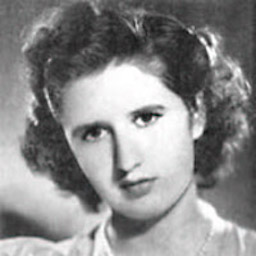
Oriel Malet (image used with the kind permission of Persephone Books).

Auriel Rosemary Malet Vaughan, born into an aristocratic family in 1923, was hardly a novice. She had written her first book Trust in the Springtime when she was seventeen, been a winner of the John Llewellyn Prize for Young Novelists, and enjoyed international success. The party at which she would meet Daphne du Maurier was being hosted by Ellen Doubleday, the wife of both authors’ American publisher.

But despite these early achievements, Malet still considered herself something of an outsider to the capital’s literary scene. When she arrived to find the hotel suite address locked-up and silent, she felt relieved at the excuse it provided for beating a hasty retreat.

But just then she heard a voice close by, and turned to see another woman also waiting alone. The two soon fell into easy conversation, passing over small talk for enthusiastic discussions about ‘books, the theatre, Paris, Life’. Neither one seems to have felt the need to introduce herself by name, and so by the time Doubleday arrived – full of apologies and ushering in a brigade of waiters carrying silver dishes of food and buckets of iced champagne – Malet remained unaware that she had been talking to the celebrated Daphne du Maurier.

When the young woman discovered the truth, she was embarrassed. Fearing what faux pas she might make next, she decided to try to creep out of the party unnoticed. She’d almost made it to the door when she saw that du Maurier was doing exactly the same thing.

Downstairs, the pair escaped in a taxi and ended up going to du Maurier’s London flat, on the King’s Road in Chelsea. When they said goodbye later that evening, Malet, found herself feeling sorry that her path was unlikely to cross again with du Maurier’s.

But not long afterwards, while riding the motorcycle she’d bought with her John Llewellyn Prize winnings, Malet crashed into a closed gate which ‘should have been open but was mysteriously closed’. When word reached du Maurier about what had happened, she invited the young author to recuperate at Menabilly, the grand country house where she lived in Cornwall, and the inspiration for her most famous novel Rebecca.

This marked the start of a friendship spanning over thirty years, and one that came to an end only with du Maurier’s death in 1989. Over the period, they wrote to each other regularly, and du Maurier’s half of the correspondence – later collected and published by Malet in Letters From Menabilly charts the development of their literary relationship.
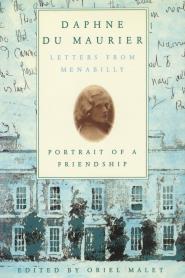
Letters From Menabilly
Daphne du Maurier, within the cover of Oriel Malet’s book. (Used with the kind permission of Rowman & Littlefield.)

In its earliest days, du Maurier signed off using ‘Daphne’, but switched to the nicknames ‘Bing’, ‘Tray’ or ‘Track’ as the pair grew closer. She wrote about her family and friends, her reading and writing, and sent advice to Malet on literary matters. The names of other authors crop up frequently in her letters – both those of contemporaries and the forebears who inspired her, Katherine Mansfield, Elizabeth Gaskell, and the Brontë sisters in particular.

Du Maurier would eventually write a biography of the Brontës’ brother Branwell, and she and Malet made a pilgrimage to the Parsonage in Haworth in the 1950s – still a quiet spot in those days, not yet on the tourist trail.

Although du Maurier’s is, as one would expect, the voice that dominates the book’s pages, Malet’s frequent interjections do much more than put the letters in context. They give a sense of the younger woman’s loyalty, her inquisitive nature, and most of all her enormous affection for her friend du Maurier.

Special thanks

We are grateful to two of our readers, Anne Hall and Jenny McAuley, who answered our open request for information about a literary friend of Daphne du Maurier’s by letting us know about Oriel Malet.

Activity

When we read Daphne du Maurier’s words ‘Dearest Oriel, Your great long letter arrived this morning’, we wished we were able to tell exactly what Malet had said. Over the time we’ve been running Something Rhymed, we’ve often speculated about the gaps that remain, through lack of solid evidence, in what we can know about the friendships we’ve profiled. This month, we will each take a look at just a few of these gaps. We’ll write about what draws us to these particular mysteries, and the stories we think we can piece together.
The List: Megan Bradbury and Lauren Frankel

Like many of the writer friends we’ve profiled so far, this month’s guest bloggers Lauren Frankel and Megan Bradbury enjoy tracking each other’s literary progress. But they gave this idea their own twist, thanks to something they call The List.

Lauren

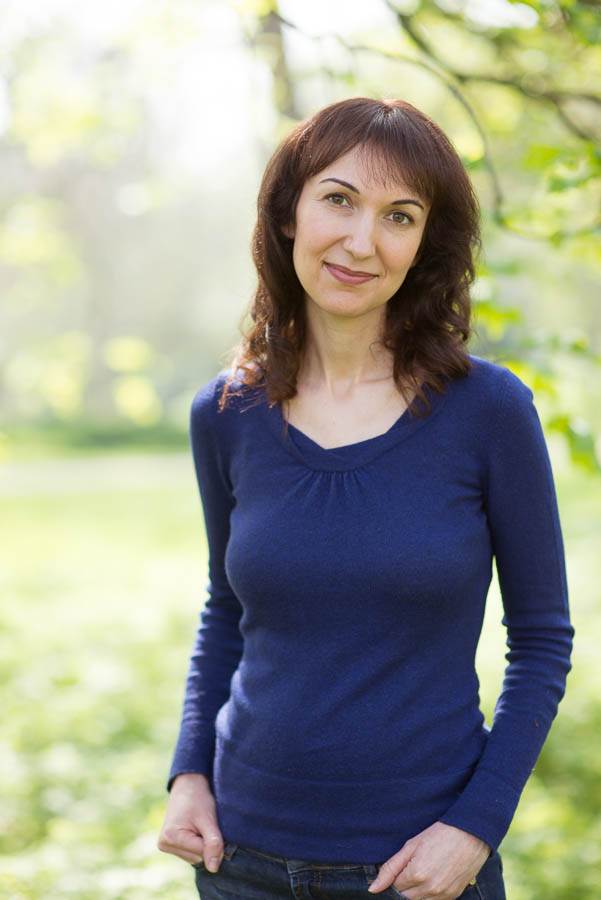
DSC_6096
Image by Rosalind Hobley.

I don’t think it’s an exaggeration to say that without Megan I wouldn’t be a published writer. Who knows? I might not have a six month old son, either.

Let me explain. Megan and I met on the UEA Creative Writing course some years ago. She was young but fiercely serious, with a great laugh and strong opinions. When other students trashed my writing, she would jump to my defence.

After we left UEA, I doubted that I would ever finish a novel. I was slow as molasses – a procrastinator and a perfectionist to boot. When you’re trying to write your first book, nobody cares whether you finish it or not. You don’t have an editor giving you praise, deadlines, or a bollocking.

Megan and I kept in touch, and hearing about my writer’s despair, she invited me to send her a list of my goals each week by e-mail. She and her friend had been sharing theirs, celebrating one another’s large (and small) achievements. Up until then, I hadn’t dared to give myself weekly targets. I thought it would be too depressing to see myself failing to reach them over and over. But I agreed to try it.

Each week, Megan, her friend Kirsten and I would share by e-mail what we’d achieved in the previous week and what we planned for the current one. Soon other writers were joining us in the e-mail ‘achievement’ chain, which meant that four people now cared how my work was going. As I reviewed their weekly goals and accomplishments, I felt spurred on to aim higher – and also to think more about the long term, a thing which had terrified me previously.

With Megan’s encouragement and the help of my ‘list’ friends, I finally managed to finish my novel. To rewrite it again and again when I wanted to give up.

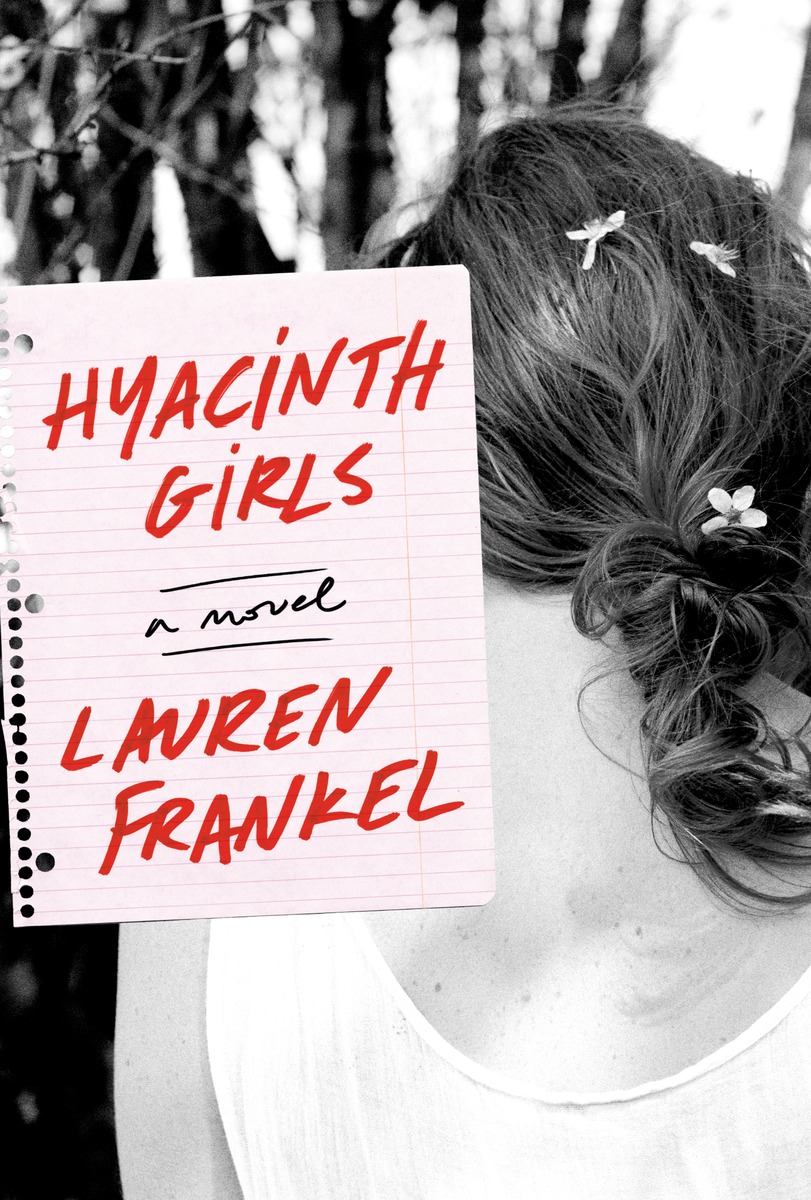
Hyacinth Girls - cover image
Image used with the kind permission of Crown Publishing.

And as for the baby… well. I never put having a kid on my shared ‘to do’ list. But I made a private list. And he was on it.

Megan

IMG_9123In the autumn of 2011, my partner and I drove 560 miles from Edinburgh to Penzance. We were moving to Cornwall to live with relatives who had offered us a room rent-free for a year – we would now be able to write full-time without distraction.

I was excited but also scared. We had given up our jobs and our home. We had travelled across the country with no plan other than to write.

As we drove into Penzance I visualised myself in twelve months’ time, driving back along the coast with nothing to show for my year – no money, no job, and no novel.

I spoke to my friend, the poet, editor and copy-writer Kirsten Irving, and together we came up with the List.

The idea behind the List is very simple. Every Sunday we write a list of things we plan to do in the week ahead, and when that week is over we review what we did (or didn’t do).

The List can include anything:

  • Write a chapter of the novel
  • Take shoes to be re-heeled
  • Drive mother-in-law to Morrisons

By including non-writing activities, the list makes the act of writing seem less precious. Most importantly, it shows what I have achieved in weeks when I feel I have done nothing. I may feel I have not written well, but I can see I have improved my running times or read an excellent book.

When I first met Lauren, I knew we’d be friends. She always gave superb editorial advice and could be relied upon to recommend interesting books. She made me feel my writing was special. A few years ago, when she mentioned she needed more support with her writing, I told her about the List and asked if she wanted to join.

I’ve been exchanging lists with friends every week now for four years. My fellow Listers pick me up and dust me down every Sunday. They are there for me when things go wrong.

I recently completed my first novel and it’s due to be published in the summer of next year. I know I couldn’t have written it without them.

Megan Bradbury’s debut novel Everyone is Watching will be published by Picador in summer 2016.

Lauren Frankel’s debut Hyacinth Girls, published by Crown, came out this month.

Growing Mature Together

Emily and I have sometimes envied Vera Brittain and Winifred Holtby their shared university years. If we could defy time and pal up with just one of the pairs of writers that we’ve profiled on this site, I’m pretty sure that we’d both pick these friends: two women who ‘didn’t exactly grow up together’ but ‘grew mature together’ and considered that ‘the next best thing’.

Unlike them, we met after separate and rather different undergraduate experiences: Emily partying hard in London while I pored over books in Cambridge.

book stacks

In the best possible way, co-running Something Rhymed feels akin to studying together. We now spend hours on end searching the stacks at Senate House Library, and we regularly exchange bulging folders of notes. We’ve created for ourselves a second stab at studenthood – this time together and with a curriculum of our own.

This month I’ve relished the chance to re-read the poetry of Marianne Moore, which I’d first come across as an undergrad. We toyed at first with profiling Moore’s friendship with fellow modernist Hilda ‘H.D.’ Doolittle, who she met in 1905 when they were both studying at Bryn Mawr College, Pennsylvania. But we ended up becoming even more fascinated by a bond that began in 1934 when the middle-aged Moore took final-year undergraduate, Elizabeth Bishop, under her wing.

Both Emily and I have benefited from the wisdom of women writers older and more experienced than us and, as with Moore and Bishop, these mentorships have sometimes blossomed into friendships. Now that we teach ourselves, we’ve had the chance in our own small way to continue this intergenerational sisterhood.

Without ever really discussing it, we must have both come to the conclusion that – in the widest sense – the best students are also teachers; the best teachers, forever students. We each tend to enrol in one writing course per year – sometimes together, sometimes separately – to remind ourselves what it feels like to sit at the other side of the desk. And yet we were surprised (and heartened) to learn that a poet of Moore’s stature had taken this same approach.

Inspired by Moore, this month I’ve been attending Berko Writers’ screenwriting course, taught by Abigail Webber, formerly a commissioning editor and now a script consultant. I have written poetry, fiction and non-fiction over the years, taking my first steps into all of these forms as if entering familiar rooms. But screenwriting has always felt like a closed door – and one on which I felt nervous even to knock. My heart pounded so loudly during the first session at Berko Writers that I promised myself never to underestimate the courage it might take for one of my own students to step into my class.

The course has opened up that locked door, and screenplays no longer feel to me like a forbidden wing in literature’s house. Emily’s acting background and her storyteller’s skill lead me to suspect that she might one day turn her hand to scripts and that I might get to share with her the tips that I’ve recently gleaned.

Emily’s storytelling skill and lyricism were recognised last night at the awards ceremony for the prestigious Lucy Cavendish Fiction Prize 2015. Emily’s shortlisting opened up for her – and for me as her guest – the usually closed doors of the dining hall at this Cambridge College. Here we had the chance to chat over dinner with its president, Professor Janet Todd – a feminist heroine of ours. In the hall at Lucy Cavendish, among its students and fellows, I enjoyed the great privilege of cheering on my friend as she was announced the winner. As I sat there, watching her receive her prize, it dawned on me that this shared moment of celebration more than made up for our separate university years. Growing mature together is, in fact, the very best thing.

Emily Midorikawa is announced the winner of the Lucy Cavendish Fiction Prize 2015


Buying Ballet Shoes as a Grown-up

One of the struggles Emma Claire and I face when we compose our profiles on each month’s literary pair is how to condense many years of friendship into just a few hundred words. Interesting episodes and key details about each woman’s personality often have to go by the wayside for the short-form writing we do here on Something Rhymed.

Marianne Moore’s commitment to lifelong learning, well into old age, was an aspect of her life that almost failed to make the cut. Moore’s enthusiasm for dance and even creative writing classes, though intriguing, didn’t seem to be quite relevant enough to her friendship with fellow poet Elizabeth Bishop.

But when we thought of the great affection with which Bishop had written about this aspect of Moore’s character, we decided it was something we wanted to explore through our writing this month.

The subject of adult education had, in fact, been floating around my mind ever since February’s Something Rhymed challenge, when I took Emma Claire to see a gallery exhibition about the Russian ballet The Bolt.

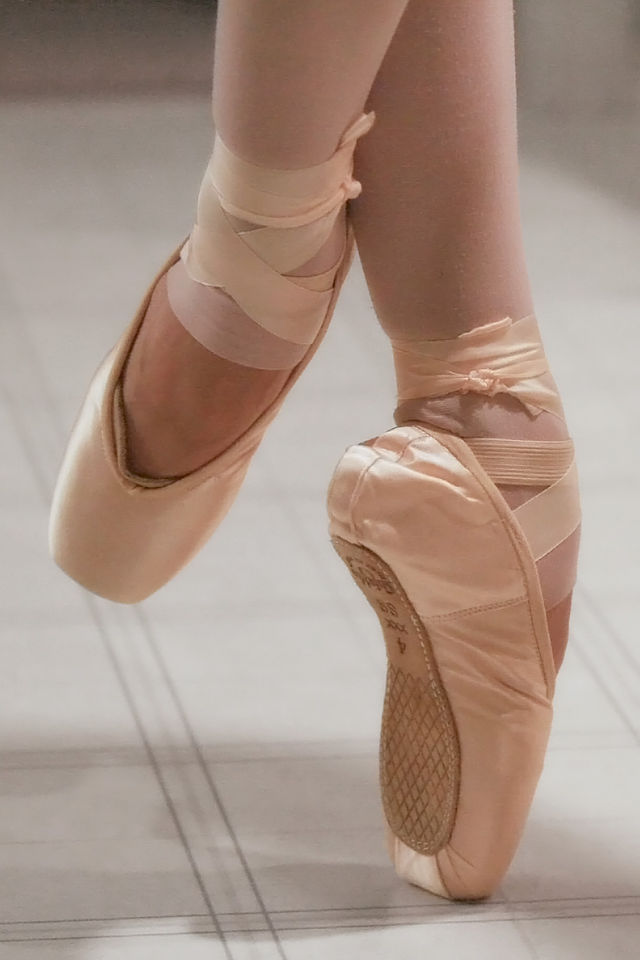
This image is in the public domain.

Ballet has been a love of mine for many years, and – having previously had lessons from the ages of four to eighteen – I took it up again as a hobby a few years ago. Like Emma Claire’s morning yoga sessions, it is an activity that hovers around the fringes our friendship. I’ve occasionally met her before or after an evening at the studio, and have mentioned class to her in passing, but a lack of shared vocabulary means I’d never thought to talk of it in detail, thinking it would be boring for her.

That trip to the gallery made me rethink my reticence, though – its costumes, rehearsal photographs and choreographer’s notes sparking questions from Em, not just about the exhibition itself, but also my own long-held fascination with this dance form. I was soon recalling the elderly babysitter, Mrs Tomlinson, who had enchanted my imagination at four-years-old with her crayon drawings of the Nutcracker’s Sugar Plum Fairy and the sad story of Swan Lake. I told Em of my childhood (highly unrealistic) dream of becoming a professional dancer, and also the rewarding but humbling experience of returning to ballet as an adult after such a long hiatus.

An idea for a story about dancing had pushed me to take the plunge and buy a new pair of ballet shoes. I’d wanted to immerse myself in that world again, because I wanted to write about it.

But taking class has, in fact, enriched my life in other unpredicted ways. It’s a part of the week to which I now always look forward. An hour-and-a-half of ballet makes for a wonderful way to change gears after several hours at my desk. The concentration required to try to master the steps empties my mind of any work-related stresses, and afterwards I feel refreshed and more enthusiastic about whatever I have to do tomorrow.

Being an initially extremely rusty student has also helped me in my work as a teacher. The experience of being unable to remember where to place my arms, and finding my feet no longer seem to work as they used to, has served as a great reminder of how daunting it might be for one of my adult writing students, who finds themself sitting in a classroom again after many years out in the world of work.

Though it’s unlikely we’ll ever find ourselves standing together at the barre, I’d been wondering, since our visit to the Bolt exhibition, about other ways in which Emma Claire and I might enjoy ballet again together. Then I heard about the Royal Ballet’s new production Woolf Works – based on the writing of Virginia Woolf – which opens in London this month.

Emma Claire and I have just bought tickets, and I’m excited to go and see a performance with her for the first time. Not only should it give me the chance to share with her something more of my love of ballet, but the subject matter will surely open up new conversations about one of Em’s own great passions, the writing of Virginia Woolf.

Elizabeth Bishop and Marianne Moore

Elizabeth Bishop was in dire need of maternal affection. At five years old, she’d witnessed her own mother committed to an asylum: the last glimpse Bishop ever got of her.

In the mid-1930s, as a shy, bushy-haired student at the all-women’s Vassar College in Poughkeepsie, New York, Bishop devoured many poems by the older modernist writer Marianne Moore. Later, she’d wonder whether she would ever have become a poet if it hadn’t been for reading the likes of ‘Marriage’ and ‘Peter’.

Elizabeth Bishop. Image used with kind permission from the Elizabeth Bishop Society.

Moore was perhaps ready to adopt a literary daughter. Her own mother rarely left her side, watching while she wrote or busying herself in the adjacent room, ready to cast her sharp editorial eye over each new poem. During the last three decades of Mrs Moore’s life, the pair even shared a bed.

Moore may have had a surfeit of maternal attention, but she could connect with Bishop’s parental loss. During Moore’s infancy, her father had cut off his right hand in a fit of delusion and had then been committed to an asylum. She could not recollect a single memory of him.

When Moore was approached by an old childhood friend, now the librarian at Vassar College, she reluctantly agreed to meeting the twenty-three-year-old Bishop. The young woman rushed from Grand Central Station, relieved to have just about made it on time to their meeting place beneath the imposing lion statues that flank the New York Public Library. Moore, who wore two wrist watches, was already waiting for her. She cut a quaint old-fashioned figure, her rust-pink hair braided around her head, her man’s polo shirt two sizes too large.

Marianne Moore in 1935. Creative Commons License.

Despite Bishop’s nerves and Moore’s reservations, the pair hit it off immediately. The older writer soon placed her protégée’s work in an anthology, writing an insightful preface to the new poems. But there was always a familial aspect to their friendship as well as a literary connection: they would take trips to the circus and the cinema and to children’s talks at the Natural History Museum. And, however early Bishop showed up, she would always find Moore there ready and waiting.

Soon, Bishop was invited to the narrow over-crowded apartment that Moore shared with her mother in Brooklyn – the unlikely but popular meeting place for Moore’s coterie of fellow high-modernist friends, among them H.D., T.S. Eliot, Ezra Pound, Wallace Stevens and William Carlos Williams.

Elizabeth Bishop is standing on the right and Marianne Moore is sitting beside her. Other writers include the likes of W. H. Auden, Tennessee Williams and Gore Vidal. Image used with kind permission of the New York Times.

Unlike Moore and her mother – who impersonated each other to the extent that it was difficult to tell where one ended and the other began – Bishop retained her separate identity. Six years into their friendship, she sent her mentor her latest poem ‘Roosters’. Moore and her mother objected to what they considered Bishop’s vulgarity – particularly her reference to a ‘water-closet’! Staying up until the early hours of the morning, the mother-daughter duo rewrote the younger woman’s poem, removing everything that had affronted them. Although Bishop incorporated some of the changes, she retained her lavatorial images. And the friendship survived undented.

Activity:

In her old age, Moore soared to an extraordinary level of superstardom: appearing on the Tonight Show, featured on the cover of Esquire, inundated by fans who showed up at her door. But in her memoir of her friend, Bishop lovingly recalls how the elderly Moore continued to attend creative writing classes as a student (sometimes to the tutor’s horror!) and even enrolled in a dance school, where she learnt to tango.

This month, we will follow in Moore’s footsteps by embracing lifelong learning.

Crying Tears of Laughter: Irenosen Okojie and Yvette Edwards

In her work as a reviewer for the Sunday Times, Dorothy L. Sayers often took the opportunity to praise the work of her friend Agatha Christie – calling Murder on the Orient Express, for example, ‘a murder mystery conceived and carried out on the finest classical lines’. Inspired by this, we asked April’s guest bloggers, Yvette Edwards and Irenosen Okojie, to each sing the praises of their writer friend.

They met when they appeared together at a literary event, a couple of years ago. Irenosen takes up the story:

SONY DSCIt was a platform to showcase new writers; at that point the buzz had started to build about Yvette’s writing. When she read, her work immediately captured me. It was evocative, fearless and powerful.

Not only that but she was very warm, generous and humble. She was the star attraction on the bill but she didn’t behave that way and she didn’t distance herself from me or the other writer. She was incredibly chatty, curious about our writing journeys and happy to offer advice.

One of the images I never forget from that evening was Yvvettes’s mother managing her stack of books being the literary equivalent of a roadie. I enjoyed this tiny window into their relationship.

We all exchanged details; afterwards, I bought a copy of her book A Cupboard Full of Coats. It was so engrossing I read it in one sitting. What I really loved was that the female protagonist was complex and darkly drawn, unapologetically so. It is a brilliant debut novel, a heartbreaking read worth every penny.

One of the things I admire about Yvvette is her tenacity. She didn’t have an easy writing journey but she never gave up.

Over the next year, we’d bump into each other at literary gatherings, our friendship developed from there. We’d email back and forth and she’d encourage me to keep writing when things were difficult. Writing can be such an isolating endeavour that friendships and support are invaluable.

My favourite thing about her other than her literary prowess is her humour. She’s one of the most hilarious writers I know and is never without a funny anecdote or encounter. I cry with laughter whenever we meet up. She could have been a stand-up comedian had she not wanted to go into fiction writing. She’s a natural storyteller. When you engage with her, this becomes apparent.

It’s been fun and heartening watching her journey so far being both a fan and a friend.

Yvette says:

iphone pics 202

Irenosen is a power ball of energy that continually amazes me. She is always busy, is always writing as well as juggling various projects, passionate about everything literary, from the craft itself to championing events, interviewing other authors, getting involved in awards and prizes, reading, judging, spreading the word.

I think her website is a perfect reflection of her as a person and as a creative.  It is warm, full, interesting, regularly updated, filled with information about her own work as well as the projects she’s involved in.

It is vast and varied and quirky. You could pop in, intending only a short visit and a quick browse, and hours later still be clicking into tabs and links, discovering fabulous pics, astute observations and confident commentary, writing that’s rich, humorous, profound. It’s impossible to sum up either Irenosen or her website with a mere handful of words.

And that’s what her writing is like. It defies strait-laced and simple definition.  It doesn’t slip into any pre-packaged boxes or notions or expectations.  You can never exactly anticipate the journey she’ll take you on, or the destination you’ll reach, but you can be confident it will be interesting, that there will be surprises in store, that you will be challenged and entertained along the way, that you’ll emerge from your journey both heady and giddy, like stepping off a super roller coaster at a different place to where your journey began.

And if you do decide to take the matter up with her, there is every possibility she’ll hug you, throw her head back and laugh.

A Cupboard Full of Coats (Oneworld) by Yvette Edwards was longlisted for the Man Booker Prize and the International IMPAC Dublin Literary Award, and shortlisted for the Commonwealth Writers’ Prize.

Irenosen Okojie’s first novel, Butterfly Fish, and a collection of short stories, Speak Gigantular, will be published in June 2015 by Jacaranda Books.

Travellers on the Same Road

Image by Luke Detwiler (Creative Commons Licence).

Agatha Christie and Dorothy L. Sayers never shared the extraordinary levels of closeness enjoyed by their contemporaries Vera Brittain and Winifred Holtby, who saw each other as literary ‘travelling companions’.

Neither were they spurred on by the kind of highly motivating personal rivalry that fired the bond between modernists Katherine Mansfield and Virginia Woolf, another pair of author friends of a similar generation.

What Christie and Sayers had instead was a solid working friendship, and, for them, this was presumably enough. For Emma Claire and me it never has been, though.

As some of our readers will already be aware, we got to know each other at a time when we were both living carefree lives as young English teachers in rural Japan. It was still some months before we’d admit to anyone else – and each other first – that we had serious ambitions to write, and so, although I remember us sometimes talking about books we were reading, writing was not a big part of our friendship. We spent our time doing other things: travelling the country, going to parties, and sampling the wares of local noodle shops and bars.

Back then, I would have been delighted to be told that, once we’d ‘come out’ to each other as would-be authors, the similar direction in which we’d chosen to travel would allow us to support each other through the years to come: celebrating individual triumphs as a pair, providing each other with a sympathetic ear when necessary, and –  through our mutual interest in female literary friendship – eventually finding a way to write together.

Image by maroubal2. Creative Commons licence.
Image by maroubal2. (Creative Commons Licence).

This would have sounded fantastic, and of course it is. What could be better than your closest co-worker also being one of your closest friends?

The only niggling problem is that recently it began to dawn on us that, bit by bit over time, our whole friendship had become consumed by work. When we went out for the evening, supposedly for fun, our thoughts would soon turn to ideas for feature articles we could write together. When one of us invited the other over for dinner, we’d find ourselves talking about the next literary event we’d be doing together, or our jobs at the universities at which we both teach.

Now that we’ve become aware of this, we’ve started to make a concerted effort to have times when we turn off the ‘shop talk’, although sometimes it can be hard. As I write this, I’m acutely aware that, despite having sent Emma Claire three emails today and talked with her on the phone, each of these conversations was about our various joint projects.

That’s why it was especially good to go out for cocktails and noodles recently. The drinks were fancier than the cans of alcoholic fruit Chu-hi that we used to buy in our twenties. The ramen broth was floating with all sorts of extra ingredients unseen in the traditional joints we used to frequent. But there was something about the night’s holiday atmosphere that took me back to those heady, early days in Japan.

It reminded me that, though a working writers’ friendship is a wonderful thing, to have found someone with whom you can truly ‘travel’ is many, many times better.

Cocktails and Candour

London buzzed with a carnival energy on the night Emily and I met for cocktails at the Hotel Café Royal. It was the evening before the Easter weekend and Piccadilly Circus milled with people who had just arrived or were just about to depart, almost everyone wheeling cases or carrying backpacks or cradling cones of spring flowers.

Something Rhymed’s April ‘challenge’ to follow in the footsteps of Agatha Christie and Dorothy L. Sayers provided the perfect excuse to embrace the city’s festive atmosphere. Surrounded by holidaymakers and all decked out in my cocktail dress, I took in afresh the grandeur of Regent Street – its buildings tall and white against the clear blue sky.

Inside the revolving doors of the Hotel Café Royal, I entered a marble lobby filled with tall vases of orchids, and the bustle of the street gave way to a hushed sense of glamour. It was easy to imagine Christie and Sayers, the Queens of Crime, meeting here with fellow members of the Detection Club, for their lavish club dinners.

The Café Royal, London (William Orpen, 1912). Creative Commons License.

Unlike the ‘shop talk’ that took up much of their usual meetings, the club’s spring and summer dinners focused more on celebration.

Now that Emily and I teach at the same university, co-write literary features and run Something Rhymed together, we have to remind ourselves to make time for purely socialising. But we long ago pledged to mark every writing success, however small. During the past few years this commitment to celebration has become more important still.

In the Green Bar, we toasted Something Rhymed over a pink champagne cocktail and a luridly blue martini, and we agreed just to chat for a while, putting off the task we’d set ourselves to compose our own set of literary rules.

We got on with that part of April’s activity in the distinctly less rarified surroundings of a Soho noodle joint, writing in between slugs of Asashi beer, and miraculously managing to avoid staining our dresses with broth.

This ramen shop brought to mind the early days of our friendship, when we both taught English in rural Japan, secretly writing in between classes. Looking back on the ways our friendship has developed since then, we realised that another unspoken ‘rule’ had developed over the years and that we had this to thank for the development of our collaboration: as well as committing ourselves to celebration we’ve also committed ourselves to candour.

Rules
Rules for Our Collaborative Work

I’ve learnt so much from Emily about the importance of honesty, and the courage it sometimes takes to speak the truth as we see it. This is not to say that we talk about all aspects of our lives: there remain subjects we keep to ourselves or are more likely to discuss with others. But whether we’re seeking advice on personal matters, critiquing each other’s fiction, dividing workloads, or thrashing out a line of enquiry in our collaborative writing, we always endeavour to speak our minds.

This fundamental tenet led us to formulate a few more specific rules. In terms of maintaining trust between each other, we’ll always be clear about which projects we’d like to work on together and which we’d prefer to tackle alone, and we’ve also agreed that we must never co-publish anything that we can’t both stand by. And in terms of establishing trust with our readers, we’ve promised always to acknowledge speculation.

In this way, we hope that our collaboration will thrive and, more importantly, that our friendship will endure for a lifetime.

Agatha Christie and Dorothy L. Sayers

Despite some parallels in their childhoods, and their shared status as ‘Golden Age’ queens of crime, the differences between Agatha Christie and Dorothy L. Sayers were far more profound.

Agatha Christie (Creative Commons licence)
Agatha Christie, 1890-1976 (Creative Commons licence)

Agatha Mary Clarissa Miller was schooled largely at home. Her mother had wanted to hold her back from reading until she was eight, but by the age of five the impatient girl managed to teach herself.

While Christie’s learning was relatively ad hoc, and focused ultimately on helping her to find a good husband, the parents of Dorothy Leigh Sayers (who also educated her at home) kept her to a rigorous schedule.

Dorothy L Sayers
Dorothy L. Sayers, 1893-1957 (Image used with the kind permission of the Dorothy L. Sayers Society.)

Sayers eventually won a scholarship to Somerville College at the University of Oxford (also the alma mater of writer friends Vera Brittain and Winifred Holtby) and went on to a series of jobs, most successfully in the advertising industry.

Later in life she would return to academia, her translation of Dante’s Divine Comedy becoming the work of which she felt most proud. But most remember her as the author of the Lord Peter Wimsey novels, and it was this position as a writer of detective fiction that led her into a friendship with Christie.

Both were members of the Detection Club. This group of leading crime writers, who met regularly to socialise and talk shop, had to abide by a strict set of literary rules designed to give the reader a fair chance of guessing the guilty party in their books. They also jointly-penned several mysteries, three of which – the novel The Floating Admiral and two radio serials – included both Christie and Sayers as contributors.

Each woman’s attitudes to these activities illustrate the contrast in their personalities. Sayers devised the club’s elaborate initiation rituals, threw herself into ceremonies with gusto, and took on the formidable task of organising her fellow writers for their collaborations.

The reserved Christie, on the other hand, merely submitted to her initiation. When she accepted the role of president (succeeding Sayers) it was on the condition that someone else be appointed to make speeches and chair events.

When working on the radio serials, she often proved elusive, leading to frantic phone calls and letters between her and Sayers when at last she’d been tracked down. But Sayers also sent notes praising Christie’s recent fiction and divulged her exasperation at what they both saw as unnecessary interference by J.R. Ackerley, their BBC producer.

The feeling, incidentally, appears to have been mutual. Ackerley later recalled that, though Christie was one of his favourite detective fictionists, he believed she was a ‘little on the feeble side’ as a broadcaster – adding that ‘anyone in that series would have seemed feeble against the terrific vitality, bullying and bounce of that dreadful woman Dorothy L. Sayers’.

Able to earn far more from other writing endeavours, Christie’s sense of loyalty to Sayers was probably a major reason why she agreed to take part in even as many of these joint ventures as she did. But Sayers also came to her friend’s aid on several occasions, including joining in with the search for the author during her famous 1926 ‘disappearance’. She also provided a vital supporting vote when disgruntled members of the Detection Club, unhappy with the ‘unfair’ plot of her Poirot mystery The Murder of Roger Ackroyd, called for Christie to be expelled.

It has been said that, partially due to her shyness, Christie had few intimate female friends. But with Sayers she established an important working friendship, and one on which each woman was able to draw for support through the glory years of their success.

Activity

The Detection Club often held their official dinners at London’s Café Royal. This month, we will visit this historic venue for a cocktail or two. Since the Detection Club sometimes wrote collaboratively and also came up with a series of rules to abide by, we will come up with a list of ‘rules’ for the writing we do together.

Louise Doughty and Jacqui Lofthouse: Tortoises Rather Than Hares

A Class Act

Jacqui: I first met Louise twenty years ago, at the University of East Anglia, on a photo shoot for the Sunday Telegraph. We had both studied there, for our MA in Creative Writing under Malcolm Bradbury, but in different years.

Class Act
Jacqui Lofthouse (middle in black) and Louise Doughty (behind her to the left in polka dots).

It’s a moody photograph (the photographer told us ‘don’t smile, you’ll look stupid’) but the actual mood was celebratory. Louise was wearing a sleeveless polka dot dress and had a brilliant suntan. She looked very stylish and cool. We were both excited about the publication of our first novels. Louise’s was already out and mine was about to appear. I still couldn’t quite believe that I was about to be published by Hamish Hamilton and was mixing with other published authors.

Louise: Jacqui struck me immediately as enviably calm and serene.  We swapped notes on being students on the UEA MA and how neither of us felt regarded as the stars of our year – we laughed about that, and about how we were tortoises rather than hares.

The Polymath and the Will of Steel

Jacqui: Louise has been more focussed than me over the years, in terms of her writing, whereas I’ve been more distracted by entrepreneurial ventures, such as setting up my business coaching writers, but also by other art forms, returning to my love of drama and even having an interlude training to be a drama teacher. Right now, for example, I’m developing the business, finishing a second draft of a play, in discussion with a filmmaker and attending screen acting classes. Louise is focusing on her latest novel full-time. Some of this relates to financial decisions, but I think it’s also about our character types. She has a will of steel and I can’t stop myself diversifying.

Louise: Jacqui is more of a polymath than me: she’s much more plugged in to social media, has trained as a coach and run her own business.  I’ve focused very much on the novels and although that’s paid off to a certain extent I think her life is more interesting and varied than mine.

The Unrest Cure

Jacqui: One dinner that particularly stays with me was the night when I told Louise I was planning to train as a secondary school drama teacher. In the end, it was only a two year interlude, but it felt hard breaking the news that I was going to do something so different and apparently out of character. I was ready for a change, what Saki calls the ‘unrest cure’. I wanted to give something back to young people, to be more ‘out in the world’ but I remember, at that time, also feeling somewhat jaded with the literary world and saying ‘but what would you do?’ I don’t think Louise had an answer but I imagine she was thinking ‘I’d rather starve in my garret than do something as crazy as that!’ But she was gracious enough not to try to hold me back from something that I so clearly wanted to do. Those two years, in fact, served to remind me how vital writing is in my life; how impossible it is for me to do without it.

Girl Novelists’ Dry Martini Club

Louise: At one point, just for a laugh, we formed something called the Girl Novelists’ Dry Martini Club.  There were five of us and an agreement that whenever one of us signed a book deal, we would all go out for martinis.  It started out as just an in-joke between a group of friends but it got picked up by the media – I think I mentioned it on Radio 4’s Midweek – and the next thing we knew it was mentioned in articles and we received letters from women asking if they could join.  I thought it was a hoot when the Club made it into Jacqui’s satirical novel The Modigliani Girl.  Almost every aspect of writing and the writing world gets satirised in that book.

Silent 3

Jacqui: Louise introduced me to the novelist Charles Palliser at a reading we did together. I was awestruck because an old beau of mine had bought me a copy of Charles’ novel The Quincunx so it was clearly the book to have! Meeting Charles, who had real literary kudos, made me feel incredibly grown up, but more importantly, he is now a genuine friend, whose devotion to writing and books never fails to inspire. In turn, Charles introduced me to a number of other writers and we still meet for an annual dinner each January at Louise’s home and talk about the year we’ve had, sharing the ups and downs of the writing life – and indeed, of life beyond writing.

Louise: This writing group is Silent 3 (don’t ask me why it’s called that, no idea), which was set up by Robert Irwin, a renowned Arabic scholar who also writes science fiction. The group used to be very large and meet in a pub in central London once a month but has shrunk to a hard-core now and every January we all have dinner at my house and review our writing years – another member brings the food and I do the long table etc.

Louise Doughty and Jacqui Lofthouse

Rollercoaster

Louise: When I look back over the twenty years I’ve been publishing, it strikes me just how essential my writing friends have been: my other close writing buddy is the novelist Jill Dawson, but along with her and Jacqui there is a wider circle of writing friends, mostly women but not exclusively, who I feel I have really grown up with.  Those friends are incredibly important, partly because you know each other’s personal and domestic lives as well, but also because you know that the successes are hard-fought for and well-earned and the disappointments often arbitrary.  A writer’s life is such a rollercoaster of success and disappointment that it’s invaluable having friends that will understand and support you whatever part of the ride you are on.  Friends are far more important, at the end of the day, than finding an agent or a publisher.

Louise Doughty is the author of seven novels including Apple Tree Yard and Whatever You Love, which was shortlisted for the Costa Novel Award and longlisted for the Orange Prize for Fiction. She is also a critic and cultural commentator and broadcasts regularly for the BBC.

Jacqui Lofthouse is the author of four novels including Bluethroat Morning and The Modigliani Girl. She runs a mentoring and literary consultancy service for writers The Writing Coach.