As we mentioned in last week’s post, Margaret Mason’s relationship with Mary Shelley – the daughter of her former governess Mary Wollstonecraft – changed dramatically over the years. Thinking about the change in Mason and Shelley’s relationship prompted us to look back on some of the changes that have affected our own friendship.
It’s my great pleasure to be able to talk of this most recent one now…
Some of our readers – particularly those who follow Emma and me on Twitter – will already know that the first of our novels will be published in 2016. I say ‘our’, but I want to make it clear that this is not a collaborative work of fiction.
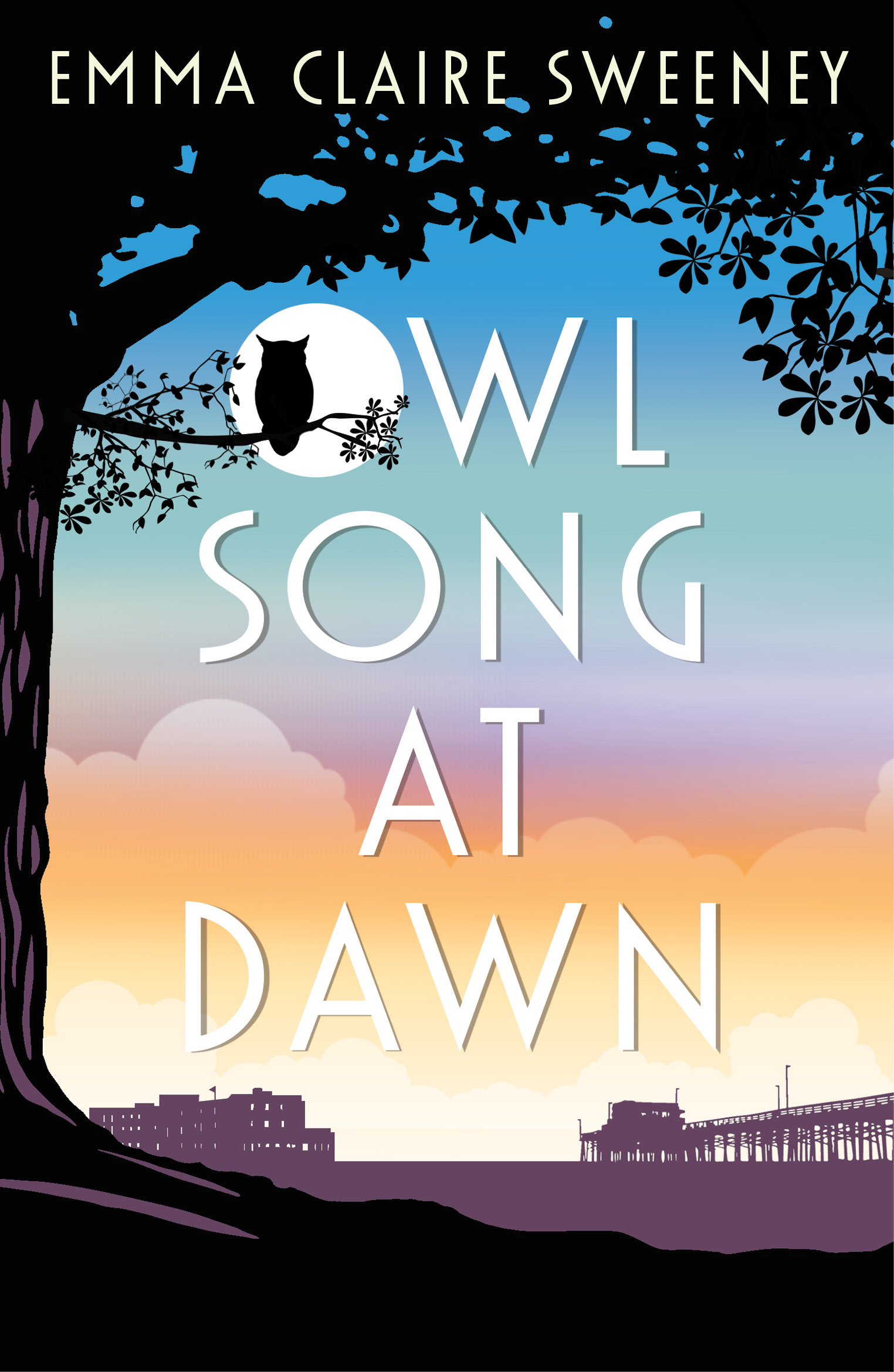
Owl Song at Dawn is written by Emma Claire Sweeney. Emma is the one who imagined the characters of twins Maeve and Edie, who grow up together in a seaside boarding house and whose lives later take dramatically different courses. Emma created each sister’s distinctive voice – that of straight-talking Maeve and lyrical Edie, whose musical speech patterns are both enthralling and hard-to-fathom. Emma arranged the modern-day and 1950s story strands until they sang as a pleasing whole.
I cannot take credit for any of these things. And yet, because I have known Emma for so long, and because we have had so many conversations about her novel, I do feel that I am a part of the story behind Owl Song at Dawn.
Over the past few years, I have lived in several different places around Britain, and Emma’s novel-in-progress – like her friendship – has accompanied me from home to home.
I remember cooking dinner in the cramped kitchen of my flat at the time, while Emma – who’d come up on the train from London – stood, sipping wine, close by. Owl Song at Dawn existed only in fragments back then – some of them committed in embryonic form to paper, some still only in her mind. Keen not to give away the plot before she was in a position to show me a full draft, she was sparing with details. But as she talked, and I stirred the pan, I started to fit these snippets together until I began to get a fuzzed sense of the novel’s characters and the intriguing connections between them.
I remember us sitting, surrounded by metal railings and creeping honeysuckle, on the balcony of a different flat, us talking through all the notes I’d made on that first full draft. I remember other drafts in another flat, and later, emails flying back-and-forth between us about submission letters to literary agents, and then the book being sent out to publishing houses.
Back in the very earliest days of our friendship, I think both Emma and I assumed that – although we were already such a big part of each other’s writing lives – moments of success like these would be chiefly for one of us alone. While I’m sure we assumed we’d join in with our friend’s celebrations, I doubt either of us imagined just how collaborative those celebrations would feel.
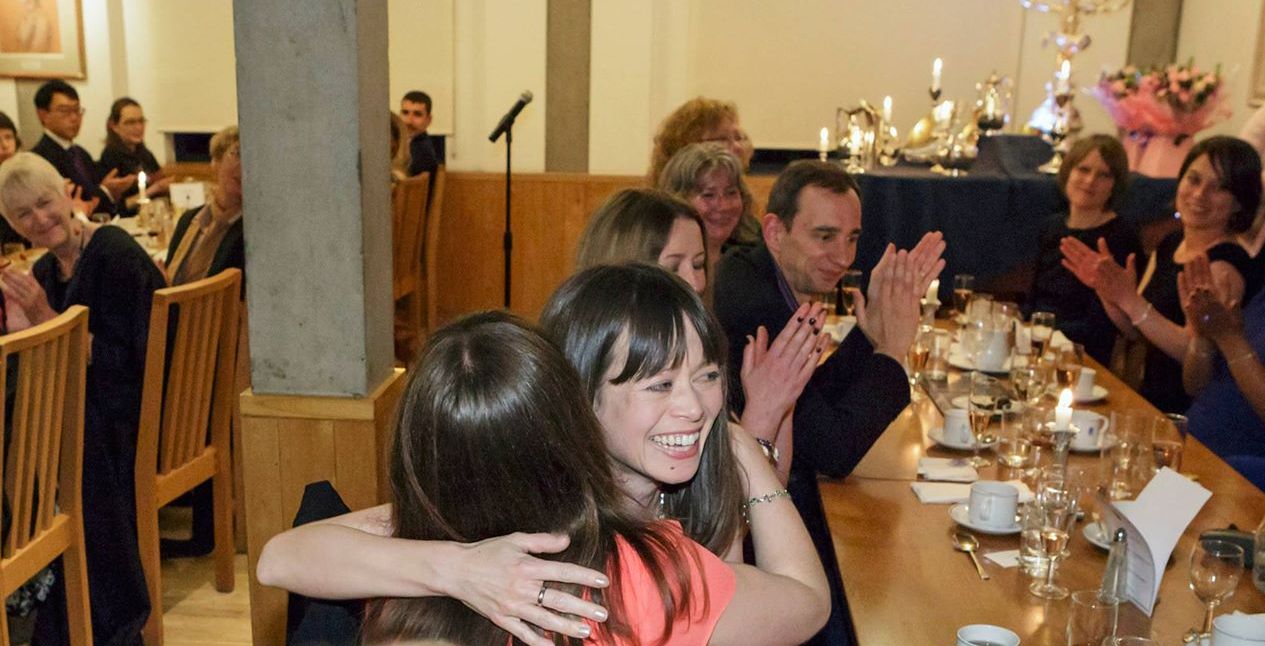
But when Emma called me up on the phone and told me the wonderful news that Owl Song at Dawn had been bought by Legend Press, I felt the same feeling I’d experienced at this year’s Lucy Cavendish Prize ceremony, just a few months ago: that this was an achievement not just for Emma or for me, but for us both as writer friends.
Celebrating together (copyright: Lucy Cavendish College)
Mary Shelley, the celebrated author of Frankenstein, needs little introduction, whereas her friend Margaret Mason may be less familiar.
Born into a wealthy Anglo-Irish family in 1773, Margaret King, as she was then called, spent her childhood years in the neo-Gothic surroundings of Mitchelstown Castle in County Cork.
The former Mitchelstown Castle, now demolished. This image is in the public domain.
Fate would set her on the path towards friendship with two of the most famous female authors of her era when a new governess-companion arrived at the castle in 1786.
Mary Wollstonecraft, then in her late twenties, was yet to embark on her illustrious career as an author. She was an instant hit with her teenage pupil, but frictions soon developed between the free-thinking English woman and her young charge’s aristocratic mother.
Portrait of Mary Wollstonecraft by John Opie. This image is in the public domain.
Unable to hide her disdain for Lady Kingsborough, Wollstonecraft found herself dismissed within the year, but she would leave a lasting impression on her former student. Over the decade that followed – a period during which Wollstonecraft’s radical writings, including most famouslyA Vindication of the Rights of Woman, were causing a stir – the two remained friendly.
Even after Wollstonecraft’s early death in 1797, following complications during the birth of her daughter Mary, Lady Mountcashell – as King had become on marriage – would remain an occasional visitor to the home of Wollstonecraft’s widower, the philosopher William Godwin.
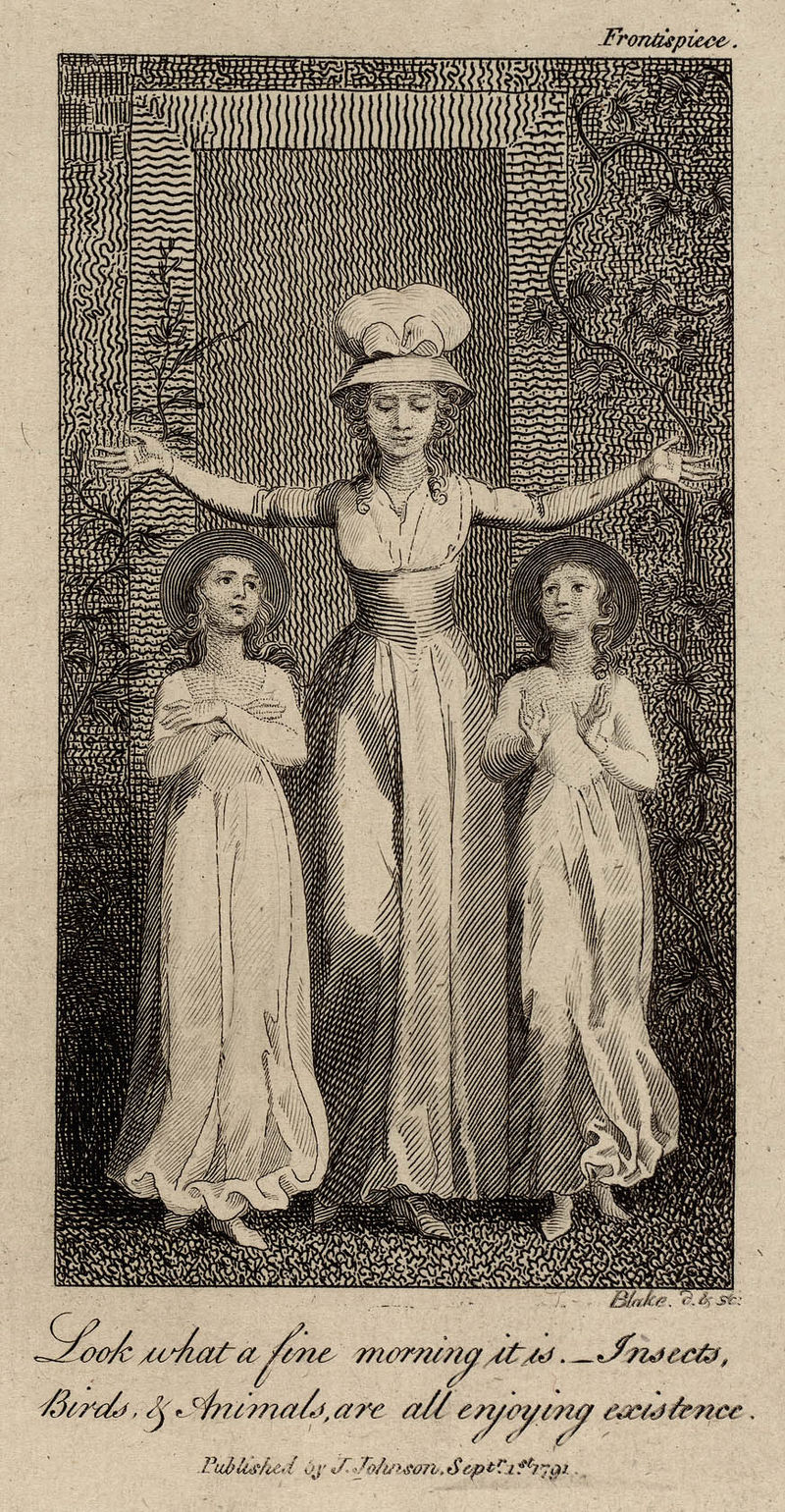
She was one of the authors who contributed to his ambitious Juvenile Library book series, tellingly adopting the nom de plume Mrs Mason, after the kindly teacher heroine of Wollstonecraft’s Original Stories from Real Life, her only work of children’s literature. Mason’s own books in Godwin’s series bear the influence of the practical, egalitarian teachings of the woman who was once her governess.
The fictional Mrs Mason – the inspiration for Margaret Mason’s name. The illustration is from the frontispiece of Original Stories (1791), engraved by William Blake. This image is in the public domain.
As a child, Mary Shelley must have regarded Mason chiefly as her father and late mother’s friend, but in later years she became close to her herself. That the two women should have bonded is perhaps unsurprising, since both – like Wollstonecraft before them – had a fierce unconventionality in common.
Despite Mason’s Anglo-Irish background, she played a part in the Irish rebellion of 1798; would don male dress some years later in order to study medicine (her six-foot figure allowing her to pass for a man); and, perhaps most scandalously of all, left her husband and eight children to elope to Italy with her Irish lover.
Interestingly, though, when Wollstonecraft’s daughter defied her father by fleeing abroad with the married Percy Bysshe Shelley in 1814, Mason was disapproving.
Following the suicide of Percy’s wife, Harriet, the Romantic poet was eventually able to marry Mary in 1816. Two years later, when the couple visited Mason’s home in Pisa, she introduced them to her social circles and helped them to set up a home in the city
Portrait of Mary Shelley by Richard Rothwell. This image is in the public domain.
When Shelley – by then the author of Frankenstein – went through a bout of serious depression following the deaths of her two children, Mason’s support and medical knowledge proved invaluable.
Relations between the two were not always rosy – Shelley, for instance, was saddened by Mason’s apparent coldness after the death of her poet husband – but the two still remained essentially on good terms. In fact, knowing of the widowed Shelley’s unhappiness, Mason counselled her friend to return to England and even supplied her with most of the funds to make the journey – a sum which Shelley could repay, she said, should she ‘ever grow rich’.
The pair continued to correspond by letter until Mason’s death in 1835. Though today Mason’s books are not well-known, she continues to be remembered for the fascinating personal link she provides between two of history’s most significant literary women.
Activity
Margaret Mason’s relationship with Mary Shelley changed significantly over the course of their lives, as Shelley matured from a girl into a woman. This month, we will each look back on a significant change that has affected our own friendship.
In last week’s post on Elizabeth Barrett Browning and Mary Russell Mitford, Emma and I set ourselves the challenge to reflect on the role of consolation in other literary friendships that we have profiled on Something Rhymed.
We’ve decided to do something a bit different this month and post our responses by video instead. This week, I talk about consolation – and an instance of the lack of it – in the friendship of George Eliot and Harriet Beecher Stowe.
After our summer hiatus, we are back this month with the story of a friendship between two much-loved nineteenth century writers. We are grateful to Lydia at Persephone Books for recommending we profile this literary pair.
Elizabeth Barrett Browning (1806-1861) – this image is in the public domain.
Elizabeth Barrett Moulton Barrett was always fiercely ambitious. Growing up, her juvenile literary output was so great that her father nicknamed her the ‘Poet Laureate of Hope End’ – this being the name of the family’s picturesque Herefordshire estate.
Her mother showed support for the girl’s talent by transcribing many of her poems for household ‘publication’. Later in life, eight years after Mrs Barrett’s death, another influential maternal figure would take the author, then aged thirty, under her wing.
Mary Russell Mitford was almost fifty when she and, a decidedly nervous, Browning were introduced in 1836. Unlike Browning, Mitford, had, from a young age, often needed to write to make ends meet – thanks to her father’s spending of his wife’s inheritance on political campaigns, entertaining and gambling. By the time the two women became friends, Mitford was the highly successful author of poetry, plays and prose – including, most famously, Our Village: Sketches of Rural Life and Scenery.
Browning, who had yet to meet her fellow-poet husband Robert, greatly appreciated the encouragement of a well-established figure like ‘ever dearest Miss Mitford’ as she was soon calling the writer in her letters. Such support had arrived at just the right moment: Browning’s book, Seraphim, and other Poems, would come out the following month and the early years of their friendship coincided with a time when the literary establishment was beginning to take notice of her work.
But this was also a turbulent period. Browning’s personal life was blighted by serious bouts of illness and family tragedy, culminating in the deaths of two of her brothers in swift succession.
Mary Mitford Russell (1787-1855) by Benjamin Robert Haydon – this image is in the public domain.
The accidental drowning of ‘Bro’, her favourite brother, hit Browning particularly hard, and she confided in Mitford that the experience was ‘a very near escape from madness, absolute hopeless madness’.
In addition to their frequent correspondence, Mitford consoled her friend through these darkest times by sending her gifts. As well as the regular delivery of flowers, in 1841 she gave her the spaniel Flush, the offspring of her own dog, (and later to be immortalised by Virginia Woolf in her imaginative biography of the same name).
A decade on, the friendship hit shakier ground when Mitford published her Recollections of a Literary Life. In a section intended as a warm tribute to Browning, she related the sad tale of Bro’s death, deeply upsetting her friend who believed that such personal details should have remained private.
The pair had experienced tensions before – not least in Mitford’s initial disapproval of Robert Browning. Thankfully, on this occasion too, they ultimately managed to negotiate this bump in the road and their relationship survived until the end of Mitford’s life.
Although today, she is the less well-known of the two, she is remembered, not just for her most popular work Our Village, but also the witty and engaging correspondence she maintained with many famous nineteenth century figures – most importantly, her closest literary friend, Elizabeth Barrett Browning.
Activity
Mitford went to great lengths to console her friend after the loss of her brother. This month, we will reflect on the role consolation played in other literary friendships that we have profiled on Something Rhymed.
Our guest interview this month comes from two bestselling authors. Susanna Gregory is the author of numerous medieval murder mysteries, Restoration whodunits and other historical crime fiction – something that drew her together with Karen Maitland, the writer of medieval thrillers. They are the sole female members of the Medieval Murderers, a group of popular authors who write historical crime novels together.
Susanna Gregory (left) and Karen Maitland, on a visit to Northern Ireland in 2014, as part of Libraries NI’s Crime Week.
SR: How did the two of you meet? Can you tell us about your first impressions of each other?
Karen: Our first official meeting was when I joined the Medieval Murderers, but in fact I’d first seen Susanna about two years earlier when I was an audience member at a talk she gave about The Tarnished Chalice, the year before my first historical novel was published. I was awe-struck by her knowledge of the medieval period, but also how gentle and self-effacing she was, even though she was such a successful novelist. I couldn’t believe she’d once been in the police-force. Her description of medieval Lincoln in the novel was so well-written and researched, that even though I’d already lived in that city for eight years, it was another six years before I dared set one of my novels in medieval Lincoln.
Susanna: Our first meeting was at an event we did together in Margham Country Park, near Neath, and I remember feeling an instant liking for Karen as we strolled slowly around the shell of the old house there. We chatted nineteen to the dozen to each other, while the others were more interested in finding somewhere to get some lunch! I suppose we should have been talking about the ‘performance’ we were about to give, but what I remember is being rather stressed about having an orthodox Jewish friend to stay, and making sure I got everything right for him diet-wise – I’m not Jewish, and didn’t want to make a stupid mistake. Karen gave me a lot of helpful advice and encouragement – which I’m sure she wasn’t expecting to have to do just before an event! I was very grateful.
SR:From our research into writer friends Agatha Christie and Dorothy L. Sayers, who collaborated on works by the Detection Club, we know that writing as part of a collective of authors can present both joys and challenges. How do the Medieval Murderers manage to make things work?
Karen: The six Medieval Murderers authors are scattered all over the UK and most of us live in rural areas. So as most writers based outside London will know, you can feel cut off from the literary scene. You can’t just pop along to launch party for an hour after work. But the advantage modern writers have, which Dorothy L. Sayers and Agatha Christie didn’t, is email. One of the MMs, Ian Morson, has kept copies of all the emails the MM’s members have exchanged over the years, which reveals every step in the process of our writing collaboration throughout the ten MM novels, which should make fascinating reading for researchers in the future, if only to reveal the dark and twisted imaginations of six crime writers.
Susanna: When we collaborate, we probably generate hundreds of emails – someone has a concept, and the rest of us respond with answers and opinions. Usually, one of us comes up with some central theme that will hold all our stories together – such as a dangerous book, a curse or a weapon – and then we toss ideas around between us for a while, until we have something that works. Naturally, there’s a fair amount of tweaking along the way, but it’s a lot of fun.
SR: Can you tell us about something you particularly admire in your friend’s approach to writing?
Karen: I hugely admire Susanna’s ability to plot historical crime, whether it’s in a long novel or novella. It seems effortless, though I know it isn’t. She can judge exactly how many murder suspects, clues and twists there needs to be in different lengths of stories and that’s something I tried to learn from her when I began to write the MM novellas. She also has the skill to make the reader feel they know the characters in depth as living people, regardless of whether she has an entire novel to develop them in or just a novella.
Susanna: Karen’s research into her era is meticulous, and she knows far more about some aspects of life in medieval times than I do, particularly about women and fringe religions. My research tends to be manuscript-based, and as most scribes were monks, I tend to have their view of events, but Karen’s research is much more wide-ranging. As I have male protagonists, the Latin sources are usually fine, but I’ve learned a lot about 14th century attitudes to women from Karen, which has helped me greatly with my stories.
SR: Writing seems to be central to your friendship. Do you ever see each other in other contexts?
Susanna and Karen, appearing together at Libraries NI’s Crime Week.
Karen: We share a love of rescue chickens. I used to keep them and Susanna does now, so we’ve exchanged tips such as coaxing them into a hen-house at night with tinned sweet corn and we’ve sympathised with each other when we’ve lost birds we adore. Hens, especially those who suddenly experience freedom after a life in a cage, radiate such joy. It’s contagious.
Susanna: I would certainly ask Karen for help if I was stuck with some aspect of my research, but I also confide in her as you do with any friend. We talk about our families, our work, our publishers, our likes and dislikes – just like any two people with a lot in common and a respect for each other’s opinions. Karen helped my husband and me a lot with advice and moral support when we got our beloved chickens – having birds as pets isn’t always easy, and Karen is always sympathetic and understanding when things go wrong. And she listens so patiently when I blather on about their antics, and is always ready with a smile!
SR: We set up Something Rhymed because we’d noticed that literary bonds between famous female authors are generally less well-known than the great male writing friendships. Do you have any thoughts on why this might be?
Karen: If women begin a professional literary friendship, in most cases it seems to rapidly become a personal friendship. In the past, male to male friendships appeared to be more task-based and operate in public through work, sports or hobbies. So, I wonder if the reason female friendships are less well-known is because the famous female authors themselves talked and wrote publically much less often about their friendships than men did, perhaps regarding these friendships as private, if what they discussed was more deeply personal.
Susanna: The first thought that springs into my mind is that there have been more ‘famed’ male writers than female, historically speaking, which means it isn’t really a fair comparison. Give us a few years …
Karen: I’ve noticed in the email writing circles that I belong to that many of the male authors join in discussions when it’s about writing/publishing/promotion, whereas female authors also talk about family life and problems in these groups. The women often temporarily cut the men out of the group email address list when the discussion turns deeply personal or is about emotional issues. Are male authors doing the same and cutting female authors out of group emails when discussing certain topics? I’d love to know!
We sought permission from Jacaranda Books to use this image.
Last week, I had the pleasure of attending the book launch of one of our former guest blogger’s debut novels. Butterfly Fish by Irenosen Okojie has just been published by Jacaranda Books.
I first got to know Irenosen through her work as a Prize Advocate for the SI Leeds Literary Prize, an award that celebrates the writing of Black and Asian female writers, and for which I was delighted to be a runner-up in 2012. I am grateful to Irenosen for the support she’s given me with my writing, and so it was great to be able to go along last Wednesday to give my support to her.
It is this kind of reciprocity that takes a relationship away from a purely work-based arrangement and into the realms of friendship. Of the writer pairs we’ve profiled on Something Rhymed, some – like Maya Angelou and Toni Morrison, or George Eliot and Harriet Beecher Stowe – enjoyed similar phenomenal levels of literary success. Others – such as Jane Austen and Anne Sharp, or Emily Dickinson and Helen Hunt Jackson in their day (Dickinson being the unknown one) – were poles apart professionally. But what they all had in common was a high regard for their friend’s opinions and talents, and, in almost all cases, a desire to celebrate their successes with them.
Prior to beginning Something Rhymed, Emma Claire and I were not at all sure that we’d be able to find so many heartening examples of female solidarity – not necessarily because we doubted these kinds of relationships existed through history, but because we feared that the evidence might no longer be there.
So it was good to learn about Jane Austen and Anne Sharp. While Austen’s books enjoyed great popularity during her lifetime, the plays of her friend Sharp remained unperformed outside the home. Nonetheless, a level playing field always remained between the two when it came to discussions of their work. After the publication of her novel, Emma, Austen sought out Sharp’s critical opinions. Sharp expressed admiration for the book, but she wasn’t afraid to let Austen know that she found the character of Jane Fairfax – inspired in part by Sharp herself – insufficiently complex.
Emily Dickinson’s extrovert friend, Helen Hunt Jackson, author of the novel Ramona, made several attempts to even things out professionally between the two of them by raving about Dickinson’s writing in her own literary circles and encouraging her reclusive friend to publish her poems. Although Dickinson largely resisted these efforts, such an endorsement must surely have done wonders for her confidence and perhaps even had an impact on her prolific output, which totalled nearly 1800 poems.
As Emma Claire mentioned in last week’s post, over the many months during which we have been researching female literary friendships, we have been surprised by the historical sources that do indeed exist, and how often they have been overlooked or misinterpreted.
Just as unpublished material in the Austen family’s papers revealed new insights into her friendship with Sharp, the close transatlantic bond between George Eliot and Harriet Beecher Stowe was illuminated for us by the letters between them – letters that have too often been dismissed as a correspondence between mere acquaintances. Going back to the diaries of Virginia Woolf allowed us to see that Katherine Mansfield was her greatest literary confidante rather than her bitterest foe.
These last two were not always willing to share in the joy of each other’s achievements, and occasionally even revelled in their friend’s disappointments. But they were ready to lavish praise when they felt it was due, and even collaborated together on Mansfield’s Prelude, published by Woolf through her Hogarth Press.
Setting every single letter of her friend’s story with the wooden blocks of her hand-press was a drawn-out and laborious process. For me, this image stands as a strong symbol, not just of the value Woolf accorded to Mansfield’s work, but also of one woman helping another – as a friend and a fellow writer.
Inspired by our reading of Daphne du Maurier’s letters, this month Emma Claire and I have been thinking about what we know and can’t know about the various writer friends we’ve profiled on Something Rhymed.
Something that has always interested me about these two is that they could so easily not have become close friends.
Despite their shared status as the most celebrated female authors either side of the Atlantic, and the level of common understanding this brought with it, the great geographical gulf between Eliot and Stowe meant that they were only ever able to communicate by letter.
It would have been challenging enough to maintain relations, even if they’d previously enjoyed a face-to-face friendship. Doubly so, you would think, since, unlike the other pairs we’ve profiled, Stowe and Eliot’s bond began by letter and was sustained entirely on paper.
Most scholars date the friendship’s beginning from the spring of 1869: the point at which Stowe sat down in her sunny orange grove in Florida to pen the first of their letters. It’s often claimed that when these pages reached Eliot at her north London villa, their arrival was entirely unexpected.
However, their opening line has led Emma and me to wonder whether it was all really quite this simple.
Stowe began her letter by saying that, the previous year, a mutual friend had called on her and passed on ‘a kind word of message’ from Eliot. Unsurprisingly, Stowe didn’t bother to repeat the message, so Eliot’s exact words remain tantalisingly out of reach of readers other than the original recipient.
But this hasn’t stopped Emma and me from wondering what she’d said that encouraged Stowe’s overtures of friendship.
Thinking about Eliot’s earlier admiring review of Stowe’s anti-slavery novel Dred, it’s possible that she might have mentioned that she was a long-time admirer of the American author’s work. But Eliot had found herself drawn to Stowe’s personality too, ever since she’d been shown a letter addressed to the abolitionist Eliza Cabot Follen in which Stowe had caricatured herself as ‘a little bit of a woman, rather more than forty, as withered as dry as a pinch of snuff – never very well worth looking at in my best days, and now a decidedly used up article’.
Eliot, who had always been made to feel painfully self-conscious about her own lack of conventional beauty, was so moved by this passage that she transcribed it to keep. She would remark afterwards that the whole letter by Stowe was ‘most fascinating and makes one love her’.
Stowe would be closer to sixty than forty by the time she reached out to Eliot directly, and perhaps even more interesting than Eliot’s tacit encouragement of an approach is Stowe’s motivation for picking this moment to seek a new literary friendship.
Homing in on the first line of Stowe’s correspondence led us to question the received wisdom that she’d contacted Eliot out of the blue. But stepping back to survey all the correspondence between them allowed us to appreciate the significance of the letter’s date. 1869 was also the year when, five months later in September, Stowe would publish her notorious article in the Atlantic. The piece made public the once only whispered rumour that the now deceased Lord Byron had indulged in incestuous relations with his half-sister.
Byron’s wife, who had also died by this time, had been a friend of Stowe’s. Recent criticisms of Lady Byron by one of her husband’s former mistresses had so incensed Stowe that she was moved to write this spirited defence of the trials her friend had suffered.
Even before the article’s publication, Stowe had privately expressed fears that making such a scandal public would attract widespread criticism – a prediction that would prove right. Therefore, given the timing, it seems feasible that Stowe might have had another more self-serving motivation for getting in touch at this time.
If someone as intellectually respected as Eliot had been willing to support her this would surely have added weight to Stowe’s arguments. But, sadly for Stowe, even in their personal letters, Eliot refused to endorse her, telling Stowe that she ‘should have preferred that the “Byron question” should not have been brought before the public’.
But by this stage, the two had cemented their friendship through their warm and surprisingly candid epistolary conversations. Though the eleven-year correspondence has never been published altogether and in full, were it ever to be gathered into a single volume it would make for a great gift to fans of both of authors.
What we have learned through our studies of Eliot and Stowe’s letters is that, in order to gain the truest picture of their friendship, you sometimes have to get up close to the words, sometimes stand back from them, and sometimes look hardest at the blank surrounding spaces to try to make sense of important things unspoken.
We wonder how many young writers have dreamed of an older, more experienced author taking her under her wing. Well, this was Oriel Malet’s luck one evening in the early 1950s.
Oriel Malet (image used with the kind permission of Persephone Books).
Auriel Rosemary Malet Vaughan, born into an aristocratic family in 1923, was hardly a novice. She had written her first book Trust in the Springtime when she was seventeen, been a winner of the John Llewellyn Prize for Young Novelists, and enjoyed international success. The party at which she would meet Daphne du Maurier was being hosted by Ellen Doubleday, the wife of both authors’ American publisher.
But despite these early achievements, Malet still considered herself something of an outsider to the capital’s literary scene. When she arrived to find the hotel suite address locked-up and silent, she felt relieved at the excuse it provided for beating a hasty retreat.
But just then she heard a voice close by, and turned to see another woman also waiting alone. The two soon fell into easy conversation, passing over small talk for enthusiastic discussions about ‘books, the theatre, Paris, Life’. Neither one seems to have felt the need to introduce herself by name, and so by the time Doubleday arrived – full of apologies and ushering in a brigade of waiters carrying silver dishes of food and buckets of iced champagne – Malet remained unaware that she had been talking to the celebrated Daphne du Maurier.
When the young woman discovered the truth, she was embarrassed. Fearing what faux pas she might make next, she decided to try to creep out of the party unnoticed. She’d almost made it to the door when she saw that du Maurier was doing exactly the same thing.
Downstairs, the pair escaped in a taxi and ended up going to du Maurier’s London flat, on the King’s Road in Chelsea. When they said goodbye later that evening, Malet, found herself feeling sorry that her path was unlikely to cross again with du Maurier’s.
But not long afterwards, while riding the motorcycle she’d bought with her John Llewellyn Prize winnings, Malet crashed into a closed gate which ‘should have been open but was mysteriously closed’. When word reached du Maurier about what had happened, she invited the young author to recuperate at Menabilly, the grand country house where she lived in Cornwall, and the inspiration for her most famous novel Rebecca.
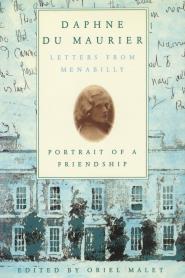
This marked the start of a friendship spanning over thirty years, and one that came to an end only with du Maurier’s death in 1989. Over the period, they wrote to each other regularly, and du Maurier’s half of the correspondence – later collected and published by Malet in Letters From Menabilly – charts the development of their literary relationship.
Daphne du Maurier, within the cover of Oriel Malet’s book. (Used with the kind permission of Rowman & Littlefield.)
In its earliest days, du Maurier signed off using ‘Daphne’, but switched to the nicknames ‘Bing’, ‘Tray’ or ‘Track’ as the pair grew closer. She wrote about her family and friends, her reading and writing, and sent advice to Malet on literary matters. The names of other authors crop up frequently in her letters – both those of contemporaries and the forebears who inspired her, Katherine Mansfield, Elizabeth Gaskell, and the Brontë sisters in particular.
Du Maurier would eventually write a biography of the Brontës’ brother Branwell, and she and Malet made a pilgrimage to the Parsonage in Haworth in the 1950s – still a quiet spot in those days, not yet on the tourist trail.
Although du Maurier’s is, as one would expect, the voice that dominates the book’s pages, Malet’s frequent interjections do much more than put the letters in context. They give a sense of the younger woman’s loyalty, her inquisitive nature, and most of all her enormous affection for her friend du Maurier.
Special thanks
We are grateful to two of our readers, Anne Hall and Jenny McAuley, who answered our open request for information about a literary friend of Daphne du Maurier’s by letting us know about Oriel Malet.
Activity
When we read Daphne du Maurier’s words ‘Dearest Oriel, Your great long letter arrived this morning’, we wished we were able to tell exactly what Malet had said. Over the time we’ve been running Something Rhymed, we’ve often speculated about the gaps that remain, through lack of solid evidence, in what we can know about the friendships we’ve profiled. This month, we will each take a look at just a few of these gaps. We’ll write about what draws us to these particular mysteries, and the stories we think we can piece together.
Like many of the writer friends we’ve profiled so far, this month’s guest bloggers Lauren Frankel and Megan Bradbury enjoy tracking each other’s literary progress. But they gave this idea their own twist, thanks to something they call The List.
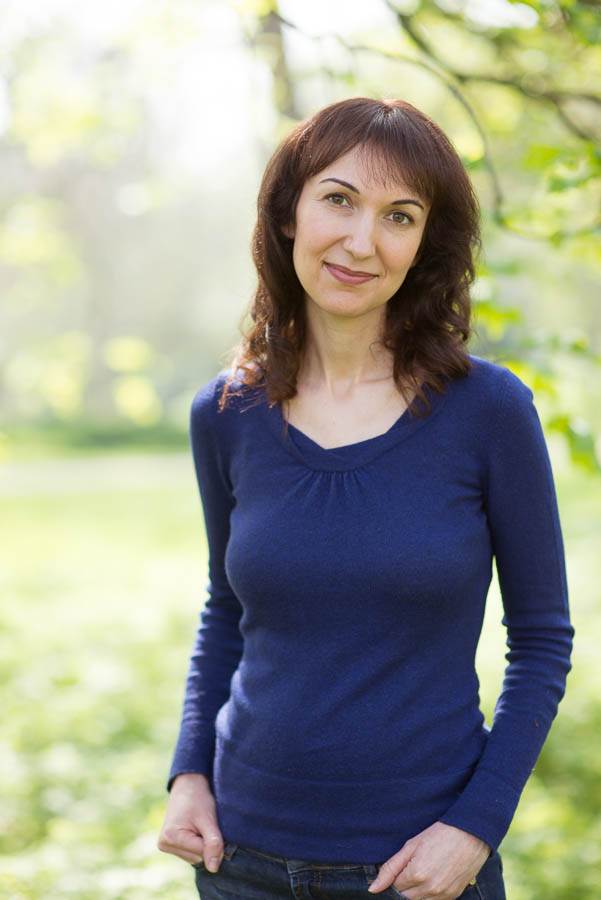
Lauren
Image by Rosalind Hobley.
I don’t think it’s an exaggeration to say that without Megan I wouldn’t be a published writer. Who knows? I might not have a six month old son, either.
Let me explain. Megan and I met on the UEA Creative Writing course some years ago. She was young but fiercely serious, with a great laugh and strong opinions. When other students trashed my writing, she would jump to my defence.
After we left UEA, I doubted that I would ever finish a novel. I was slow as molasses – a procrastinator and a perfectionist to boot. When you’re trying to write your first book, nobody cares whether you finish it or not. You don’t have an editor giving you praise, deadlines, or a bollocking.
Megan and I kept in touch, and hearing about my writer’s despair, she invited me to send her a list of my goals each week by e-mail. She and her friend had been sharing theirs, celebrating one another’s large (and small) achievements. Up until then, I hadn’t dared to give myself weekly targets. I thought it would be too depressing to see myself failing to reach them over and over. But I agreed to try it.
Each week, Megan, her friend Kirsten and I would share by e-mail what we’d achieved in the previous week and what we planned for the current one. Soon other writers were joining us in the e-mail ‘achievement’ chain, which meant that four people now cared how my work was going. As I reviewed their weekly goals and accomplishments, I felt spurred on to aim higher – and also to think more about the long term, a thing which had terrified me previously.
With Megan’s encouragement and the help of my ‘list’ friends, I finally managed to finish my novel. To rewrite it again and again when I wanted to give up.
And as for the baby… well. I never put having a kid on my shared ‘to do’ list. But I made a private list. And he was on it.
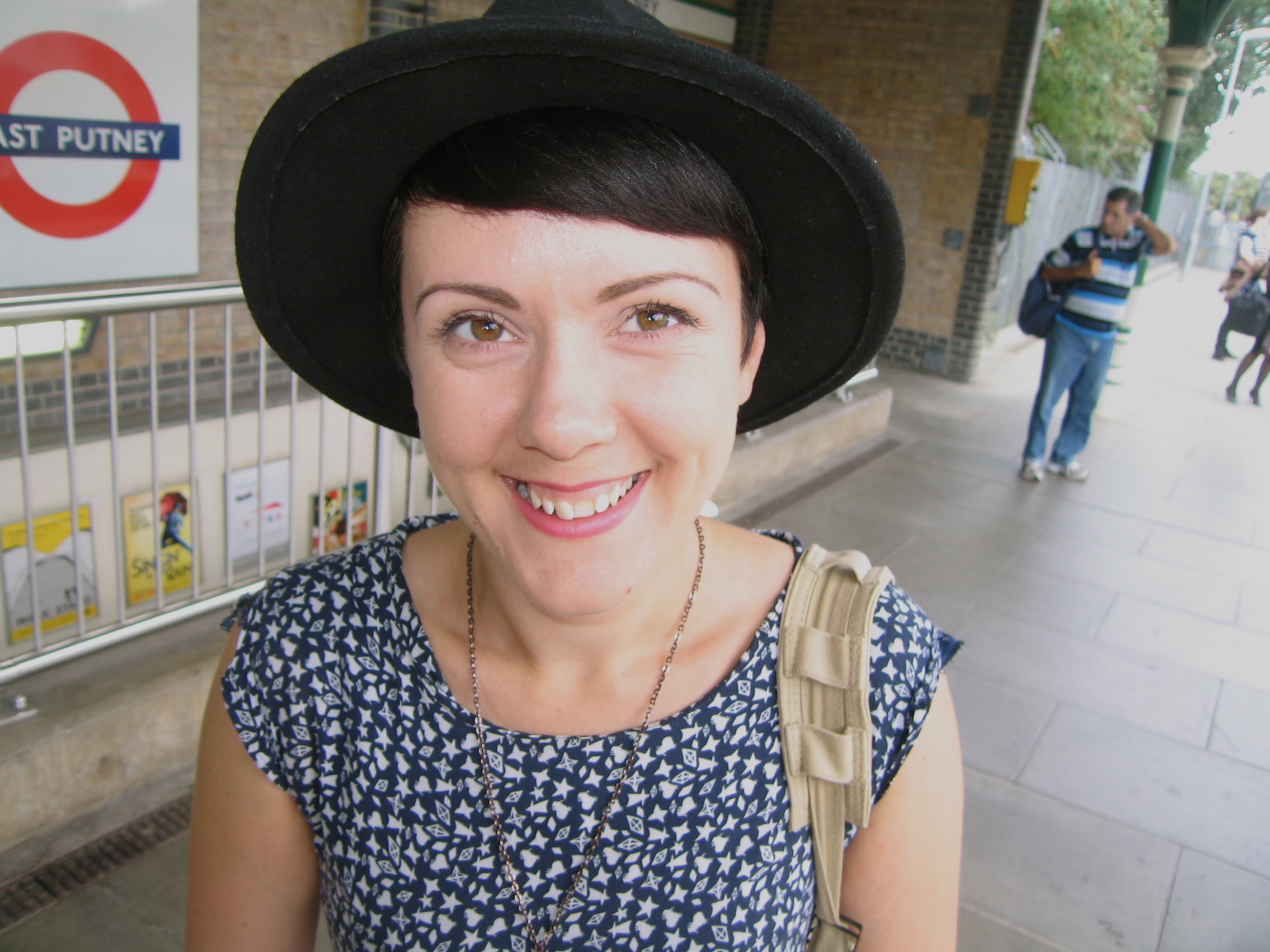
Megan
In the autumn of 2011, my partner and I drove 560 miles from Edinburgh to Penzance. We were moving to Cornwall to live with relatives who had offered us a room rent-free for a year – we would now be able to write full-time without distraction.
I was excited but also scared. We had given up our jobs and our home. We had travelled across the country with no plan other than to write.
As we drove into Penzance I visualised myself in twelve months’ time, driving back along the coast with nothing to show for my year – no money, no job, and no novel.
I spoke to my friend, the poet, editor and copy-writer Kirsten Irving, and together we came up with the List.
The idea behind the List is very simple. Every Sunday we write a list of things we plan to do in the week ahead, and when that week is over we review what we did (or didn’t do).
The List can include anything:
Write a chapter of the novel
Take shoes to be re-heeled
Drive mother-in-law to Morrisons
By including non-writing activities, the list makes the act of writing seem less precious. Most importantly, it shows what I have achieved in weeks when I feel I have done nothing. I may feel I have not written well, but I can see I have improved my running times or read an excellent book.
When I first met Lauren, I knew we’d be friends. She always gave superb editorial advice and could be relied upon to recommend interesting books. She made me feel my writing was special. A few years ago, when she mentioned she needed more support with her writing, I told her about the List and asked if she wanted to join.
I’ve been exchanging lists with friends every week now for four years. My fellow Listers pick me up and dust me down every Sunday. They are there for me when things go wrong.
I recently completed my first novel and it’s due to be published in the summer of next year. I know I couldn’t have written it without them.
Megan Bradbury’s debut novelEveryone is Watchingwill be published by Picador in summer 2016.
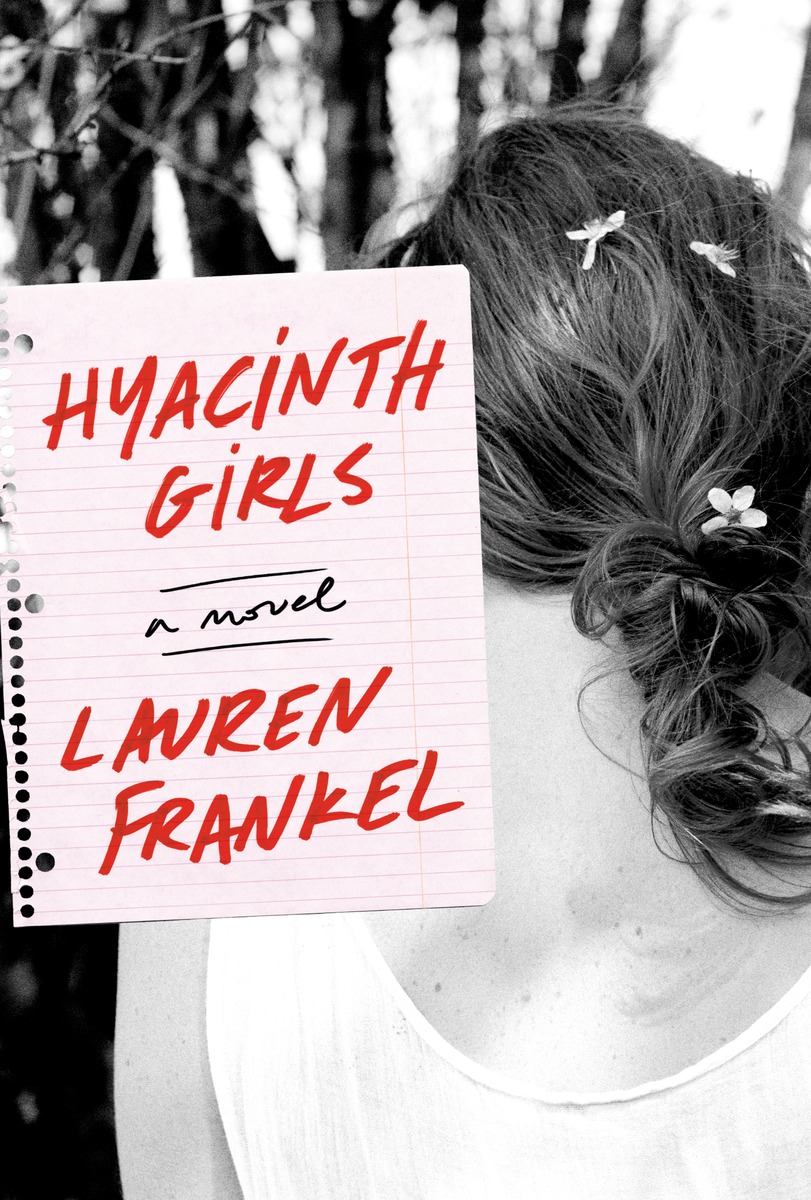
Lauren Frankel’s debut Hyacinth Girls, published by Crown, came out this month.
One of the struggles Emma Claire and I face when we compose our profiles on each month’s literary pair is how to condense many years of friendship into just a few hundred words. Interesting episodes and key details about each woman’s personality often have to go by the wayside for the short-form writing we do here on Something Rhymed.
Marianne Moore’s commitment to lifelong learning, well into old age, was an aspect of her life that almost failed to make the cut. Moore’s enthusiasm for dance and even creative writing classes, though intriguing, didn’t seem to be quite relevant enough to her friendship with fellow poet Elizabeth Bishop.
But when we thought of the great affection with which Bishop had written about this aspect of Moore’s character, we decided it was something we wanted to explore through our writing this month.
The subject of adult education had, in fact, been floating around my mind ever since February’s Something Rhymed challenge, when I took Emma Claire to see a gallery exhibition about the Russian ballet The Bolt.
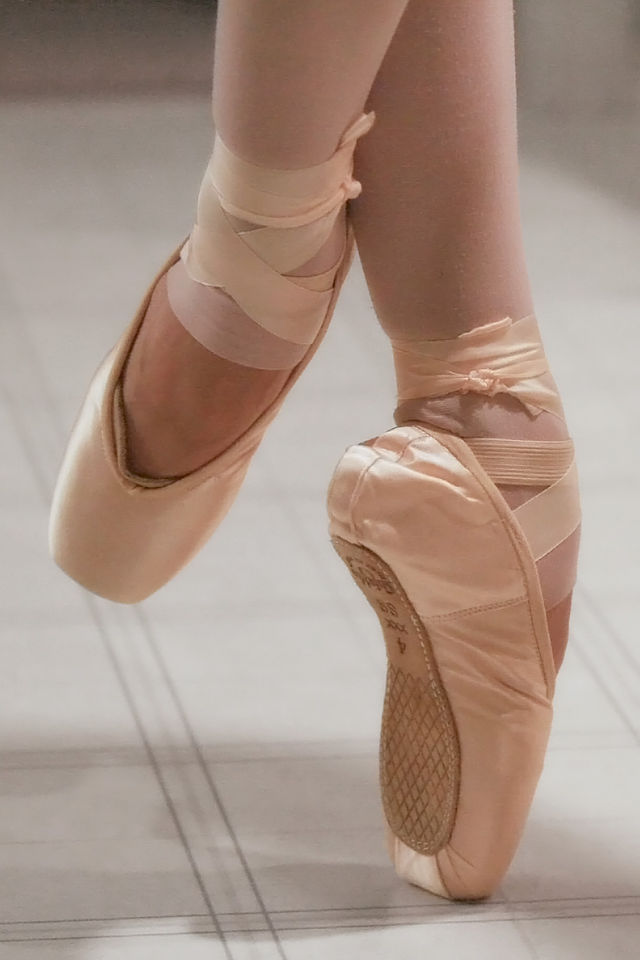
Ballet has been a love of mine for many years, and – having previously had lessons from the ages of four to eighteen – I took it up again as a hobby a few years ago. Like Emma Claire’s morning yoga sessions, it is an activity that hovers around the fringes our friendship. I’ve occasionally met her before or after an evening at the studio, and have mentioned class to her in passing, but a lack of shared vocabulary means I’d never thought to talk of it in detail, thinking it would be boring for her.
That trip to the gallery made me rethink my reticence, though – its costumes, rehearsal photographs and choreographer’s notes sparking questions from Em, not just about the exhibition itself, but also my own long-held fascination with this dance form. I was soon recalling the elderly babysitter, Mrs Tomlinson, who had enchanted my imagination at four-years-old with her crayon drawings of the Nutcracker’s Sugar Plum Fairy and the sad story of Swan Lake. I told Em of my childhood (highly unrealistic) dream of becoming a professional dancer, and also the rewarding but humbling experience of returning to ballet as an adult after such a long hiatus.
An idea for a story about dancing had pushed me to take the plunge and buy a new pair of ballet shoes. I’d wanted to immerse myself in that world again, because I wanted to write about it.
But taking class has, in fact, enriched my life in other unpredicted ways. It’s a part of the week to which I now always look forward. An hour-and-a-half of ballet makes for a wonderful way to change gears after several hours at my desk. The concentration required to try to master the steps empties my mind of any work-related stresses, and afterwards I feel refreshed and more enthusiastic about whatever I have to do tomorrow.
Being an initially extremely rusty student has also helped me in my work as a teacher. The experience of being unable to remember where to place my arms, and finding my feet no longer seem to work as they used to, has served as a great reminder of how daunting it might be for one of my adult writing students, who finds themself sitting in a classroom again after many years out in the world of work.
Though it’s unlikely we’ll ever find ourselves standing together at the barre, I’d been wondering, since our visit to the Bolt exhibition, about other ways in which Emma Claire and I might enjoy ballet again together. Then I heard about the Royal Ballet’s new production Woolf Works – based on the writing of Virginia Woolf – which opens in London this month.
Emma Claire and I have just bought tickets, and I’m excited to go and see a performance with her for the first time. Not only should it give me the chance to share with her something more of my love of ballet, but the subject matter will surely open up new conversations about one of Em’s own great passions, the writing of Virginia Woolf.





 Something Rhymed