All Posts

Jane Austen and Anne Sharp

emma-anne-sharp1
The presentation copies of Emma that Jane Austen sent to Anne Sharp (image used with kind permission from Bonhams)

When we realised that we knew all about the great male literary friendships but little of their female counterparts, we both immediately wondered whether Jane Austen had a writer friend. But since so little is known of her life, we weren’t confident of discovering much.

However, after a bit of sleuthing, we found out that Austen did have ‘an excellent kind friend’. What’s more, this support came from an unexpected source: her niece’s governess, Anne Sharp.

This name will be familiar to those of you who’ve been following Radio 4’s 15 Minute Drama, The Mysterious Death of Jane Austen. You might not be aware, however, that Sharp was herself a writer.

Austen was attracted to Sharp’s keen intelligence and wit, combined with independence of spirit – sensibilities that transcended class lines. But Sharp lived an even more financially precarious existence than Austen – something Austen worried about on her friend’s behalf. Rehearsing the match-making role of her heroine, Emma, she dreamt that Sharp might marry a wealthy employer.

Like Austen, though, Sharp never did wed. The demands of fulltime teaching prevented her from pursuing writing professionally. However, she did get to flex her literary muscles by writing plays for her pupils to perform. Austen herself likely acted in one such play (interestingly, cast in the role of governess), and Sharp was known to pen male roles for herself.

Fascinatingly, one of her theatricals was entitled Pride Punished or Innocence Rewarded. Several years later, Austen decided to change the title of one of her novels from First Impressions to Pride and Prejudice, and it’s hard to imagine that she hadn’t been influenced by the work of her friend.

She certainly valued Sharp’s critical faculties, electing her as the only friend to whom she sent one of her precious presentation copies of Emma. The candour with which Sharp answered her request for a critique shows the level of trust between these two writer friends. Sharp pointed out a flaw in one of the sub-plots, ultimately rating this latest novel somewhere between Pride and Prejudice and Mansfield Park.

After Austen’s early death, her sister sent Sharp a lock of Austen’s hair, a pair of clasps, and a small bodkin as mementoes – mementoes of a radical friendship that refused to be bound by the constraints of class, or to be defined by divisions between the professional and the amateur; mementoes of an influential literary alliance, yet one that has been all but forgotten.

Activity

This month, we’re going to send each other a trinket accompanied by a note that explains why it should stand as a memento of our friendship. Like the gifts that Anne Sharp cherished, something as small as a hairclip or needle might be all it takes to bring back memories.

As usual, please also share with us any more female writing friendships that you’ve discovered.

We Beg to Differ

Emma Claire Sweeney and Emily Midorikawa on Read Me Something You Love, discussing the differences that fired the friendship between Katherine Mansfield and Virginia Woolf

A sister can be seen as someone who is both ourselves and very much not ourselves, a special kind of double – Toni Morrison

Michèle Roberts recently advised us to acknowledge our differences.

As fans of her work and beneficiaries of her teaching on UEA’s Creative Writing MA, we were particularly keen to learn from her. With male friends, she told us, differences are delightfully obvious, but with fellow women we must mine deeper to discover the disparities between us:

‘Mothers and daughters identify with each other because they are of the same sex, and yet also they have to recognise themselves as separate people; the struggle for them to differentiate from each other can be troubled at times. With women friends, particularly, perhaps, if they are very close, and particularly, perhaps, if they are very idealistic about friendship, this struggle can occasionally be re-enacted. One of the roles of friends is to cherish and respect their differences as well as delight in their identification!’

Since our similarities are so obvious and we’ve never once had a feud, we found Michèle’s advice simultaneously resonant and troubling.

In our profile of Maya Angelou and Toni Morrison, we mention that they are often grouped together for the crudest of reasons. This is something that we’ve experienced too. We’re both writers; both northern; both brunette and petite; both teach at the same universities; both share a taste for vintage fashion, second-hand bookshops, and long conversations over afternoon tea. We even share variations of the same name: Emma and Emily. When one of our colleagues persistently mistakes us for the same person, we roll our eyes and laugh but are secretly pleased.  

Emily’s poem, ‘Things We Didn’t Do’, depicted a childhood very similar to Emma Claire’s: we both staged plays in our back gardens, practised cartwheels, created dens, shared secret cigarettes.

Yet it is our differences that might have most enhanced our formative years: in Emily Midorikawa’s home, you would have found chopsticks that rubbed along easily with the knives and forks, whereas at Emma Claire Sweeney’s you would have been more likely to stumble across holy water contained in a bottle the shape of Our Lady; Emma Claire could have eavesdropped on conversations between Emily’s academic parents, whereas Emily could have discovered a less obvious kind of intelligence in Emma Claire’s autistic sister.  

More important and problematic, though, are the differences in our characters and in the lives we’ve forged for ourselves. If we fail to accommodate them, they could damage our friendship in the long run.

One of the things Emma Claire admires in Emily, and tries (but frequently fails) to emulate is her ability to broach difficult matters with honesty. It takes a particular kind of tact and courage to acknowledge the things that divide us: if we go about it the wrong way, we risk falling out.

We learnt from Katherine Mansfield and Virginia Woolf that competition can be constructive – something that tends to go without saying about male friendship but is still taboo about women – but we don’t want to repeat their cycle of feud and reconciliation.

In the process of writing this post, we’ve realised that Maya Angelou and Toni Morrison have already taught us a thing or two about positive recognition of difference. In our responses to this month’s activity, for instance, Emily mentions that she’s never ‘known anyone quite like Emma Claire for taking an idea and running with it’, whereas Emma Claire admires the way Emily ‘accurately predicts the length of time a task requires and only undertakes work she can complete to the highest of standards’. These are attributes and yet they are also often our undoing. Looked at from another angle: Emma Claire needs to learn to say ‘no’, whereas Emily could more often say ‘yes’.

Something Rhymed may never have got off the ground without Emma Claire’s drive, but it could not have thrived without Emily’s pragmatism. We have only scratched the surface when it comes to acknowledging our differences, but we’re exploiting some of them each and every time we make a post on this site.

Ten Things Sarah Butler and Tessa Nicholson Love About Each Other

When novelist, Sarah Butler, and screen writer, Tessa Nicholson, posted up pictures of their beautiful letters on Twitter, we were delighted to discover that they were following Something Rhymed and joining us in dedicating 2014 to friendship. Since each chapter of Sarah’s début novel, Ten Things I’ve Learnt About Love, begins with a list, we asked them to share the lists they wrote in response to February’s challenge in this month’s guest blog.

We met, aged 19, at University: both reading English, both slightly overawed by the academia of Cambridge. We were friends from the off – easy in each other’s company, interested in each other’s lives, encouraging of each other’s dreams.

Fifteen years on, we are still firm friends, and now we are both writers. Something Rhymed’s letter writing activity for January helped us to forge another, written aspect of our friendship – which has been especially delightful now that we live in different cities.

Following the example of Ten Things I’ve Learnt About Love, we decided to write a list of ten things we admire about each other.

Sarah on Tess

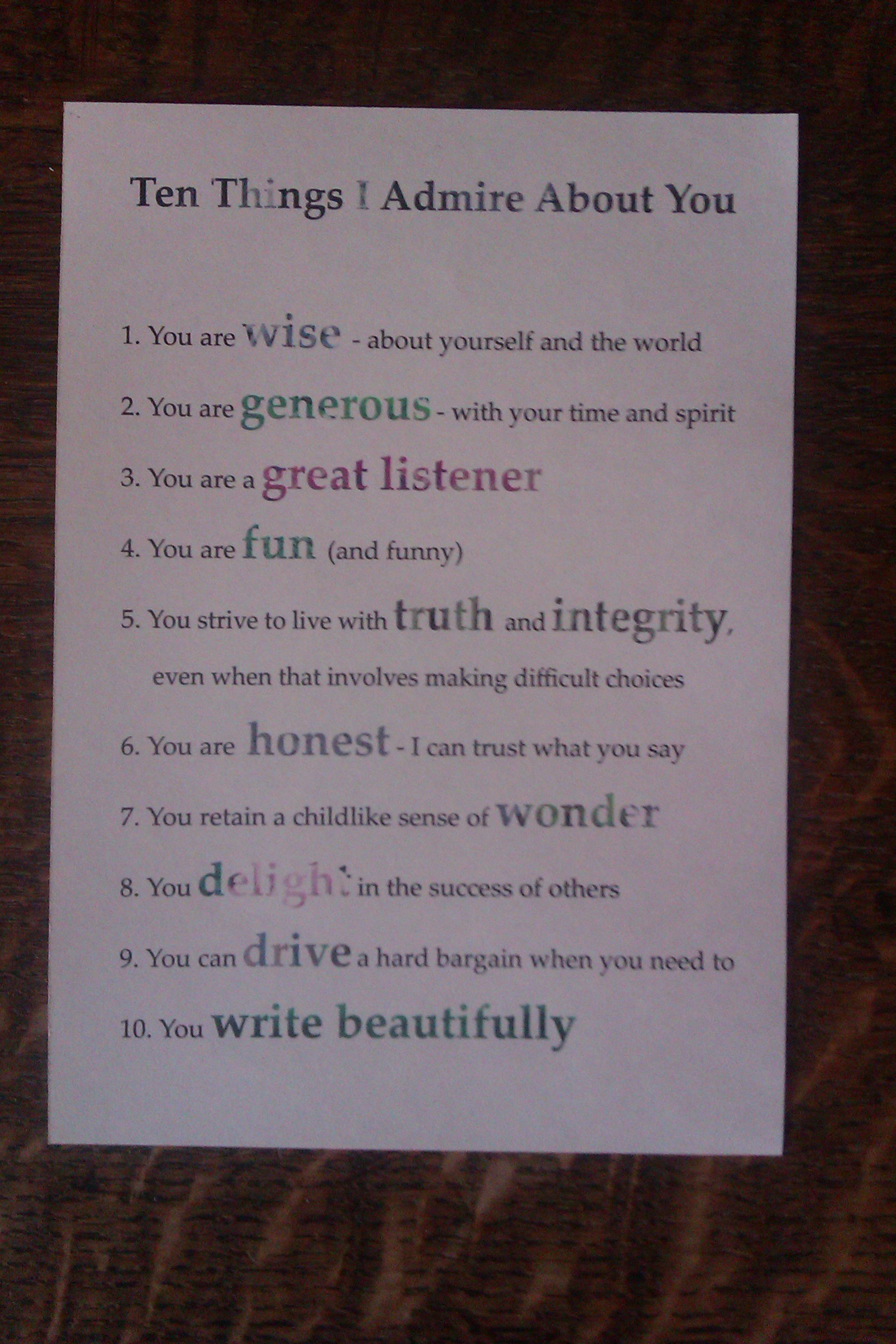
Ten Things I admire about Tessa

Sarah: It felt like a treat to take the time to really think about what makes Tessa such a great person and friend. As I wrote, certain words jumped out at me: wise, fun, generous, honest, so I decided to make a simple list which emphasised these words. I thought about which colours I associate with Tessa, which, it turns out, are muted pinks, greens and greys, so I used these colours for each key word, using images of tree bark, flowers, leaves and stone. The list’s title is ‘cut out’ of a photo of the college at Cambridge where we first met.

Tessa: Reading Sar’s list made me realise how lucky I am to have her as a friend. It is very fitting that this exercise was Sar’s suggestion – from our early days at university I was struck by her discipline and work ethic. Living beside her from the day we were able to choose rooms, I strove to work as hard and as productively as she did – and definitely failed. Today she continues to inspire me – doggedly carving a name for herself among the literati! Am so proud of her. And of our friendship. Her list felt like a big reassuring hug and an encouraging hand on my back pushing me up the hill.

Ten Things I Admire About Sarah

Tess on Sarah

TessaThere are many things to admire in Sar, so I had to be selective when putting it down on paper. First of all, I thought I would write my list by hand – but my writing is messy and difficult to read. So then I had what I thought was a better idea, to cut the letters out of the paper (the Guardian and Grazia Magazine to be precise). I now have a lot of respect for kidnappers because ransom notes really take forever. I berated a lot of journalists during the process but am now up to date on current affairs and Victoria Beckham’s rise from Spice Girl to haute couture.

Sarah: I want a wall-sized version of Tessa’s list in my office! It’s funny – I was half-hoping Tess would handwrite the list because I love her handwriting so much, but I love the ransom note – beautiful, colourful, quirky, just like her. I was touched by all of it, but especially number 3: ‘you make me feel at home’ – which links so beautifully to Maya Angelou’s essay ‘Home’ in Letter to my Daughter.

Sarah Butler’s novel, Ten Things I’ve Learnt About Love, was first published by Picador in 2013 and is just out in paperback.

Tessa Nicholson writes for PORT Magazine and the culture-vulture digital site Nowness.

Remember:

We’d love to hear about the things you admire in your friend. And if, like Tessa and Sarah, you’d like to send us a picture of your response to February’s challenge, then please email it to somethingrhymed@gmail.com or post it on Twitter along with #SomethingRhymed.

We’re on the look out for famous female writer pals to feature next month, so do let us know who you’d like to see profiled.

Two gifts: a ‘collection of books’ and a poem

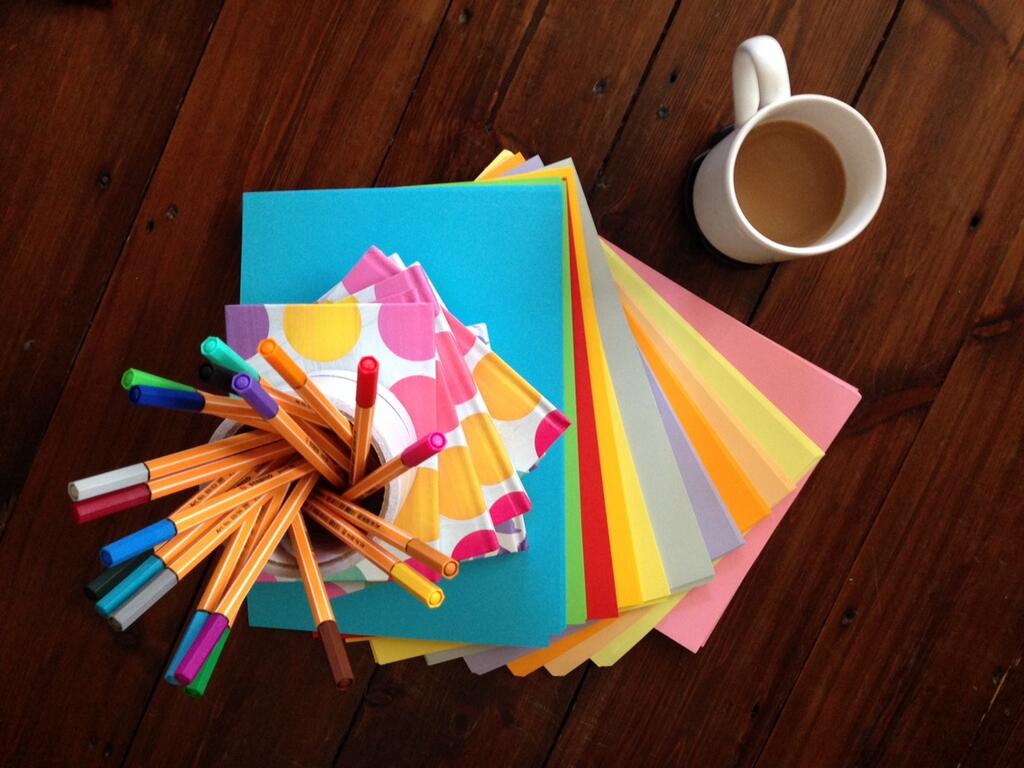
If you are on Twitter, you might know that Emma Claire posted a photo last week, saying that she had just started her response to this month’s Something Rhymed activity.

Emma's February activity

Like you, I could see pens, notebooks, coloured paper, a cup of tea. And I had absolutely no idea what she had planned.

So I was delighted to receive a stack of ‘books’ this week, each of them decorated with my name and a make-believe title. Amongst these were One Honest Friend, Speaking Up and my personal favourite The Lost Art of Getting Lost.  Each book had a related back-cover blurb too, summing up something my friend admired about me.

IMG_1032

Although I can’t help feeling that Emma Claire has been over-generous in her praise, I was really touched by what she said and the highly original way she found to say it.

This was the first time I’d received anything like this from her, and that encouraged me to step out of my comfort zone and try my hand at something I rarely attempt.

IMG_1036

I had already made a list of her many qualities at this stage. These included:

  • Her superior levels of insight as a writer and a reader
  • Her sensitivity towards other people – she’s amazingly good at predicting when someone may be feeling down and thinking of practical ways that she can help.
  • That she is more of a doer than a dreamer – I have never known anyone quite like Emma Claire for taking an idea and running with it.
  • The fact she’s very good at pulling a meal together, never ever getting flustered in the kitchen meals at Emma Claires are always served with warmth.

I wanted to do something text-based in response, and, although in no way do I consider myself a poet, I thought poetry might be a good form for what I wanted to say.

I’d also been thinking about the letters we wrote to each other as part of January’s activity, and how we’d both said there had been times when we’d regretted not meeting earlier in our lives. This element crept into the piece below too, which ended up suggesting something of the spirit of my list rather than being constructed of the original words I scribbled down.

You can read the poem by clicking on the title below:

Things we didn’t do

As always

We are very keen to hear your responses to this month’s challenge. And do keep those recommendations of female literary pairings coming in too. You can get in touch by using the ‘leave a reply’ button below. We really look forward to hearing from you.

Maya Angelou and Toni Morrison

Maya Angelou and Toni Morrison at the My Sheer Good Fortune event at Virginia Tech. (Photo used with their kind permission.)
Maya Angelou and Toni Morrison at the Sheer Good Fortune event at Virginia Tech. (Photo used with their kind permission.)

When Maya Angelou was honoured at the USA’s 2013 National Book Awards, it was Toni Morrison who presented her with the Literarian Award for Outstanding Service to the American Literary Community.

At the ceremony, Morrison spoke with clear emotion of her ‘personal pleasure’ at being able to hand over the prize to a friend who ‘inspires delight as well as awe’.

Now both in their eighties, it wasn’t the first time that one of these grandes dames of American letters had taken the opportunity to lavish praise on the other in public. The previous year, Angelou was a member of an all-female trio who hosted an event called Sheer Good Fortune in honour of Toni Morrison.

The title was inspired by the dedication from the author’s novel Sula, ‘It is sheer good fortune to miss somebody long before they leave you’, and this sentiment is clearly something that her friend has taken to heart for some time. When Morrison won the Nobel Prize for Literature back in 1993, Angelou decided to throw her a party because, as she would later recall, she felt it was something the United States should have done.

As two African Americans, two women, two writers of a similar age, these two have sometimes found themselves grouped together for the crudest of reasons. Morrison in particular has sometimes been keen to distance herself from Angelou in a literary sense – describing the author of I Know Why the Caged Bird Sings as a very different writer from her.

Nonetheless, they clearly have the greatest respect for each other, both as artists and women. As Angelou says they have been ‘sister friends’ for decades, and have been able to call on each other over the years for personal as well as public support.

They especially enjoyed being able to bond with each other at a past book festival at Wales’s Hay on Wye, when both were far away from home at a time when their mothers were ill. And, as Morrison recalled in her recent awards tribute speech for her friend, when her son died one Christmas, Angelou was the very first non-family member to call her up on the phone with what she describes as ‘that unmistakable voice of sheer balm’.

Activity

In Toni Morrison’s recent speech to honour her friend, she described Maya Angelou’s many attributes, which range from the artistic to the personal to the culinary. As she says, ‘Maya can cook.’

This month we’re challenging ourselves to make lists of all the things we admire in each other and then we’re going to do something creative with it. Maybe we’ll polish up the wording and mount it on a card or, like Morrison, we might turn it into a crafted prose piece, or perhaps a poem. Or we could come at things from a different angle entirely, working parts of our lists into a painting or collage, even icing them onto a cake.

We’ll be letting you know what we decide to do and showing you something of what we produce.

We are interested in hearing recommendations of other female writing friendships that we could showcase on this site. If you know of a literary pair of women, past or present, who have supported each other’s work, do please get in touch.


Goodbye to Mansfield and Woolf

If we’re honest, we both felt some trepidation on 31 December 2013. On the day before we launched Something Rhymed, each of us had the same questions. Would anyone, other than our nearest and dearest, want to visit this website? Is the subject of female literary friendships one that interests other people?

We’ve been delighted to discover that it has struck a chord with so many of you: 3000 hits on the site so far, the majority from the UK, USA, Canada, Ireland and Australia, but from other corners of the globe too. We’ve heard from emerging and established authors, readers, academics, literary bloggers, editors at publishing houses and literary magazines, agents, publicists, owners of writing retreats and more.

The Independent on Sunday featured our website in their Between the Covers column, and Book Oxygen, Books by Women and Writers’ Centre Norwich all asked us to talk more about Something Rhymed in the guest blogs we wrote for them this month.

There have been hundreds of tweets about the site, and many more of you have got in touch, by sending a message or leaving a comment, to add your thoughts to the discussions we’ve started and to recommend pairs of writer pals we could profile.

Some suggestions focused on friendships we’d already heard something about, but others were entirely unknown to us. We’re keen to explore all of your ideas, so do please keep them coming in.

We were also delighted to learn that some of you had joined us in this month’s letter writing activity.

Elaine, who wrote to to her long-standing friend Frieda, seems to have shared some of the same feelings that we encountered, noting that ‘In these days of e-mail and Facebook we have instant if rushed communication on tap, but my rambling missive penned whilst enjoying traditional afternoon tea on a winter’s Sunday afternoon, gave me a chance to experience a much less frequent pleasure nowadays’.

Novelist Sarah Butler and screenwriter Tessa Nicholson used their letters to talk about the business of writing itself and to give each other advice. Sarah told us how much she appreciated her friend’s wisdom, singling out two tips in particular: ‘Your competitive streak is like a motor. Don’t be ashamed of it’, and ‘You’ll have to learn to put your blinkers on and write more for you’.

Tessa Nicholson's response to January's challenge with this a letter to her friend Sarah Butler
Tessa Nicholson’s response to January’s challenge – a letter to her friend Sarah Butler

Others said that they were already in regular correspondence, including Jill Dawson and Kathryn Heyman, the authors of last week’s wonderful guest post.

It seems that, for some of this blog’s readers at least, letter writing is not such a lost art after all. As author and journalist Erina Reddan pointed out in a comment on the site, ‘Letters pull you down and into a place that conversation does not take you’.

On Saturday, we’ll be saying goodbye to Katherine Mansfield and Virginia Woolf and letting you know about the next pair of famous writing pals.

Sarah Moore was the first to mention Maya Angelou when she left a response to our first post of the year, which mentioned the author’s friendship with Jessica Mitford.

But this was followed by separate suggestions on Twitter from the writers Wendy Vaizey and Salena Godden. They cited Angelou too, but it was another one of her friendships that they thought we should consider.

And so, after much deliberation, we’ve decided to go with that duo next: Maya Angelou and Toni Morrison. If you return here on 1 February, you’ll find lots more information about that relationship and also details of the month’s activity. And if you have any thoughts you’d like to share about this pair, do please get in touch. As always, we’d love to hear from you.

Don’t forget, if you want to make sure you don’t miss out on any Something Rhymed updates, you can sign up to follow us via email using the tab on the right of the screen.

Until Saturday then…

Jill Dawson and Kathryn Heyman: competition and correspondence

When Kathryn Heyman read our profile of the rivalrous friendship between Kathryn Mansfield and Virginia Woolf, she told us about the role of envy in her long-distance friendship with fellow novelist, Jill Dawson. So we decided this week to feature a guest blog from them.

Jill Dawson and Kathryn Heyman

You either want to kill your competitors or become their friends. We chose friendship. But perhaps it’s slightly disingenuous to present it that way: when we feel that competitive spirit, it’s partly because we are attracted to the very qualities which we have – or aspire to have – ourselves.

Like Woolf, who wanted to be a better writer because she believed Mansfield had set a high standard, when one of us is successful it spurs the other on. We have allowed ourselves to be truthful about the role envy plays in our friendship because envy, after all, is a way of discovering what it is that we want.

Because we are in the same field, there are inevitably times of difficulty, of one achieving something the other wants. Award shortlists, film deals, new book deals, invitations to international events: we are, in some ways, competitors, at least if we chose to believe that there is not enough to go around. Both of us would say that we would prefer to be the one winning the Booker Prize in a given year, for instance – but if the other won it the same year, that would be a pretty neat next best thing.

We live on opposite sides of the world now, which causes us some pain. But we talk to each other every week. Our conversations are about writing, gossip, lipstick, what to wear to events, children, husbands, our works-in-progress. We’ve been alongside each other for each of our novels – thirteen between us – and know the stages of writing. ‘I thought it was going so well,’ one of us will say, ‘but now it all seems so flat. I can’t hold it together, it’s going to collapse.’ ‘Yes,’ the other will say. ‘You always say that at precisely this stage, just before you discover something wonderful; remember the last book? And the one before that?’

We write to each other regularly too. Like Woolf and Mansfield, we discuss our novels-in-progress, money matters, the books we are reading, our mutual friends. At one point, the notion of the ideal reader cropped up in our correspondence, the person who we really write for, the one who is capable of understanding the depth and intelligence of our work. And we realised then that we’ve found in each other our ideal reader – the one writer in the world for whom we would value ourselves as a reader as much as a writer. We are extraordinarily blessed that the competitor we most fervently admire is also the friend who we adore.

Kathryn Heyman’s fifth novel, Floodline, was published by Allen and Unwin in 2013.

Jill Dawson’s eighth novel, The Tell-tale Heart, will be published by Sceptre in 2014.

This post is adapted from a longer article by Kathryn Heyman, originally published in Vogue in 2008.

Remember: 

We’d love to hear about the letters you’ve exchanged, or perhaps you would like to share some reflections on the role of envy in your friendship.

We’re still on the look out for famous female writer pals, so do keep them coming too.

Letter Writing in Modern Times

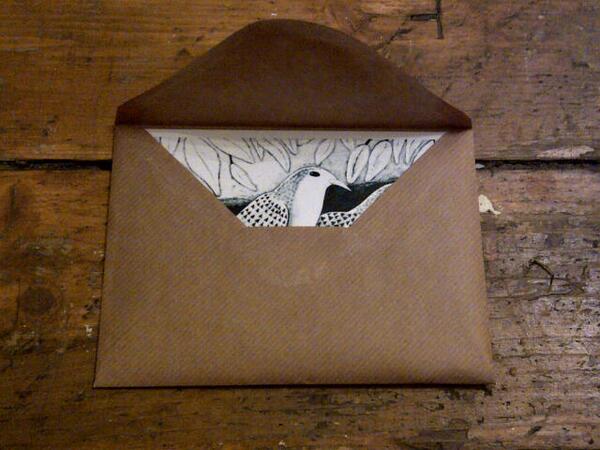
Emily's letter envelope
Addressed envelope all ready to go, with the origami windmill

When the letter from Emma Claire arrived last week, I brewed myself a pot of tea and sat down in an armchair to read it again.

I’d already sneaked a look at its contents on-line, when Emma Claire posted images of its eight pages here, but a postal delivery of this kind is such a rarity these days that I wanted to make more of an occasion of it, away from my computer screen.

What struck me as I sat there, the paper bending and rustling between my fingers, was how rewarding it can be to give your full attention to a letter. Time seems to slow as you focus only on your friend’s voice in your head. It’s a different sort of experience from opening an email on a busy day, when you find yourself painfully aware, even as you read, of the dozens of other messages building up in your inbox.

Prior to hearing from Emma Claire, I had already started jotting ideas in my notebook about things I wanted to discuss with her. These included:

  • Memories of our time in Japan, and how it kick-started our writing
  • Some things I admire about her prose style
  • Recurrent themes I’ve noticed in her work
  • Her influence on me as a writer
  • The Persephone Book of Short Stories, which I planned to recommend

Not all of these things made it into my reply. Influenced by the issues Emma Claire raised in her own letter, I found that I wanted to discuss some of them in more detail instead.

I ended up talking about the many ways in which I value her friendship, about memory itself, the similarities and differences in how each of our minds had preserved important recollections, and how I hoped we would correspond like this again. I also told Emma Claire about an earlier letter she once wrote to me, which I read again a few days ago, and the images of the past it immediately brought back.

I was inspired by the beauty of the stationery Emma Claire sourced, but was unable to find anything I liked as much myself. And so I took some plain sheets and decorated them with strips of coloured origami paper – something that seemed apt, considering how our time in Japan featured heavily in both of our letters

From one of the leftover scraps, I made a simple miniature windmill and added it to the envelope. If you are interested in having a go at this origami yourself, instructions can be found here.

As Emma Claire did in her last post, I’ve included pictures of the pages I wrote, which you can click and zoom in on below.

Emily's letter 1 Emily's letter 2Emily's letter 3Emily's letter 4

Emily's letter 5Emily's letter 6Emily's letter 7

Don’t forget

We’d love for you to join us in this activity by writing a letter of your own to a friend. Please use the ‘Leave a Reply’ facility below to let us know about the kinds of things you wrote in your letters.

Click here to find out about this month’s challenge in more detail.

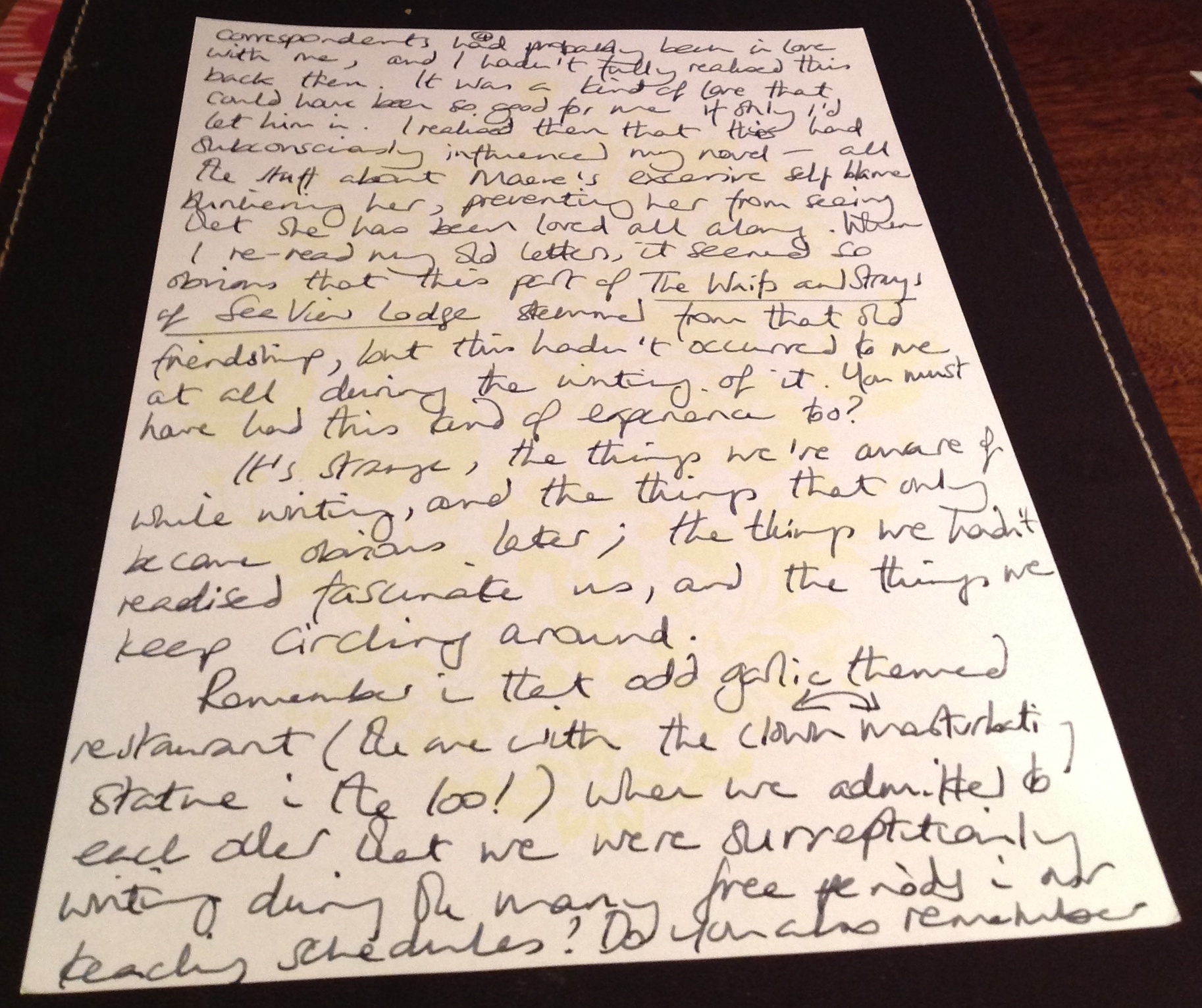
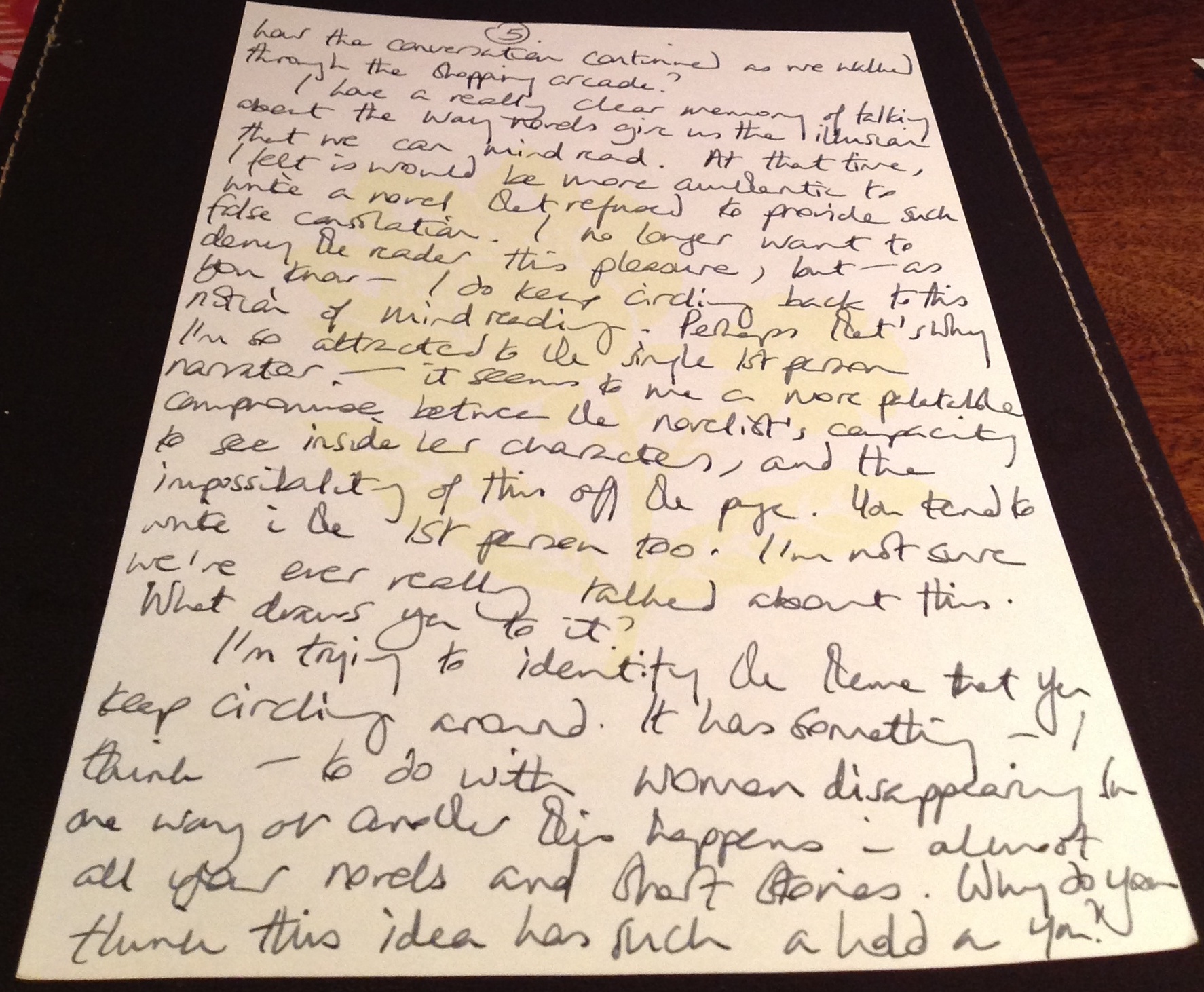
The Lost Art of Letter Writing

Letter to Emily

Emily and I are lucky to live nearby these days – a luxury that, until recently, we hadn’t re-experienced since we first became friends back in 2001.

As we now get to see each other regularly, I tried to include in my letter some things that we might not discuss in person because of embarrassment, fear, or simply the deviations of conversation.

In a loose way, I was also influenced by the kinds of things Woolf wrote about in her letter to Mansfield: reflections on writing, reading, gender, friends.

Here are the ideas I jotted down to include in my letter to Emily:

  • Recommend The Faraway Nearby by Rebecca Solnitt
  • Are there no societal rules for friendship?
  • Is friendship between women still somehow considered subversive?
  • Unexpectedly autobiographical roots to certain aspects of our novels
  • The themes we keep circling around
  • Getting lost

I’ve included pictures of the letter itself so you can click and zoom to see how I ended up exploring these ideas.

There was something comforting about using the fountain pen that Emily bought for me a few years back – the half-forgotten rub of the nib against paper, paper I bought in San Francisco when I visited one of our mutual friends.

The letter itself became a kind of meditation on the lost art of letter writing: the way in which the pen can explore ideas too difficult for the tongue; the eye can receive ideas too difficult for the ear.

Getting lost has itself become a lost art now that so many of us have satellite navigation systems in our cars and GPS on our phones. Through writing to Emily, I realised just how much I valued my many experiences of getting lost with her – most recently in Notting Hill on the way back from Book Slam; but also last year in Bayswater on the way to Porchester Spa; and once when we were stranded at a remote station in Cumbria with no idea of our hostel’s address.

In this letter, I reminisced about the times we first got lost together in rural Japan – joyful occasions when we began to realise just how much we shared – and, as I wrote, it occurred to me that the experience felt surprisingly like being found.

Page 1Page 2Page 3Page 4Page 5Page 6Page 7Page 8

Over to you:

Please use the ‘Leave a Reply’ facility below to let us know about the kinds of things you wrote in your letters. We can’t wait to hear.

Click here if you’d like to be reminded of this month’s challenge.

Katherine Mansfield and Virginia Woolf

Katherine Mansfield and Virginia Woolf

Virginia Woolf’s scathing first impression of Katherine Mansfield as ‘a civet cat that had taken to street-walking’ had always led us to put them down as enemies, but when our novelist friend Jill Dawson suggested them for our Times article on female writing friendships we began to question this preconception.

It turned out that Mansfield and Woolf considered themselves dear friends: they sought each other’s opinions on the books they traded; they exchanged gifts of Belgian cigarettes, loaves of bread, coffee beans, and columbine plants; they sent each other umpteen letters; and discussed their work over tea.

The two women were unlikely pals: Mansfield hailed from the far-flung colonies, whereas Woolf’s family was firmly entrenched in the English intelligentsia; Mansfield embraced her youthful desires with bohemian exuberance, whereas Woolf approached intimacy with timidity.

Both women experienced chronic illness, had complex relationships with editor husbands, and felt ambivalent about their childlessness. But it was really their shared literary endeavours that fired their friendship. Indeed, after spending a weekend with Woolf, Mansfield remarked that it was ‘very curious & thrilling that we should both, quite apart from each other, be after so very nearly the same thing’.

Although their friendship was relatively brief – from 1917 until Mansfield’s death in 1923 – its effect on their work was profound. During this time, Mansfield produced most of her celebrated stories (one of which Woolf published), and Woolf forged her trademark style. Although we more readily associate Woolf with the stream of consciousness technique, it was actually Mansfield who tried it out first.

In fact, Woolf seems to have been the more dependent of the pair: she was hurt (but likely also stimulated) by Mansfield’s damning review of her second novel; she worried when her letters failed to elicit a swift response; and references to Mansfield haunt her journal, showing her friend’s continued influence from beyond the grave.

Both friends recognised each other’s literary prowess: Woolf claimed that Mansfield’s was the only prose to have made her jealous, and Mansfield said that reading Woolf made her proud.

We too feel proud of our literary ancestresses – these women whose relationship could accommodate support and rivalry, criticism and praise; who were open to each other’s influence; and whose important friendship we’d been all too ready to write off.

Activity

Katherine Mansfield and Virginia Woolf enjoyed corresponding with each other. In this letter, Woolf describes jotting in her diary ideas she wanted to share with Mansfield. This way, she wouldn’t forget to mention them the next time she wrote to her friend.

This month, we will follow their example. Like Woolf, we will use our notebooks to keep track of the things we’d like to discuss. Then we will write about these ideas in letters that we will post to each other.

We’d appreciate any suggestions of other friendships between famous female writers (living or dead) that you’d like us to feature in future posts.